Persistent Mullerian duct syndrome: a rare cause of unilateral cryptorchidism
- PMID: 22977013
- PMCID: PMC3534258
- DOI: 10.1136/bcr.02.2012.5722
Persistent Mullerian duct syndrome: a rare cause of unilateral cryptorchidism
Abstract
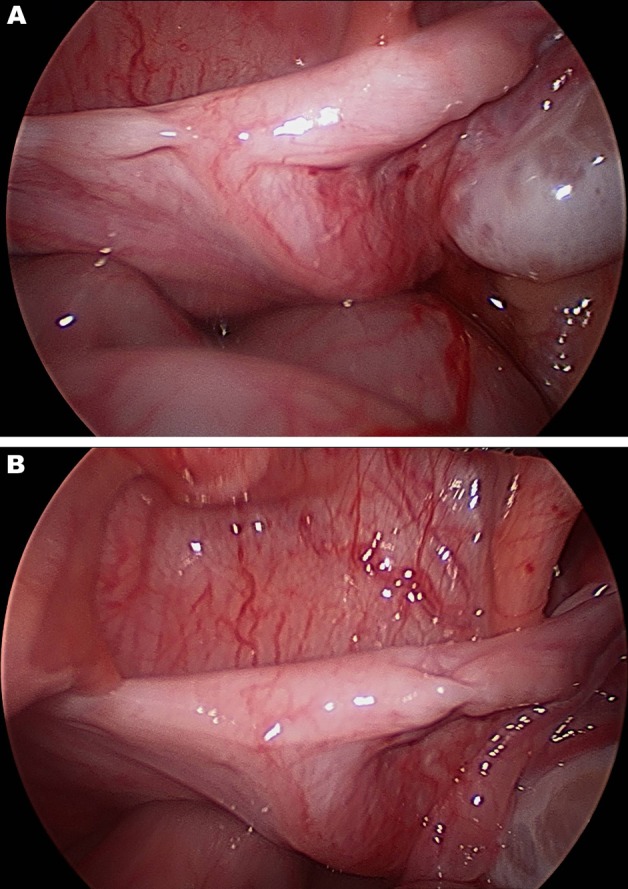
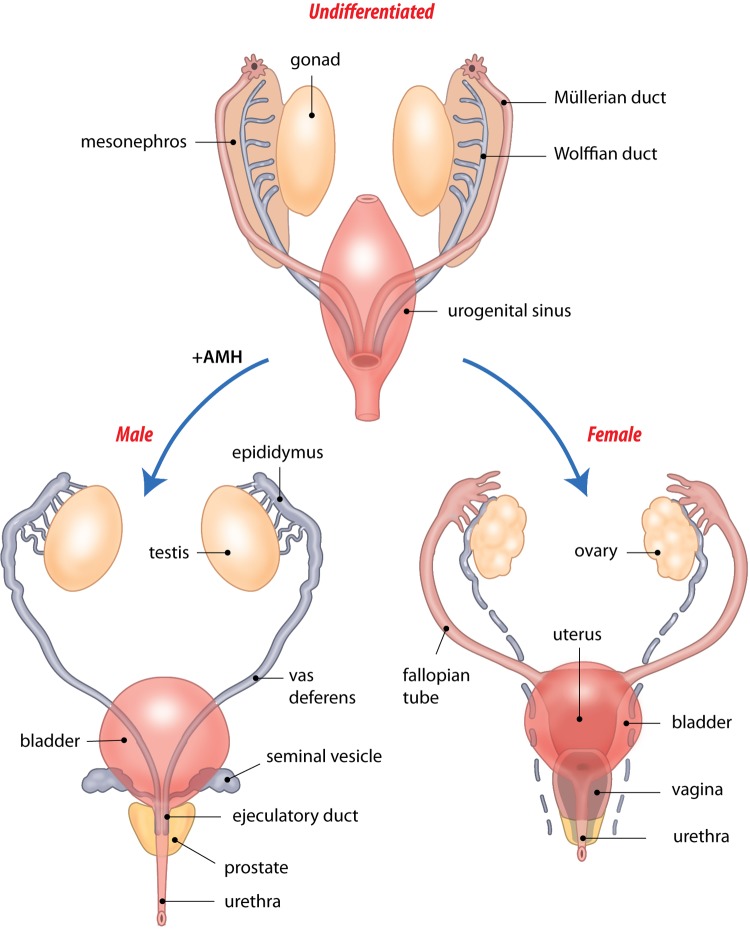
Persistent Mullerian duct syndrome (PMDS) is a rare syndrome and sometimes the cause of a common problem in paediatric and surgical practice, namely undescended testes. PMDS is a recessive disease in which there is a defect in anti-Mullerian hormone secretion or receptor activity resulting in persistence of Mullerian structures such as a uterus or fallopian tubes with otherwise normal virilisation. Here the authors present a case of a 1½-year-old boy who was referred to their hospital because of unilateral cryptorchidism. During laparoscopic surgery, two gonads were present joined together by a uterus-like structure. Additional investigations showed a normal male karyotype and biopsies of the gonads revealed infantile testis parenchyma making the diagnosis PMDS likely.
Conflict of interest statement
Figures
References
-
- Barthold JS, González R. The epidemiology of congenital cryptorchidism, testicular ascent and orchiopexy. J Urol 2003;170:2396–401. - PubMed
-
- Josso N, Belville C, di Clemente N, et al. AMH and AMH receptor defects in persistent müllerian duct syndrome. Hum Reprod Update 2005;11:351–6. - PubMed
-
- Lee MM, Misra M, Donahoe PK, et al. MIS/AMH in the assessment of cryptorchidism and intersex conditions. Mol Cell Endocrinol 2003;211:91–8. - PubMed
-
- di Clemente N, Belville C. Anti-Müllerian hormone receptor defect. Best Pract Res Clin Endocrinol Metab 2006;20:599–610. - PubMed
-
- Niewoehner CB. Endocrine Pathophysiology. Raleigh, N.C.: Hayes Barton Press; 2004.
Publication types
MeSH terms
LinkOut - more resources
Full Text Sources
Molecular Biology Databases