


Circular retrotransposition products generated by a LINE retrotransposon
- PMID: 22977178
- PMCID: PMC3510499
- DOI: 10.1093/nar/gks859
Circular retrotransposition products generated by a LINE retrotransposon
Abstract
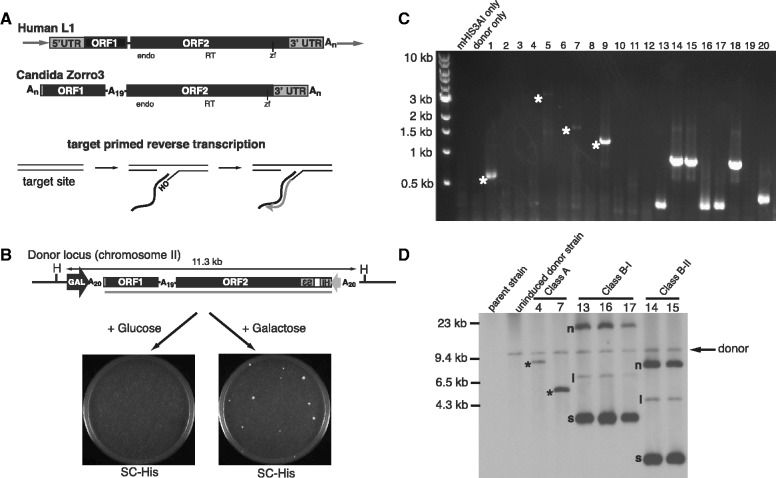
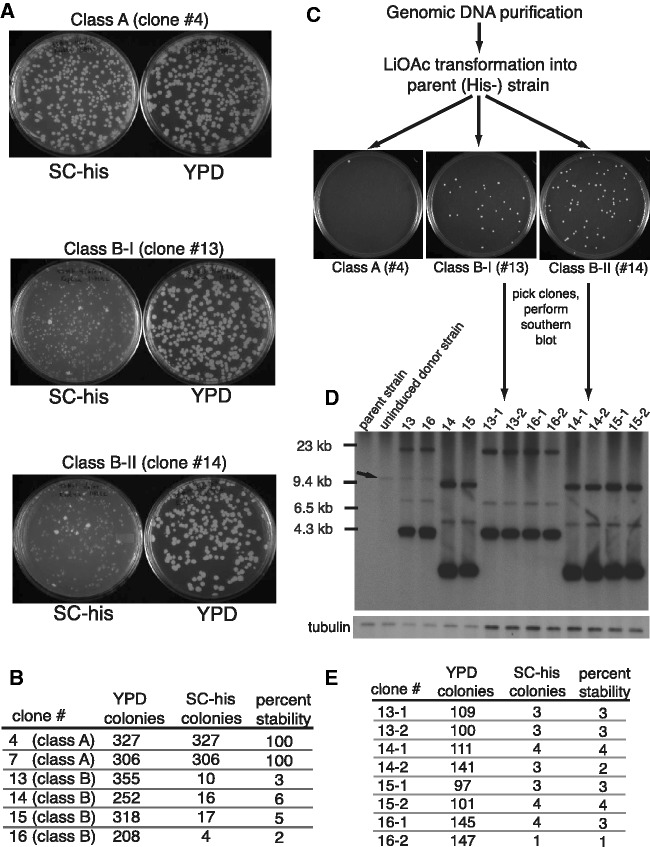
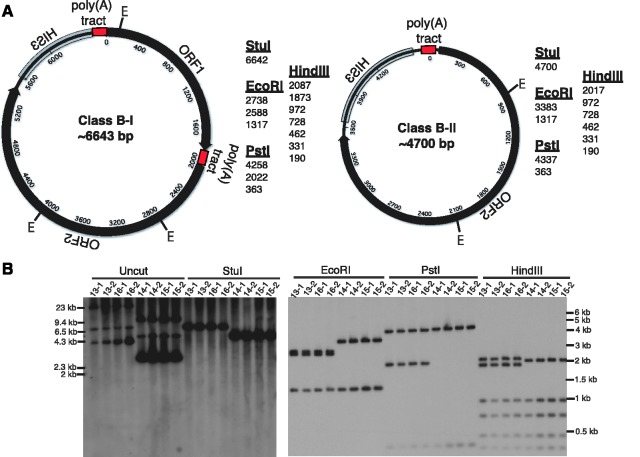
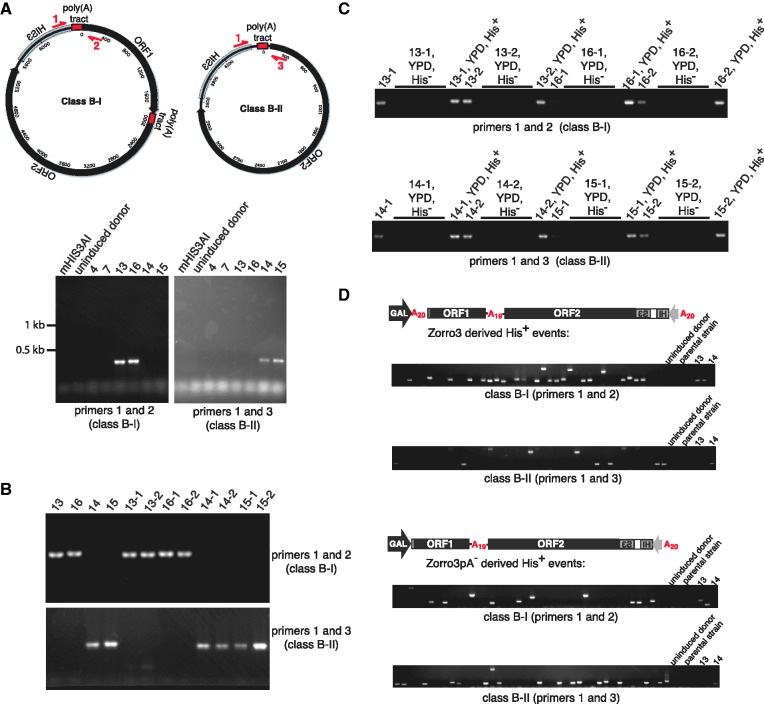
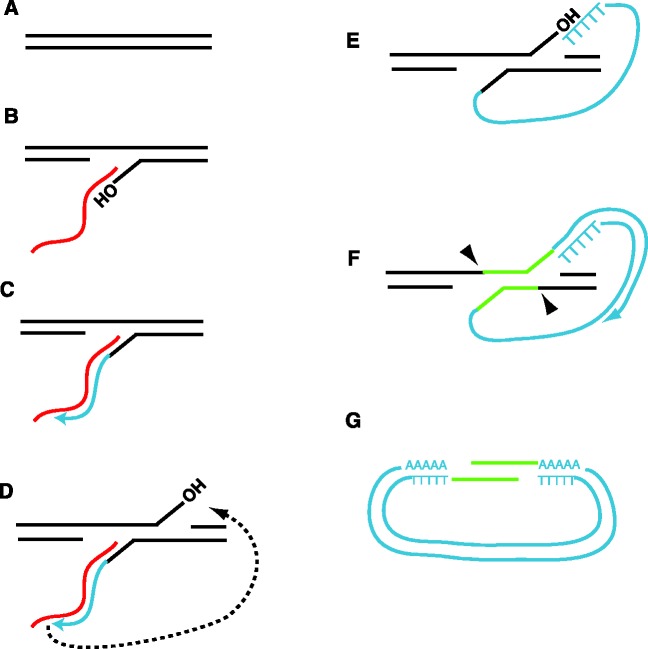
Non-long terminal repeat (non-LTR) retrotransposons are highly abundant elements that are present in chromosomes throughout the eukaryotic domain of life. The long interspersed nuclear element (LINE-1) (L1) clade of non-LTR retrotransposons has been particularly successful in mammals, accounting for 30-40% of human genome sequence. The current model of LINE retrotransposition, target-primed reverse transcription, culminates in a chromosomally integrated end product. Using a budding yeast model of non-LTR retrotransposition, we show that in addition to producing these 'classical', chromosomally integrated products, a fungal L1 clade member (Zorro3) can generate abundant, RNA-derived episomal products. Genetic evidence suggests that these products are likely to be formed via a variation of target-primed reverse transcription. These episomal products are a previously unseen alternative fate of LINE retrotransposition, and may represent an unexpected source for de novo retrotransposition.
Figures
References
-
- Lander ES, Linton LM, Birren B, Nusbaum C, Zody MC, Baldwin J, Devon K, Dewar K, Doyle M, FitzHugh W, et al. Initial sequencing and analysis of the human genome. Nature. 2001;409:860–921. - PubMed
-
- Waterston RH, Lindblad-Toh K, Birney E, Rogers J, Abril JF, Agarwal P, Agarwala R, Ainscough R, Alexandersson M, An P, et al. Initial sequencing and comparative analysis of the mouse genome. Nature. 2002;420:520–562. - PubMed
-
- Chimpanzee Sequencing and Analysis Consortium. Initial sequence of the chimpanzee genome and comparison with the human genome. Nature. 2005;437:69–87. - PubMed
-
- Gibbs RA, Weinstock GM, Metzker ML, Muzny DM, Sodergren EJ, Scherer S, Scott G, Steffen D, Worley KC, Burch PE, et al. Genome sequence of the Brown Norway rat yields insights into mammalian evolution. Nature. 2004;428:493–521. - PubMed
Publication types
MeSH terms
Substances
Grants and funding
LinkOut - more resources
Full Text Sources
Other Literature Sources
