


The impact of nutrition education interventions on the dietary habits of college students in developed nations: a brief review
- PMID: 22977369
- PMCID: PMC3436500
The impact of nutrition education interventions on the dietary habits of college students in developed nations: a brief review
Abstract
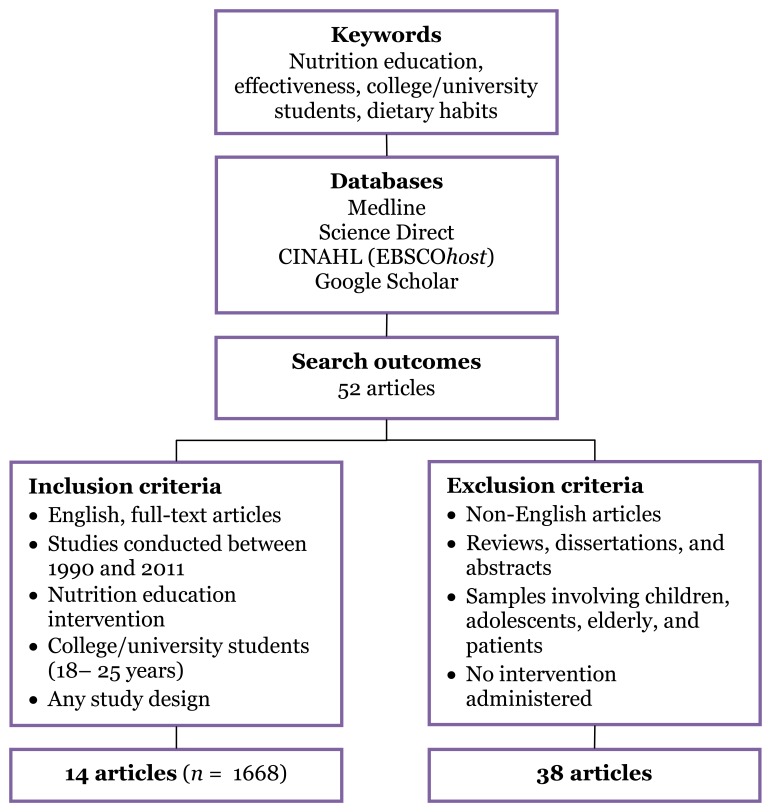
The purpose of this review is to provide a summary of studies on the effectiveness nutrition education interventions used by college students. Electronic databases such as Medline, Science Direct, CINAHL (EBSCOhost), and Google Scholar were explored for articles that involved nutrition education interventions for college students and that were published between 1990 and 2011. Fourteen studies, which involved a total of 1668 college students as respondents, were identified and met the inclusion criteria. The results showed that there were 3 major forms of nutrition education interventions: web-based education, lectures, and supplement provisions. Dietary intake measures were used in almost all studies and were primarily collected with food records, recall, food frequency questionnaires, and dietary habit questionnaires. The outcome measures varied among the studies, with indicators such as consumption of food, nutrition knowledge, dietary habits, physical activity, and quality of life. Methodological issues were also identified. In general, college students experienced significant changes in their dietary habits after the interventions were employed. The highlighted methodological issues should be considered to improve the quality of similar research in future.
Keywords: dietary habits; education; intervention studies; nutrition; programme effectiveness; young adult.
References
-
- Campbell KL, Ash S, Bauer JD. The impact of nutrition intervention on quality of life in pre-dialysis chronic kidney disease patients. Clin Nutr. 2008;27(4):537–544. - PubMed
-
- White S, Park YS, Isreal T, Cordero ED. Longitudinal evaluation of peer health education on a college campus: Impact on health behaviors. J Am Coll Health. 2009;57(5):497–505. - PubMed
-
- Ware JE Jr, Gandek B. Overview of the SF-36 Health Survey and the International Quality of Life Assessment (IQOLA) project. J Clin Epidemiol. 1998;51(11):903–912. - PubMed
LinkOut - more resources
Full Text Sources
Miscellaneous