


Expression and function of ABCG2 in head and neck squamous cell carcinoma and cell lines
- PMID: 22977636
- PMCID: PMC3440784
- DOI: 10.3892/etm.2011.331
Expression and function of ABCG2 in head and neck squamous cell carcinoma and cell lines
Abstract
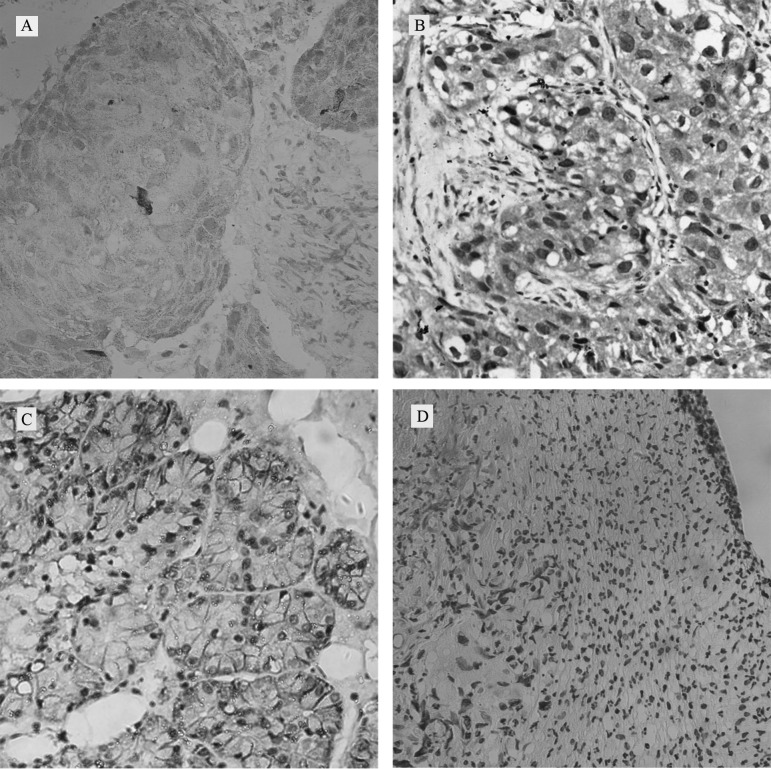
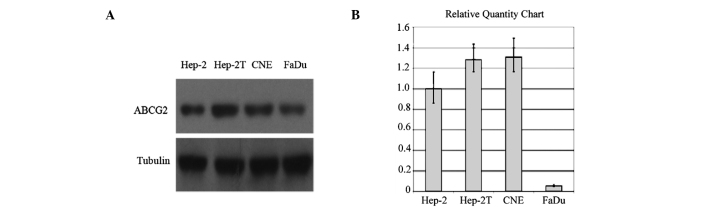
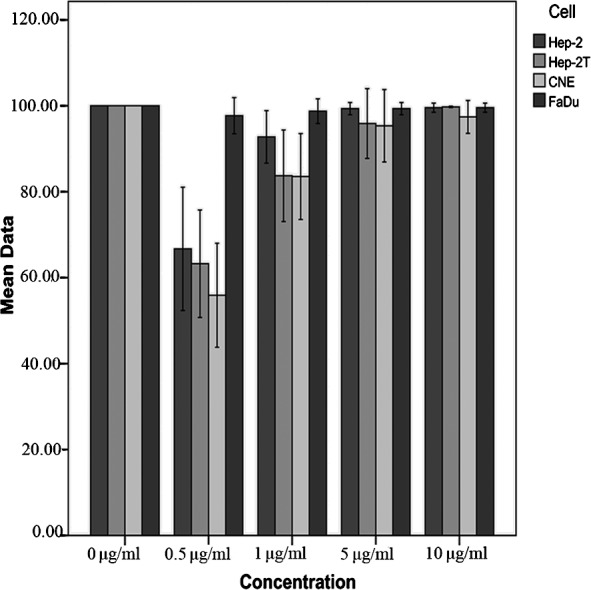
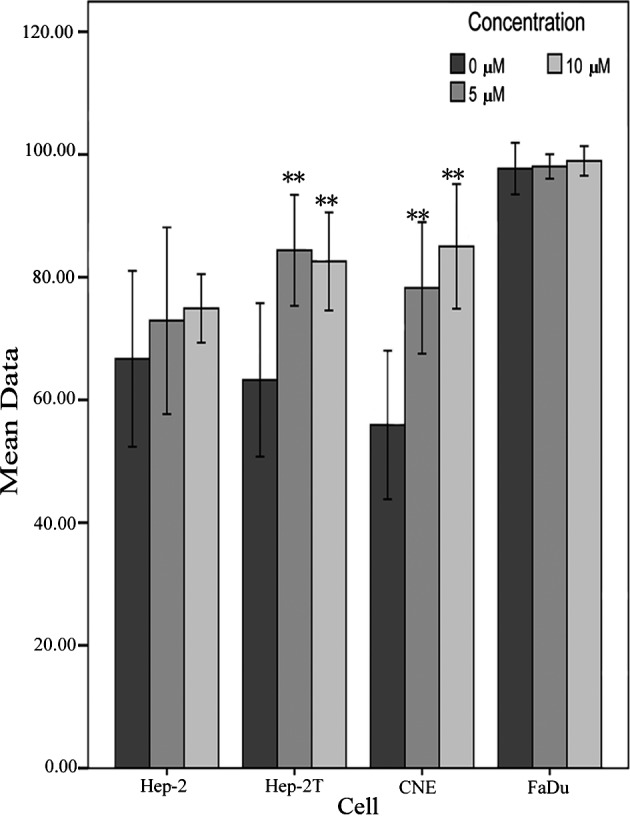
Overexpression of breast cancer resistance protein, the ATP-binding cassette, subfamily G, member2 (BCRP/ABCG2), confers multidrug resistance to tumor cells and often limits the efficacy of chemotherapy. The aim of this study was to investigate the expression and functional activity of ABCG2 in head and neck squamous cell carcinoma (HNSCC) and corresponding cell lines. Immunohistochemistry was performed to investigate the presence of the ABCG2 transporter in HNSCC tissues. Expression of ABCG2 in the Hep-2, Hep-2T, CNE and FaDu cell lines was analyzed by real-time quantitative reverse transcription-polymerase chain reaction and Western blotting at the levels of messenger RNA (mRNA) and protein, respectively. The drug sensitivity of the above four cell lines to mitoxantrone was detected using MTT, and the drug accumulation of mitoxantrone was analyzed by flow cytometry. Positive expression of ABCG2 was detected in 52.04% of the laryngeal cancer samples from 98 patients, in 65% of the 40 hypopharyngeal cancer samples and in 58.82% of the 34 nasopharyngeal cancer samples. The level of expression was found to be correlated with tumor TNM stage (P<0.05) and lymph node metastasis (P<0.01). All four HNSCC cell lines expressed ABCG2 at the mRNA and protein levels. The levels of ABCG2 expression in the four cell lines were significantly correlated with the function and sensitivity to mitoxantrone. The addition of fumitremorgin C at a concentration of 5 μM to mitoxantrone treatment caused a varied increase in mitoxantrone accumulation of 1.09-fold, 1.33-fold (P<0.01), 1.4-fold (P<0.01) and 1-fold in the Hep-2, Hep-2T, CNE and FaDu cells, respectively. Expression of ABCG2 varied among the different types of carcinoma tissues and each HNSCC cell line, and it induced multidrug resistance and separation of cancer stem cells attributing to its efflux pump function. Thus, ABCG2 expression may be an unfavorable prognostic factor for HNSCC. Due to the negligible expression and function of ABCG2, we suggest that the FaDu cell line is suitable to be a negative control in studies involving HNSCC. Taken together, ABCG2 is a promising universal biomarker of cancer stem cells and a target gene for HNSCC chemotherapy.
Figures
References
-
- Greenlee RT, Murray T, Bolden S, Wingo PA. Cancer statistics, 2000. CA Cancer J Clin. 2000;50:7–33. - PubMed
-
- Vokes EE, Weichselbaum RR, Lippman SM, Hong WK. Head and neck cancer. N Engl J Med. 1993;328:184–194. - PubMed
-
- Clark JI, Hofmeister C, Choudhury A, et al. Phase II evaluation of paclitaxel in combination with carboplatin in advanced head and neck carcinoma. Cancer. 2001;92:2334–2340. - PubMed
-
- Dean M, Hamon Y, Chimini G. The human ATP-binding cassette (ABC) transporter superfamily. J Lipid Res. 2001;42:1007–1017. - PubMed
-
- Ross DD, Nakanishi T. Impact of breast cancer resistance protein on cancer treatment outcomes. Methods Mol Biol. 2010;596:251–290. - PubMed
LinkOut - more resources
Full Text Sources