


Molecular mechanisms of lymphatic metastasis in solid tumors of the gastrointestinal tract
- PMID: 22977656
- PMCID: PMC3438765
Molecular mechanisms of lymphatic metastasis in solid tumors of the gastrointestinal tract
Abstract
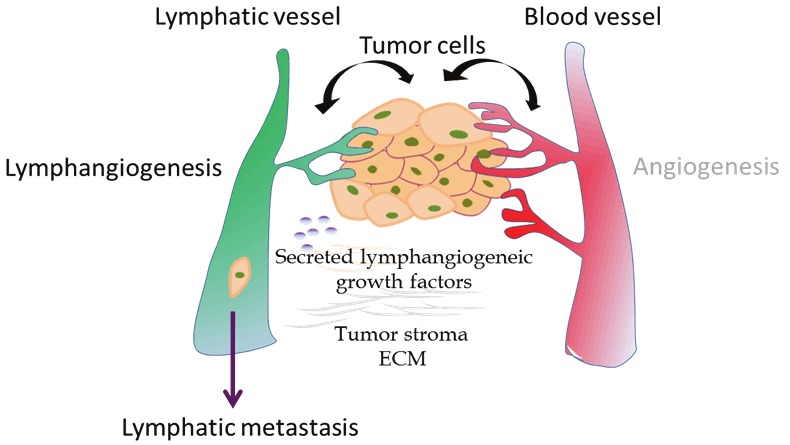
Tumor cell dissemination from the primary tumor site to distant organs is one of the characteristic properties of malignant tumors and represents a crucial step in the progression of disease. Although the pattern of spread may vary in different types of carcinomas, dissemination via the lymphatic system represents a common event in metastasis. The extent of lymph node metastasis is one of the major determinants for the prognosis of patients with gastrointestinal carcinomas and guides the therapeutically management. During the last decades, significant attention has been given to the molecular mechanisms that control lymphatic metastasis. The process of lymphangiogenesis has come into the focus. Lymphangiogenesis, the formation of newly lymphatics, comprises a series of complex cellular events and is controlled by a balance between pro- and anti-lymphangiogenic signals. This article will briefly describe the lymphatic system and then provide an overview of the molecular players involved in tumor lymphangiogenesis.
Keywords: Lymphangiogenesis; gastrointestinal tumors; lymphangiogenic factors; lymphatic metastasis; molecular mechanisms.
Figures


References
-
- Leong SP, Cady B, Jablons DM, Garcia-Aguilar J, Reintgen D, Jakub J, Pendas S, Duhaime L, Cassell R, Gardner M, Giuliano R, Archie V, Calvin D, Mensha L, Shivers S, Cox C, Werner JA, Kitagawa Y, Kitajima M. Clinical patterns of metastasis. Cancer Metastasis Rev. 2006;25:221. - PubMed
-
- Alitalo K, Tammela T, Petrova TV. Lymphangiogenesis in development and human disease. Nature. 2005;438:946. - PubMed
-
- Kato S, Shimoda H, Ji RC, Miura M. Lymphangiogenesis and expression of specific molecules as lymphatic endothelial cell markers. Anat Sci Int. 2006;81:71. - PubMed
-
- Yamanashi T, Nakanishi Y, Fujii G, Akishima-Fukasawa Y, Moriya Y, Kanai Y, Watanabe M, Hirohashi S. Podoplanin expression identified in stromal fibroblasts as a favorable prognostic marker in patients with colorectal carcinoma. Oncology. 2009;77:53. - PubMed
Publication types
MeSH terms
Substances
LinkOut - more resources
Full Text Sources