Management of Persistent Cerebrospinal Fluid Leakage Following Thoraco-lumbar Surgery
- PMID: 22977694
- PMCID: PMC3429605
- DOI: 10.4184/asj.2012.6.3.157
Management of Persistent Cerebrospinal Fluid Leakage Following Thoraco-lumbar Surgery
Abstract
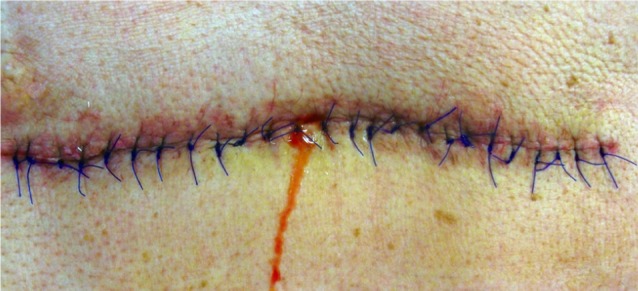
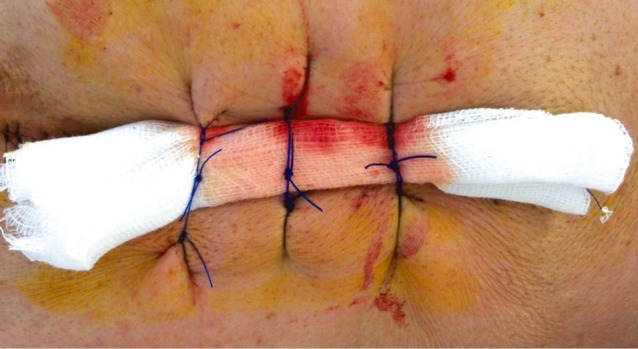
Study design: This was a retrospective study of patients who had developed a dural tear after thoracic and lumbar spine surgery that was not recognized during the surgery, and was treated either by lumbar drainage or over-sewing of the wounds.
Purpose: To revisit the treatment strategies in postoperative dural leaks and present our experience with over-sewing of the wound and lumbar drainage.
Overview of literature: Unintended durotomy is a frequent complication of spinal surgery. Management of subsequent cerebrospinal fluid leakage remains controversial. There is no distinct treatment guideline according to the etiology in the current literature.
Methods: The records of 368 consecutive patients who underwent thoracic and/or lumbar spine surgery from 2006 throug h 2010 were retrospectively reviewed. Seven cerebrospinal fluid fistulas and five pseudomeningoceles were noted in 12 (3.2%) procedures. Cerebrospinal fluid diversion by lumbar drainage in five pseudomeningoceles and over-sewing of wounds in seven cerebrospinal fluid fistulas employed in 12 patients. Clinical grading was evaluated by Wang.
Results: Of the 12 patients who had a dural tear, 5 were managed successfully with lumbar drainage, and 7 with oversewing of the wound. The clinical outcomes were excellent in 9 patients, good in 2, and poor in 1. Complications such as neurological deficits, or superficial or deep wound infections did not develop. A recurrence of the fistula or pseudomeningocele after the treatment was not seen in any of our patients.
Conclusions: Pseudomeningoceles respond well to lumbar drainage, whereas over-sewing of the wound is an alternative treatment option in cerebrospinal fluid fistulas without neurological compromise.
Keywords: Cerebrospinal; Drainage; Primary repair; Spinal; Wound Healing.
Figures
References
-
- Saxler G, Krämer J, Barden B, Kurt A, Pförtner J, Bernsmann K. The long-term clinical sequelae of incidental durotomy in lumbar disc surgery. Spine (Phila Pa 1976) 2005;30:2298–2302. - PubMed
-
- Black P. Cerebrospinal fluid leaks following spinal surgery: use of fat grafts for prevention and repair. Technical note. J Neurosurg. 2002;96:250–252. - PubMed
-
- Bosacco SJ, Gardner MJ, Guille JT. Evaluation and treatment of dural tears in lumbar spine surgery: a review. Clin Orthop Relat Res. 2001;(389):238–247. - PubMed
-
- Cammisa FP, Jr, Girardi FP, Sangani PK, Parvataneni HK, Cadag S, Sandhu HS. Incidental durotomy in spine surgery. Spine (Phila Pa 1976) 2000;25:2663–2667. - PubMed
-
- Wang JC, Bohlman HH, Riew KD. Dural tears secondary to operations on the lumbar spine. Management and results after a two-year-minimum follow-up of eighty-eight patients. J Bone Joint Surg Am. 1998;80:1728–1732. - PubMed
LinkOut - more resources
Full Text Sources