Validity and reliability of an estimated daily intake scale for fat
- PMID: 22980149
- PMCID: PMC4777051
- DOI: 10.5539/gjhs.v4n2p36
Validity and reliability of an estimated daily intake scale for fat
Abstract
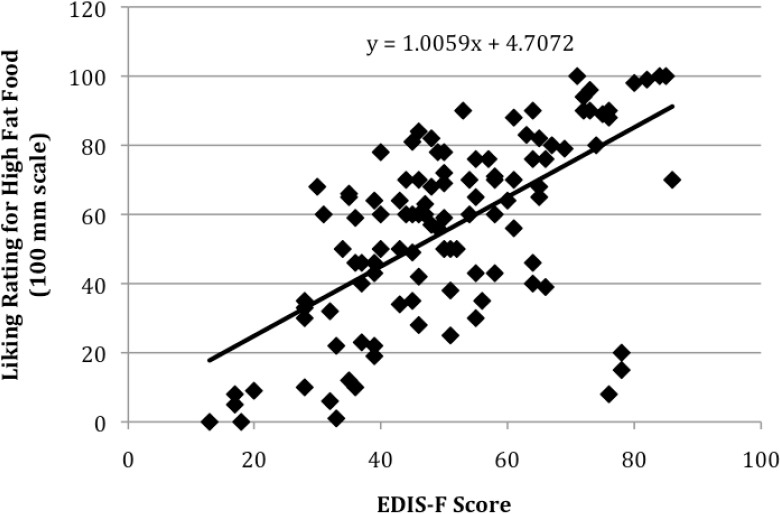
The reliability and validity of an Estimated Daily Intake Scale for Fat (EDIS-F) used to measure daily intake of fat in a participant's diet was tested. A Cronbach's alpha was used to determine the reliability of the EDIS-F. To determine the validity of this scale, scores on this scale were correlated with known factors related to daily intake of fat (e.g., ratings of liking for a high fat food and the body mass index score of participants). A 13-item EDIS-F was shown to be reliable, and scores on the EDIS-F significantly correlated with ratings of liking for a high fat cream cheese cracker and BMI, but not with gender, consistent with the assertion that this scale measures daily intake of fat. Implications for using this scale are discussed.
Figures
References
-
- Birch L. L, Marlin D. W. I don’t like it;I’ve never tried it: Effects of exposure on two-year-old children’s food preferences. Appetite. 1982;3(4):353–360. - PubMed
-
- Brunstrom J. M, Downes C. R, Higgs S. Effects of dietary restraint on flavour-flavour learning. Appetite. 2001;37:197–206. http://dx.doi.org/10.1006/appe.2001.0432 . - PubMed
-
- Capaldi E. D, Privitera G. J. Flavor-nutrient learning independent of flavor-taste learning with college students. Appetite. 2007;49(3):712–715. http://dx.doi.org/10.1016/j.appet.2007.08.001 . - PubMed
-
- Capaldi E. D, Owens J, Palmer K. A. Effects of food deprivation on learning and expression of flavor preferences conditioned by saccharin or sucrose. Animal Learning & Behavior. 1994;22:173–180.
-
- Drewnowski A, Hann C. Food preferences and reported frequencies of food consumption as predictors of current diet in young women. American Journal of Clinical Nutrition. 1999;70(1):28–36. - PubMed
Publication types
MeSH terms
Substances
LinkOut - more resources
Full Text Sources
Medical