Traditional arabic & islamic medicine: a conceptual model for clinicians and researchers
- PMID: 22980243
- PMCID: PMC4776947
- DOI: 10.5539/gjhs.v4n3p164
Traditional arabic & islamic medicine: a conceptual model for clinicians and researchers
Abstract
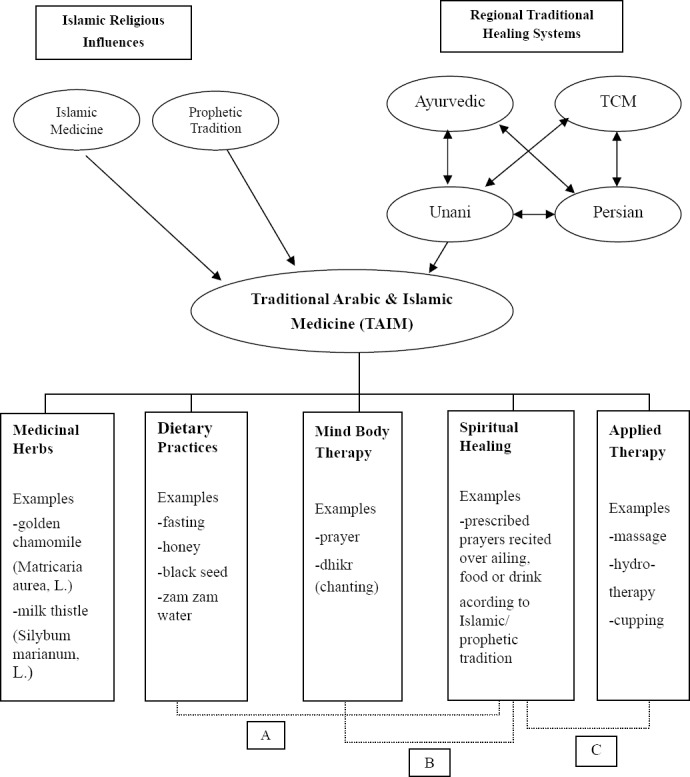
Eighty percent of the population in the developing world relies on traditional medicine, and 70-80% of the population in developed countries utilized complementary therapies. Though a vibrant healing tradition pervades modern life in the Arab and Muslim world, no clear definition or model exists to organize it's multiple and intertwined elements . We define Traditional Arabic and Islamic Medicine (TAIM) as a system of healing practiced since antiquity in the Arab world within the context of religious influences of Islam and comprised of medicinal herbs, dietary practices, mind-body therapy, spiritual healing and applied therapy whereby many of these elements reflect an enduring interconnectivity between Islamic medical and prophetic influences as well as regional healing practices emerging from specific geographical and cultural origins. Our definition and conceptual model represents a novel addition to the literature on Arab and Muslim health practices, and presents an opportunity to address a global health concern.
Figures
References
-
- Abel-Motey T. Pilgrimage to Mecca. Digest of Middle East Studies. 1997;6(3):32–35. http://dx.doi.org/10.1111/j.1949-3606.1997.tb00739.x .
-
- Akhtar J, Siddiqui M.K. Utility of cupping therapy Hijamat in Unani medicine. Indian Journal of Traditional Knowledge. 2006;7(4):572–574.
-
- Al-Enzi Y, Khan A. The sacred Zamzam waters over the past half century. Water. 2007;21(9.2):38–40.
-
- Al-Ghamdi M. S. The anti-inflammatory, analgesic and antipyretic activity of Nigella sativa. Journal of Ethnopharmacology. 2001;76(1):45–48. http://dx.doi.org/10.1016/S0378-8741(01)00216-1 . - PubMed
-
- Al-Krenawi A, Graham J. R. Culturally sensitive social work practice with Arab clients in mental health settings. Health and Social Work. 2000;25(1):9–22. http://dx.doi.org/10.1093/hsw/25.1.9 . - PubMed
MeSH terms
LinkOut - more resources
Full Text Sources