


Comment
doi: 10.1016/j.chom.2012.08.006.
Gut microbes make for fattier fish
Affiliations
- PMID: 22980321
- PMCID: PMC3888188
- DOI: 10.1016/j.chom.2012.08.006
Item in Clipboard
Comment
Gut microbes make for fattier fish
Cell Host Microbe.
.
Abstract
The mammalian gut microbiota influences both sides of the energy balance equation, salvaging energy from undigested nutrients and directing the host to accumulate adipose tissue. Semova et al. (2012) use zebrafish to demonstrate that the gut microbiota also promotes dietary lipid absorption, emphasizing the many host-microbial interactions contributing to adiposity.
Copyright © 2012 Elsevier Inc. All rights reserved.
Figures
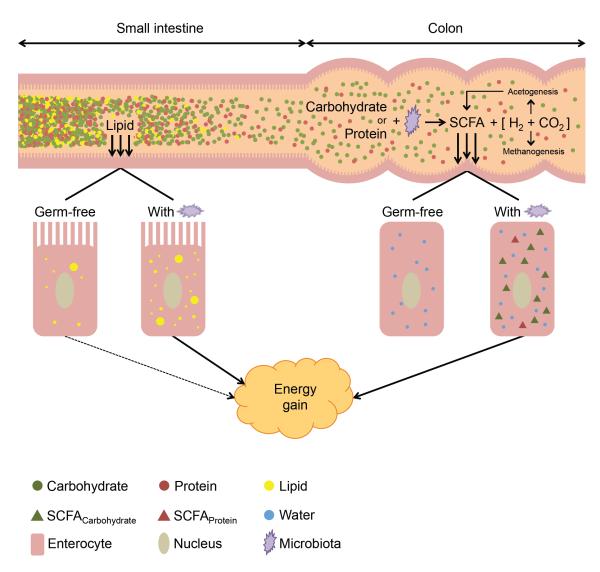
In this issue, Semova et al. (2012) show that the gut microbiota stimulates lipid absorption in the zebrafish proximal intestine. Compared with germ-free animals fed the same diet, enterocytes of animals conventionalized with a gut microbiota accumulated larger and more numerous lipid droplets. Increased lipid accumulation was also observed in the liver of conventionalized animals, suggesting greater uptake of lipids into systemic circulation. Microbial processes in the distal gut (colon) are also known to contribute to host energy gain. Carbohydrates and protein that resist digestion in the small intestine are fermented by the colonic microbiota, producing short-chain fatty acids (SCFA) that can be assimilated and used as energy by the host (Martens et al., 2011). The H2 and CO2 released during fermentation are consumed as substrates by some microbes in acetogenesis (Rey et al., 2010), which produces a secondary source of SCFA, as well as methanogenesis (Samuel and Gordon, 2006). Consumption of H2 and CO2 reaction products helps to drive the continued production of SCFA.
Comment on
-
Microbiota regulate intestinal absorption and metabolism of fatty acids in the zebrafish.Cell Host Microbe. 2012 Sep 13;12(3):277-88. doi: 10.1016/j.chom.2012.08.003. Cell Host Microbe. 2012. PMID: 22980325 Free PMC article.
References
-
- Micha R, Mozaffarian D. Trans fatty acids: effects on metabolic syndrome, heart disease and diabetes. Nature Reviews Endocrinology. 2009;5:335–344. - PubMed
