


A neuron-specific role for autophagy in antiviral defense against herpes simplex virus
- PMID: 22980330
- PMCID: PMC3454454
- DOI: 10.1016/j.chom.2012.07.013
A neuron-specific role for autophagy in antiviral defense against herpes simplex virus
Abstract
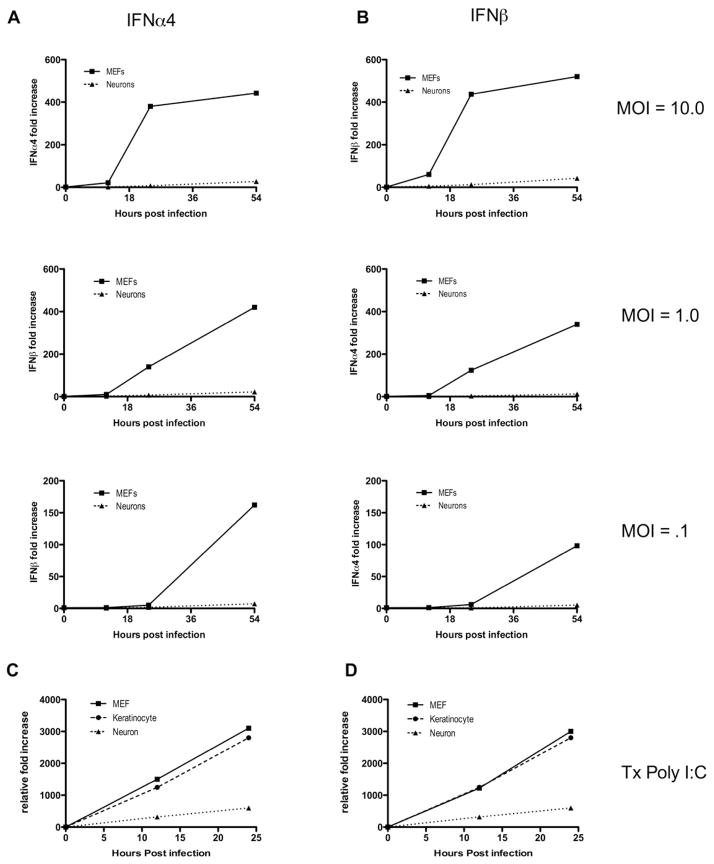
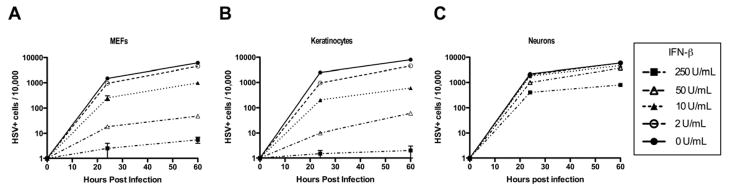
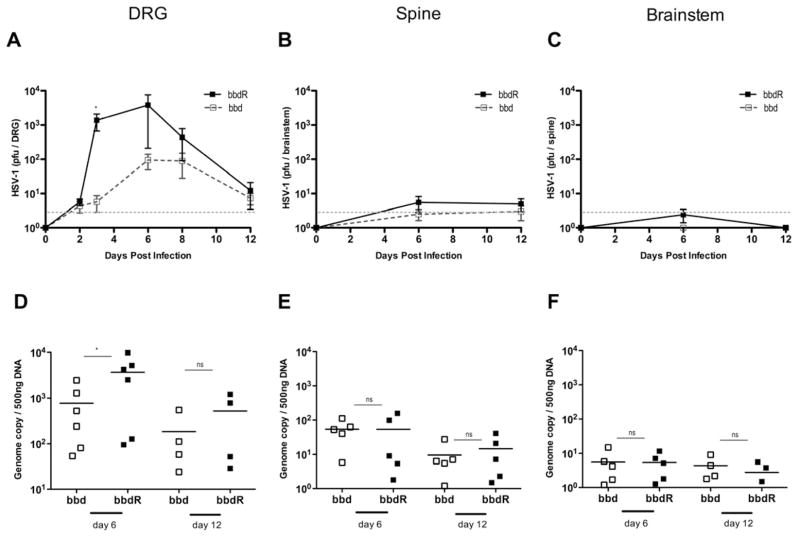
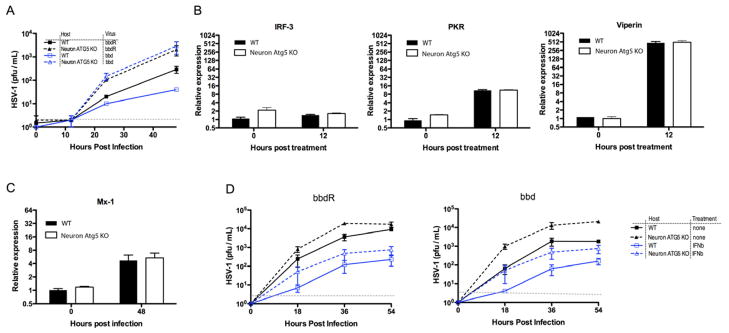
Type I interferons (IFNs) are considered to be the universal mechanism by which viral infections are controlled. However, many IFN-stimulated genes (ISGs) rely on antiviral pathways that are toxic to host cells, which may be detrimental in nonrenewable cell types, such as neurons. We show that dorsal root ganglionic (DRG) neurons produced little type I IFNs in response to infection with a neurotropic virus, herpes simplex type 1 (HSV-1). Further, type I IFN treatment failed to completely block HSV-1 replication or to induce IFN-primed cell death in neurons. We found that DRG neurons required autophagy to limit HSV-1 replication both in vivo and in vitro. In contrast, mucosal epithelial cells and other mitotic cells responded robustly to type I IFNs and did not require autophagy to control viral replication. These findings reveal a fundamental difference in the innate antiviral strategies employed by neurons and mitotic cells to control HSV-1 infection.
Copyright © 2012 Elsevier Inc. All rights reserved.
Conflict of interest statement
Authors declare no conflicts of interest.
Figures


References
-
- Barber GN. Host defense, viruses and apoptosis. Cell Death and Differentiation. 2001;8:113. - PubMed
-
- Brot MD, Rall GF, Oldstone MBA, Koob GF, Gold LH. Deficits in discriminated learning remain despite clearance of long-term persistent viral infection in mice. Journal of NeuroVirology. 1997;3:265. - PubMed
Publication types
MeSH terms
Substances
Grants and funding
LinkOut - more resources
Full Text Sources
