


Association of epicardial fat, hypertension, subclinical coronary artery disease, and metabolic syndrome with left ventricular diastolic dysfunction
- PMID: 22980968
- PMCID: PMC4346027
- DOI: 10.1016/j.amjcard.2012.07.045
Association of epicardial fat, hypertension, subclinical coronary artery disease, and metabolic syndrome with left ventricular diastolic dysfunction
Abstract
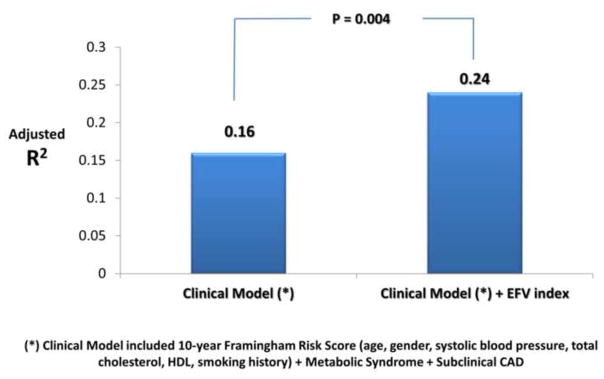
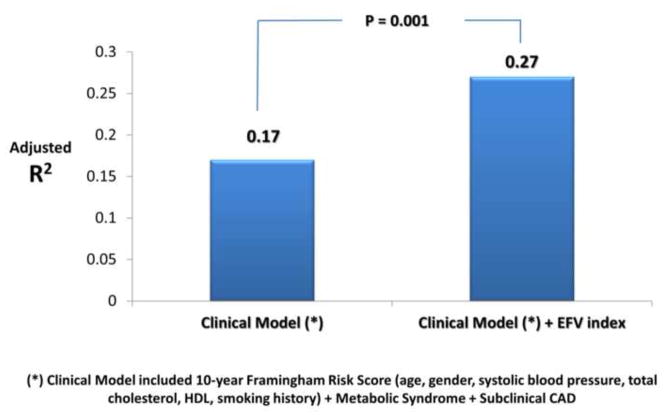
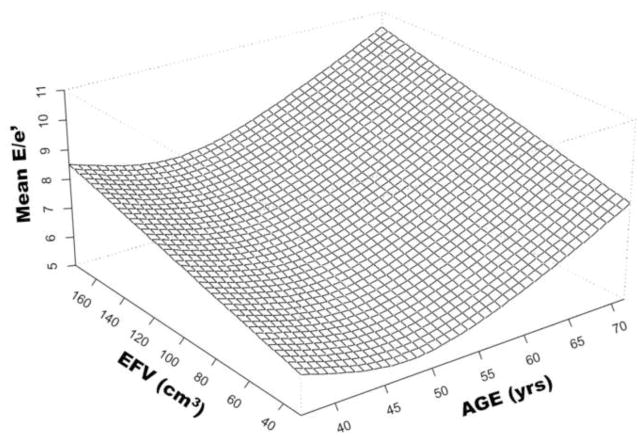
Epicardial fat is a metabolically active fat depot that is strongly associated with obesity, metabolic syndrome, and coronary artery disease (CAD). The relation of epicardial fat to diastolic function is unknown. We sought to (1) understand the relation of epicardial fat volume (EFV) to diastolic function and (2) understand the role of EFV in relation to potential risk factors (hypertension, subclinical CAD, and metabolic syndrome) of diastolic dysfunction in apparently healthy subjects with preserved systolic function and no history of CAD. We studied 110 consecutive subjects (65% men, 55 ± 13 years old, mean body mass index 28 ± 5 kg/m(2)) who underwent cardiac computed tomography and transthoracic echocardiography within 6 months as part of a self-referred health screening program. Exclusion criteria included history of CAD, significant valvular disease, systolic dysfunction (left ventricular ejection fraction <50%). Diastolic function was defined according to American Society of Echocardiography guidelines. EFV was measured using validated cardiac computed tomographic software by 2 independent cardiologists blinded to clinical and echocardiographic data. Hypertension and metabolic syndrome were present in 60% and 45%, respectively. Subclinical CAD was identified in 20% of the cohort. Diastolic dysfunction was present in 45 patients. EFV was an independent predictor of diastolic dysfunction, mean peak early diastolic mitral annular velocity, and ratio of early diastolic filling to peak early diastolic mitral annular velocity (p = 0.01, <0.0001, and 0.001, respectively) with incremental contribution to other clinical factors. In conclusion, EFV is an independent predictor of impaired diastolic function in apparently healthy overweight patients even after accounting for associated co-morbidities such as metabolic syndrome, hypertension, and subclinical CAD.
Copyright © 2012 Elsevier Inc. All rights reserved.
Conflict of interest statement
DISCLOSURES: None of the authors has any conflict of interest related to the content of this paper.
Figures
References
-
- Wong CY, O’Moore-Sullivan T, Leano R, Byrne N, Beller E, Marwick TH. Alterations of left ventricular myocardial characteristics associated with obesity. Circulation. 2004;110:3081–3087. - PubMed
-
- Kenchaiah S, Evans JC, Levy D, Wilson PW, Benjamin EJ, Larson MG, Kannel WB, Vasan RS. Obesity and the risk of heart failure. N Engl J Med. 2002;347:305–313. - PubMed
-
- Rosito GA, Massaro JM, Hoffmann U, Ruberg FL, Mahabadi AA, Vasan RS, O’Donnell CJ, Fox CS. Pericardial fat, visceral abdominal fat, cardiovascular disease risk factors, and vascular calcification in a community-based sample: the Framingham Heart Study. Circulation. 2008;117:605–613. - PubMed
MeSH terms
Grants and funding
LinkOut - more resources
Full Text Sources
Medical
Miscellaneous
