


Loss of 5-hydroxymethylcytosine is an epigenetic hallmark of melanoma
- PMID: 22980977
- PMCID: PMC3770275
- DOI: 10.1016/j.cell.2012.07.033
Loss of 5-hydroxymethylcytosine is an epigenetic hallmark of melanoma
Abstract
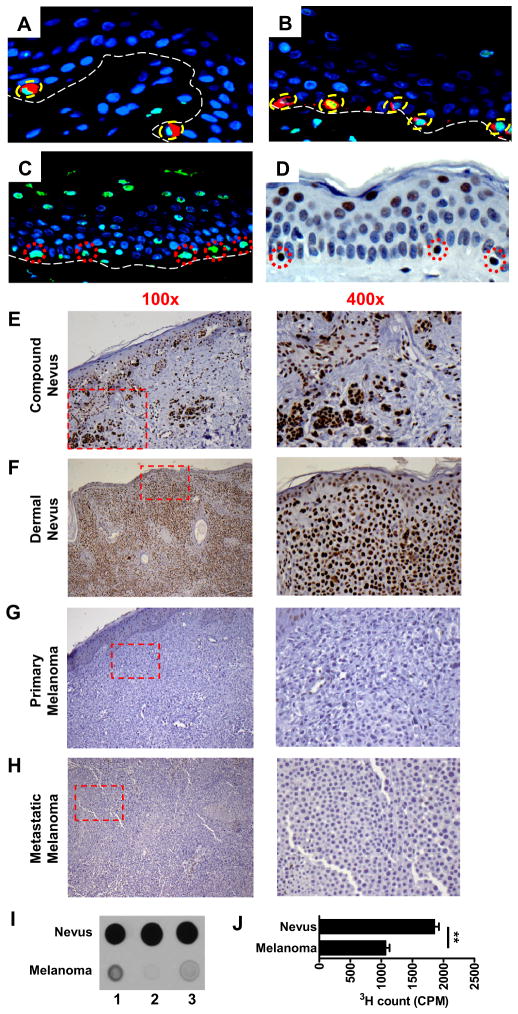
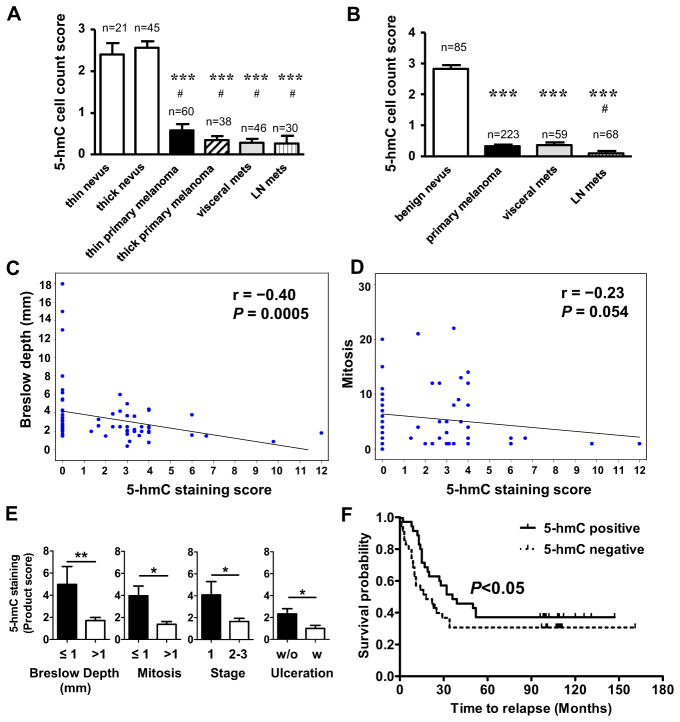
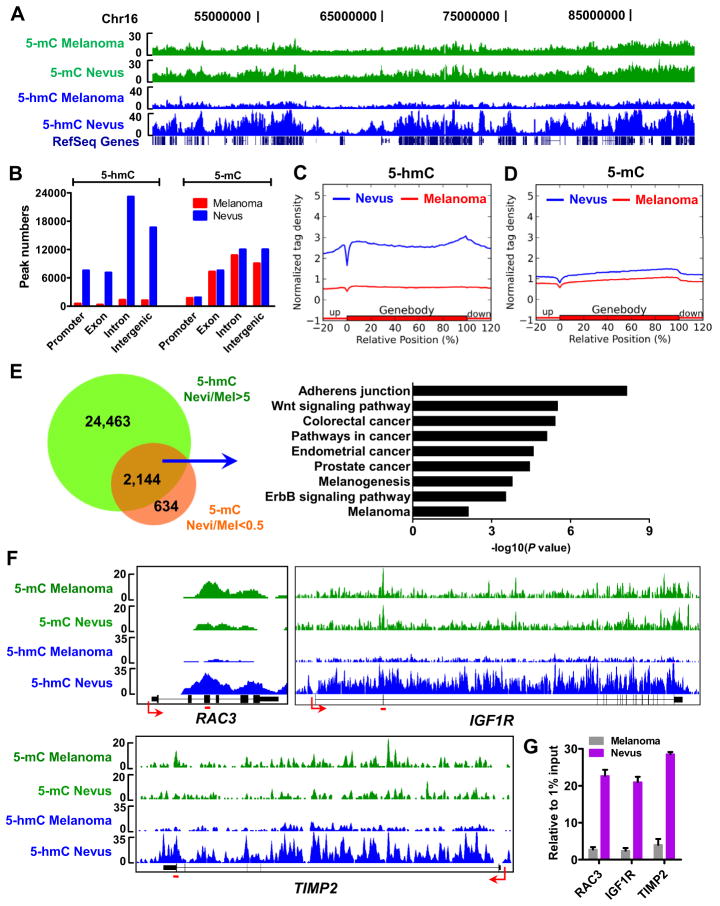
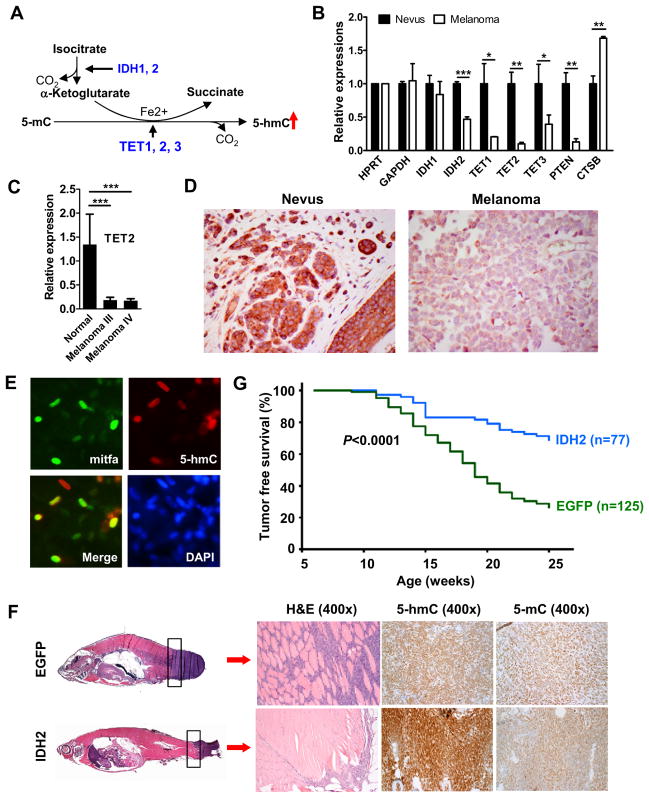
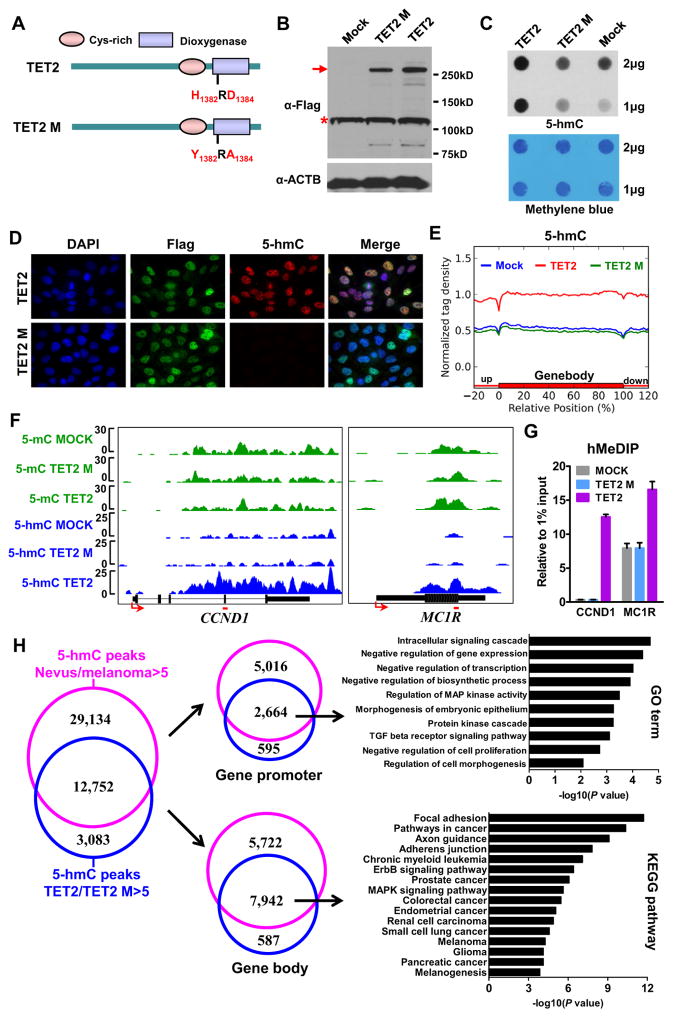
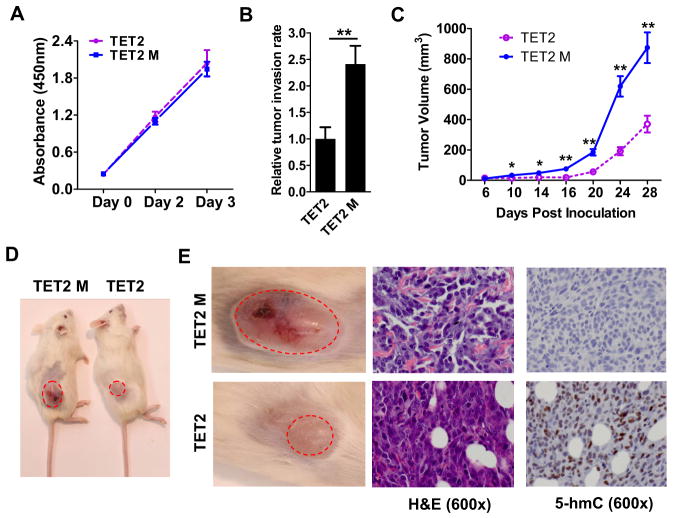
DNA methylation at the 5 position of cytosine (5-mC) is a key epigenetic mark that is critical for various biological and pathological processes. 5-mC can be converted to 5-hydroxymethylcytosine (5-hmC) by the ten-eleven translocation (TET) family of DNA hydroxylases. Here, we report that "loss of 5-hmC" is an epigenetic hallmark of melanoma, with diagnostic and prognostic implications. Genome-wide mapping of 5-hmC reveals loss of the 5-hmC landscape in the melanoma epigenome. We show that downregulation of isocitrate dehydrogenase 2 (IDH2) and TET family enzymes is likely one of the mechanisms underlying 5-hmC loss in melanoma. Rebuilding the 5-hmC landscape in melanoma cells by reintroducing active TET2 or IDH2 suppresses melanoma growth and increases tumor-free survival in animal models. Thus, our study reveals a critical function of 5-hmC in melanoma development and directly links the IDH and TET activity-dependent epigenetic pathway to 5-hmC-mediated suppression of melanoma progression, suggesting a new strategy for epigenetic cancer therapy.
Copyright © 2012 Elsevier Inc. All rights reserved.
Figures
Comment in
-
Epigenetics: Melanoma insights written in the DNA.Nat Rev Cancer. 2012 Nov;12(11):738-9. doi: 10.1038/nrc3382. Epub 2012 Oct 5. Nat Rev Cancer. 2012. PMID: 23037450 No abstract available.
References
-
- Dang L, Jin S, Su SM. IDH mutations in glioma and acute myeloid leukemia. Trends Mol Med. 2010;16:387–397. - PubMed
Publication types
MeSH terms
Substances
Associated data
- Actions
Grants and funding
LinkOut - more resources
Full Text Sources
Other Literature Sources
Medical
Molecular Biology Databases
Miscellaneous
