


Prevalence and predictors of vitamin D deficiency in healthy adults
- PMID: 22982792
- PMCID: PMC3755751
- DOI: 10.4158/EP12072.OR
Prevalence and predictors of vitamin D deficiency in healthy adults
Abstract
Objective: Vitamin D deficiency is highly prevalent in high-risk patient populations, but the prevalence among otherwise healthy adults is less well-defined. The goal of this study was to determine the prevalence and predictors of low 25-hydroxyvitamin D [25(OH)D] levels in healthy younger adults.
Methods: This was a cross-sectional study of 634 healthy volunteers aged 18-50 years performed between January, 2006 and May, 2008. We measured serum 25(OH)D and parathyroid hormone and recorded demographic variables including age, sex, race, and use of multivitamin supplements.
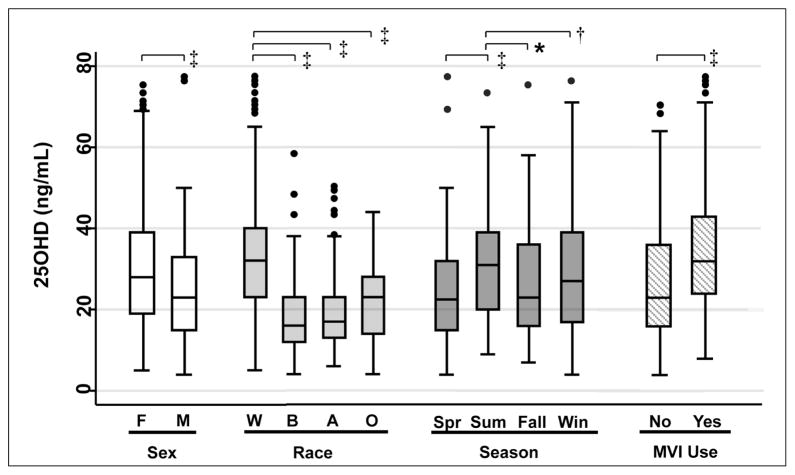
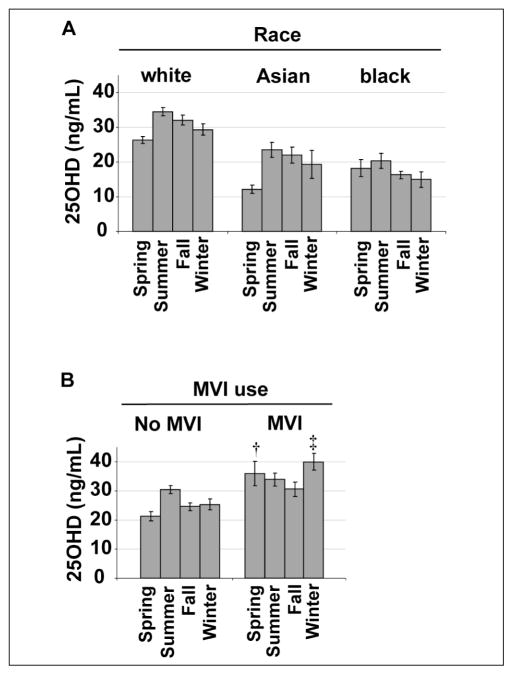
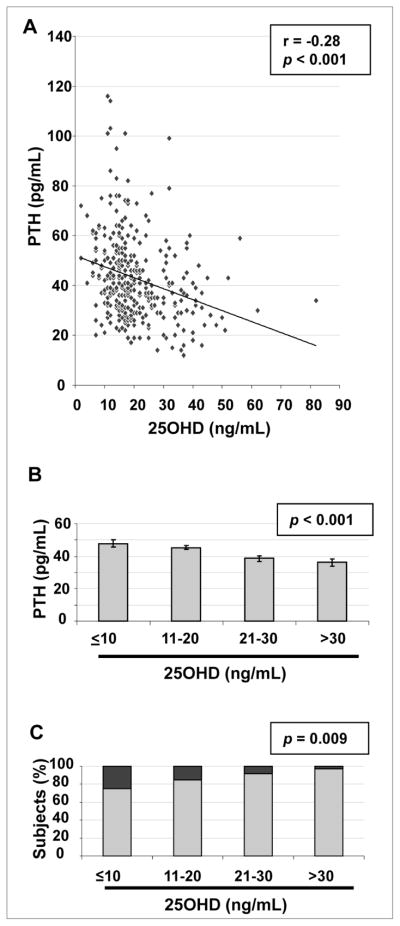
Results: Thirty-nine percent of subjects had 25(OH)D ≤ 20 ng/mL and 64% had 25(OH)D ≤ 30 ng/mL. Predictors of lower 25(OH)D levels included male sex, black or Asian race, and lack of multivitamin use (P<0.001 for each predictor). Seasonal variation in 25(OH)D levels was present in the overall cohort but was not observed in multivitamin users. Lower 25(OH)D levels were associated with increased risk of elevated parathyroid hormone. Regression models predicted 25(OH)D levels ≤ 20 or ≤ 30 ng/mL with areas under the receiver operating characteristic curves of 0.76 and 0.80, respectively.
Conclusion: Low 25(OH)D levels are prevalent in healthy adults and may confer risk of skeletal disease. Black and Asian adults are at increased risk of deficiency and multivitamin use appears partially protective. Our models predicting low 25(OH)D levels may guide decision-making regarding whom to screen for vitamin D deficiency.
Conflict of interest statement
Figures
References
-
- Kumar R. Vitamin D and calcium transport. Kidney Int. 1991;40:1177–1189. - PubMed
-
- Bhan A, Rao AD, Rao DS. Osteomalacia as a result of vitamin D deficiency. Endocrinol Metab Clin North Am. 2010;39:321–331. - PubMed
-
- Holick MF. Vitamin D deficiency. N Engl J Med. 2007;357:266–281. - PubMed
-
- Dawson-Hughes B, Harris SS, Krall EA, Dallal GE. Effect of calcium and vitamin D supplementation on bone density in men and women 65 years of age or older. N Engl J Med. 1997;337:670–676. - PubMed
Publication types
MeSH terms
Substances
Grants and funding
LinkOut - more resources
Full Text Sources
Medical
