


Tug of war in the haematopoietic stem cell niche: do myeloma plasma cells compete for the HSC niche?
- PMID: 22983434
- PMCID: PMC3461708
- DOI: 10.1038/bcj.2012.38
Tug of war in the haematopoietic stem cell niche: do myeloma plasma cells compete for the HSC niche?
Abstract
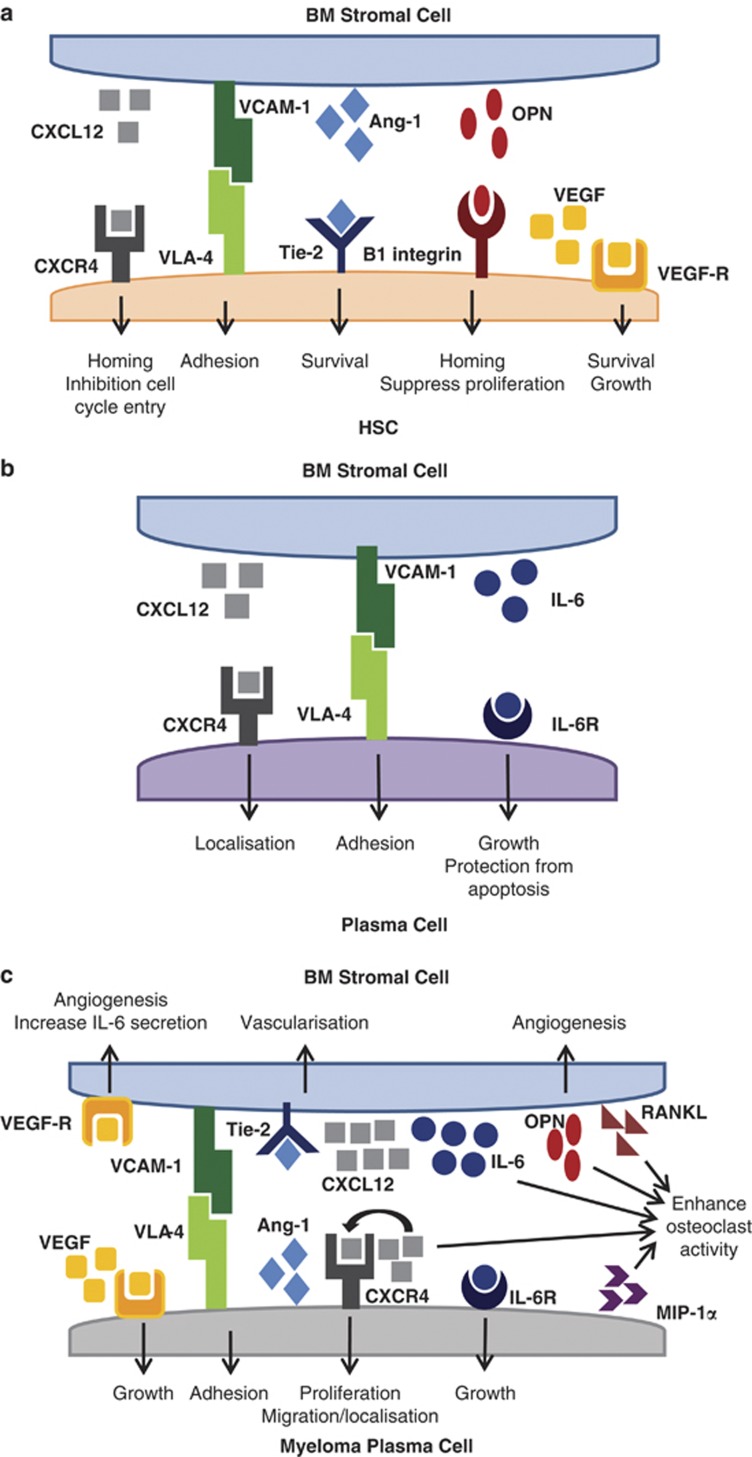
In the adult mammal, normal haematopoiesis occurs predominantly in the bone marrow, where primitive haematopoietic stem cells (HSC) and their progeny reside in specialised microenvironments. The bone marrow microenvironment contains specific anatomical areas (termed niches) that are highly specialised for the development of certain blood cell types, for example HSCs. The HSC niche provides important cell-cell interactions and signalling molecules that regulate HSC self-renewal and differentiation processes. These same signals and interactions are also important in the progression of haematological malignancies, such as multiple myeloma (MM). This review provides an overview of the bone marrow microenvironment and its involvement in normal, physiological HSC maintenance and plasma cell growth throughout MM disease progression.
Figures
References
-
- Kopp HG, Avecilla ST, Hooper AT, Rafii S. The bone marrow vascular niche: home of HSC differentiation and mobilization. Physiology. 2005;20:349–356. - PubMed
-
- Krause DS. Regulation of hematopoietic stem cell fate. Oncogene. 2002;21:3262–3269. - PubMed
-
- Kuehl WM, Bergsagel PL. Multiple myeloma: evolving genetic events and host interactions. Nat Rev Cancer. 2002;2:175–187. - PubMed
-
- Purton LE, Scadden DT. The Hematopoietic Stem Cell Niche. Stem Book: Cambridge (MA); 2008. - PubMed
-
- Schofield R. The relationship between the spleen colony-forming cell and the haemopoietic stem cell. Blood Cells. 1978;4:7–25. - PubMed
LinkOut - more resources
Full Text Sources
