The relationship between the severity of hemolysis, clinical manifestations and risk of death in 415 patients with sickle cell anemia in the US and Europe
- PMID: 22983573
- PMCID: PMC3659937
- DOI: 10.3324/haematol.2012.068965
The relationship between the severity of hemolysis, clinical manifestations and risk of death in 415 patients with sickle cell anemia in the US and Europe
Abstract
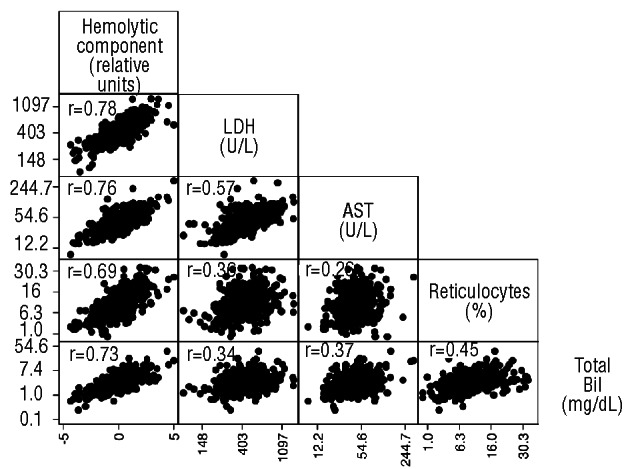
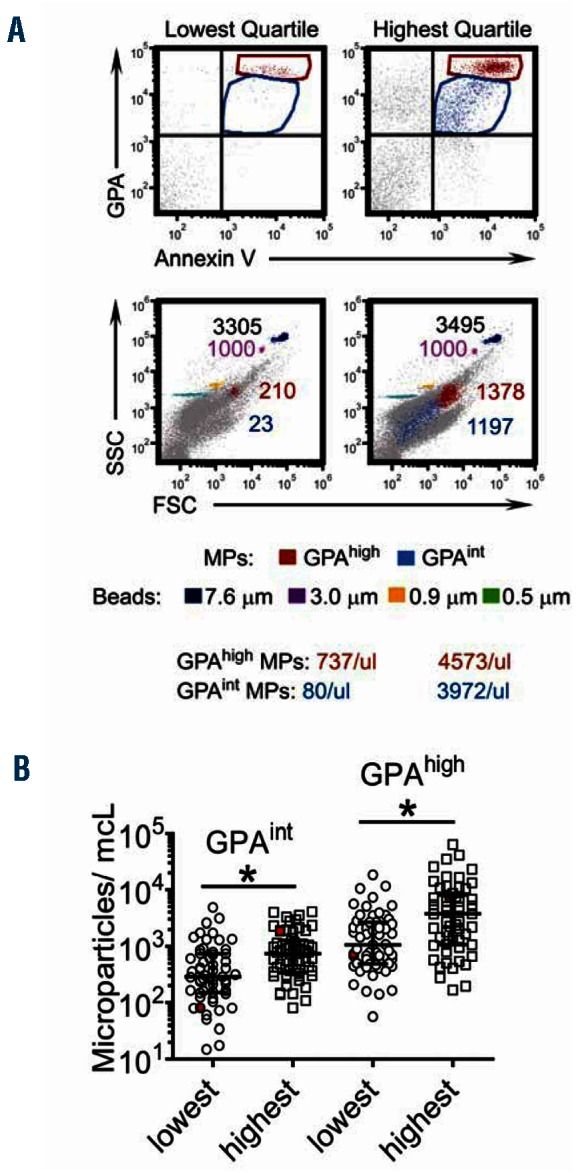
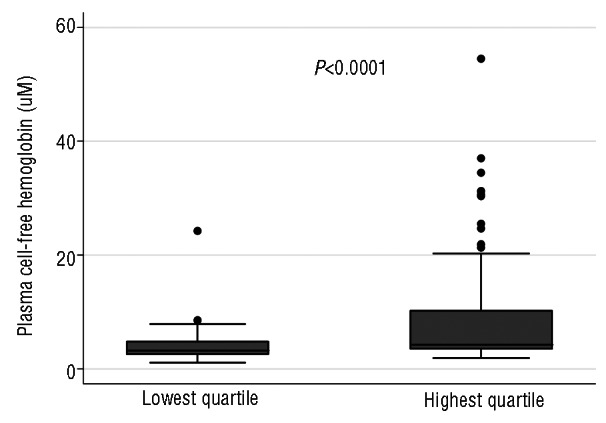
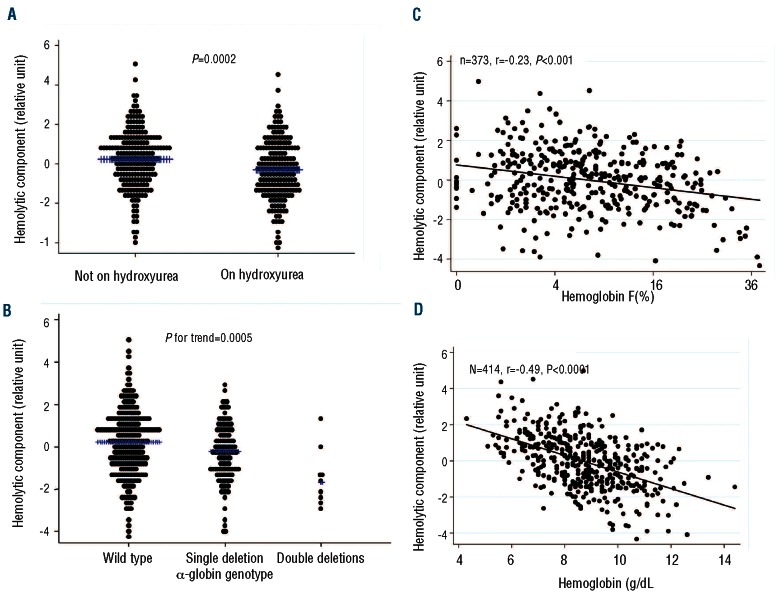
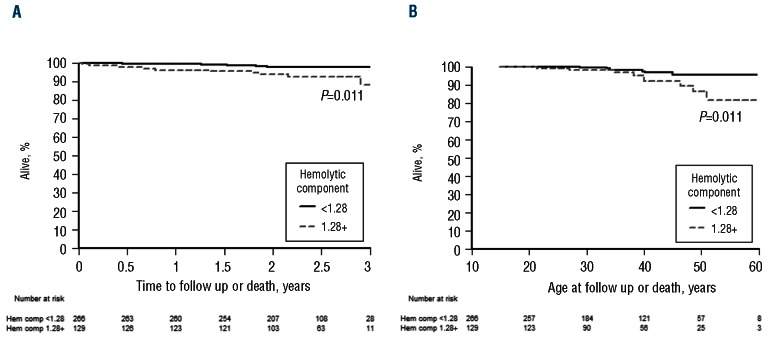
The intensity of hemolytic anemia has been proposed as an independent risk factor for the development of certain clinical complications of sickle cell disease, such as pulmonary hypertension, hypoxemia and cutaneous leg ulceration. A composite variable derived from several individual markers of hemolysis could facilitate studies of the underlying mechanisms of hemolysis. In this study, we assessed the association of hemolysis with outcomes in sickle cell anemia. A hemolytic component was calculated by principal component analysis from reticulocyte count, serum lactate dehydrogenase, aspartate aminotransferase and total bilirubin concentrations in 415 hemoglobin SS patients. Association of this component with direct markers of hemolysis and clinical outcomes was assessed. As primary validation, both plasma red blood cell microparticles and cell-free hemoglobin concentration were higher in the highest hemolytic component quartile compared to the lowest quartile (P≤0.0001 for both analyses). The hemolytic component was lower with hydroxyurea therapy, higher hemoglobin F, and alpha-thalassemia (P≤0.0005); it was higher with higher systemic pulse pressure, lower oxygen saturation, and greater values for tricuspid regurgitation velocity, left ventricular diastolic dimension and left ventricular mass (all P<0.0001). Two-year follow-up analysis showed that a high hemolytic component was associated with an increased risk of death (hazard ratio, HR 3.44; 95% confidence interval, CI: 1.2-9.5; P=0.02). The hemolytic component reflects direct markers of intravascular hemolysis in patients with sickle cell disease and allows for adjusted analysis of associations between hemolytic severity and clinical outcomes. These results confirm associations between hemolytic rate and pulse pressure, oxygen saturation, increases in Doppler-estimated pulmonary systolic pressures and mortality (Clinicaltrials.gov identifier: NCT00492531).
Figures
References
-
- Van Belle G, Fisher LD, Heagerty PJ, Lumley T. Biostatistics: A methodology for the health sciences 2ed Hoboken: John Wiley & Sons; 2004
Publication types
MeSH terms
Substances
Associated data
Grants and funding
- R01HL086884 03S1/HL/NHLBI NIH HHS/United States
- 1 R01 HL079912-02/HL/NHLBI NIH HHS/United States
- UL1 RR024131/RR/NCRR NIH HHS/United States
- R01 HL098032/HL/NHLBI NIH HHS/United States
- ImNIH/Intramural NIH HHS/United States
- M01 RR010284/RR/NCRR NIH HHS/United States
- R01HL098032/HL/NHLBI NIH HHS/United States
- HHSN268200617182C/PHS HHS/United States
- R01 HL096973/HL/NHLBI NIH HHS/United States
- R01HL096973/HL/NHLBI NIH HHS/United States
- 2MOI RR10284-10/RR/NCRR NIH HHS/United States
- 2 R25 HL003679-08/HL/NHLBI NIH HHS/United States
- R25 HL003679/HL/NHLBI NIH HHS/United States
- R01 HL079912/HL/NHLBI NIH HHS/United States
- R01HL086884/HL/NHLBI NIH HHS/United States
- R01 HL086884/HL/NHLBI NIH HHS/United States
LinkOut - more resources
Full Text Sources
Other Literature Sources
Medical
Molecular Biology Databases
Research Materials