


What will diabetes genomes tell us?
- PMID: 22983892
- PMCID: PMC3489976
- DOI: 10.1007/s11892-012-0321-4
What will diabetes genomes tell us?
Abstract
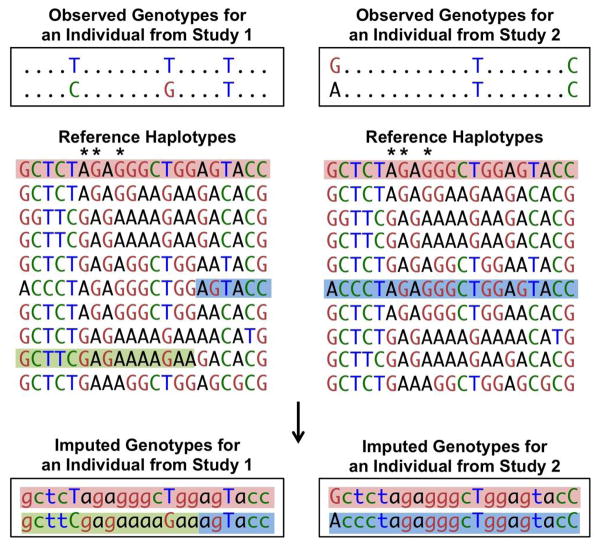
A new generation of genetic studies of diabetes is underway. Following from initial genome-wide association (GWA) studies, more recent approaches have used genotyping arrays of more densely spaced markers, imputation of ungenotyped variants based on improved reference haplotype panels, and sequencing of protein-coding exomes and whole genomes. Experimental and statistical advances make possible the identification of novel variants and loci contributing to trait variation and disease risk. Integration of sequence variants with functional analysis is critical to interpreting the consequences of identified variants. We briefly review these methods and technologies and describe how they will continue to expand our understanding of the genetic risk factors and underlying biology of diabetes.
Conflict of interest statement
No potential conflicts of interest relevant to this article were reported.
Figures
References
Publication types
MeSH terms
Grants and funding
- R01 DK093757/DK/NIDDK NIH HHS/United States
- R56 DK062370/DK/NIDDK NIH HHS/United States
- R01 HG000376/HG/NHGRI NIH HHS/United States
- R56 HG000376/HG/NHGRI NIH HHS/United States
- R01 DK062370/DK/NIDDK NIH HHS/United States
- DK62370/DK/NIDDK NIH HHS/United States
- RC2 DK088389/DK/NIDDK NIH HHS/United States
- U01 DK062370/DK/NIDDK NIH HHS/United States
- DK93757/DK/NIDDK NIH HHS/United States
- DK72193/DK/NIDDK NIH HHS/United States
- HG000376/HG/NHGRI NIH HHS/United States
- DK88389/DK/NIDDK NIH HHS/United States
- R01 DK072193/DK/NIDDK NIH HHS/United States
LinkOut - more resources
Full Text Sources
Medical
