


From Alzheimer's disease retrogenesis: a new care strategy for patients with advanced dementia
- PMID: 22984089
- PMCID: PMC10697349
- DOI: 10.1177/1533317512459794
From Alzheimer's disease retrogenesis: a new care strategy for patients with advanced dementia
Abstract
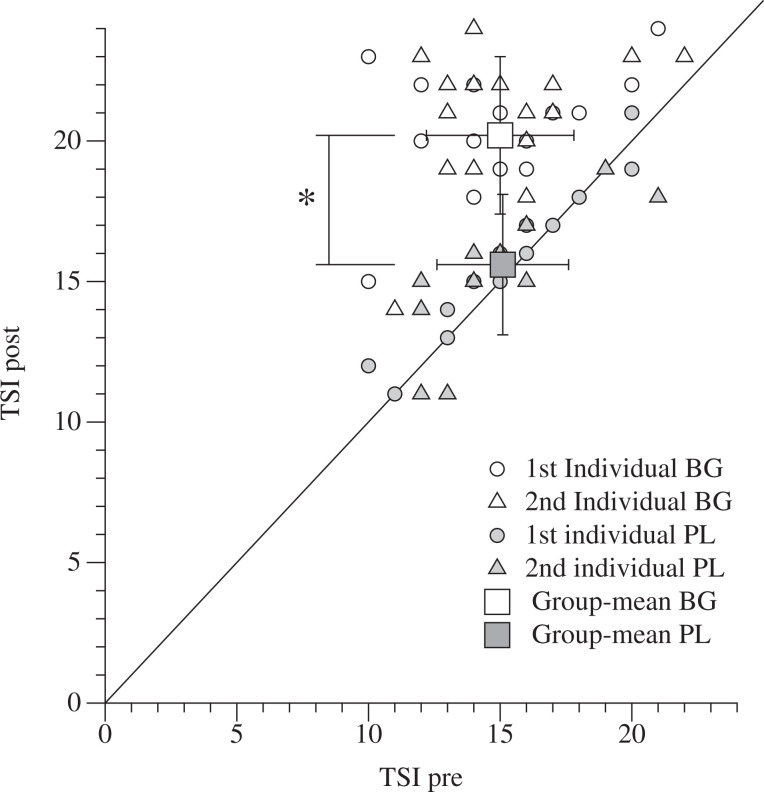
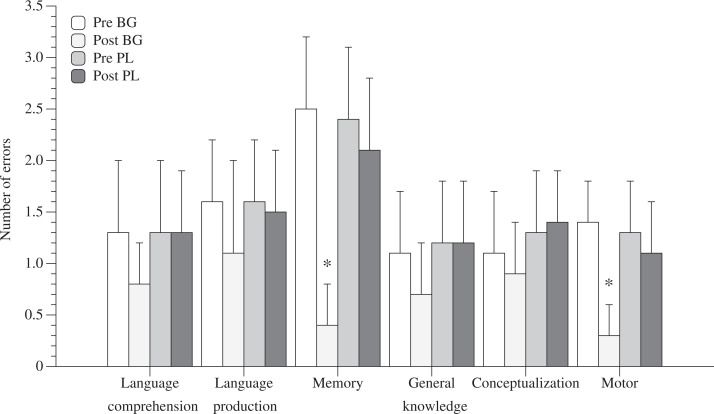
There is evidence that exercise may reduce the progressive cognitive dysfunction of Alzheimer's disease (AD). However, no previous investigation has studiethe acute effects of adapted games (AG) on patients with AD. The aim of this study was to examine the acute effects of AG on the agitated behavior (rating scale Agitated Behavior Rating Scale [ABRS]) and cognitive performance (Test for Severe Impairment [TSI]) of patients with advanced dementia. Twenty patients (83±4 yrs) participated in AG and placebo activities (PL). Agitated behavior and cognitive performance were compared before and after 30 minutes of AG and PL. In the hour after the AG, agitated behavior decreased by ∼4 ABRS points and cognitive performance increased by ∼5 TSI points. On the contrary, after PL we found no change in agitated behavior or cognitive performance. Our data indicate that AG can momentarily reduce agitated behavior and increase the cognitive performance in participants with AD.
Conflict of interest statement
The authors declared no potential conflicts of interest with respect to the research, authorship, and/or publication of this article.
Figures
References
-
- Reisberg B, Franssen EH, Souren LE, Auer S, Kenowsky S. Progression of Alzheimer's disease: variability and consistency: ontogenic models, their applicability and relevance. J Neural Transm Suppl. 1998;54:9–20. - PubMed
-
- Reisberg B, Ferris SH, de Leon MJ, Crook T. The Global Deterioration Scale for assessment of primary degenerative dementia. Am J Psychiatry. 1982;139(9):1136–1139. - PubMed
-
- Taft LB. Conceptual analysis of agitation in the confused elderly. Arch Psychiatr Nurs. 1989;3(2):102–107. - PubMed
Publication types
MeSH terms
LinkOut - more resources
Full Text Sources
Medical
