


A cross-cultural comparison of sleep duration between US And Australian adolescents: the effect of school start time, parent-set bedtimes, and extracurricular load
- PMID: 22984209
- PMCID: PMC4232364
- DOI: 10.1177/1090198112451266
A cross-cultural comparison of sleep duration between US And Australian adolescents: the effect of school start time, parent-set bedtimes, and extracurricular load
Abstract
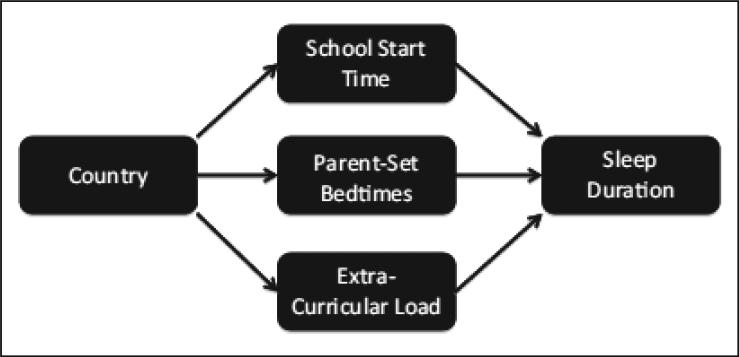
Study objective: To test whether sleep duration on school nights differs between adolescents in Australia and the United States and, if so, whether this difference is explained by cultural differences in school start time, parental involvement in setting bedtimes, and extracurricular commitments.
Participants: Three hundred eighty-five adolescents aged 13 to 18 years (M = 15.57, SD = 0.95; 60% male) from Australia and 302 adolescents aged 13 to 19 years (M = 16.03, SD = 1.19; 35% male) from the United States.
Methods: Adolescents completed the School Sleep Habits Survey during class time, followed by an 8-day sleep diary.
Results: After controlling for age and gender, Australian adolescents obtained an average of 47 minutes more sleep per school night than those in the United States. Australian adolescents were more likely to have a parent-set bedtime (17.5% vs. 6.8%), have a later school start time (8:32 a.m. vs. 7:45 a.m.), and spend less time per day on extracurricular commitments (1 h 37 min vs. 2 h 41 min) than their U.S. peers. The mediating factors of parent-set bedtimes, later school start times, and less time spent on extracurricular activities were significantly associated with more total sleep.
Conclusions: In addition to biological factors, extrinsic cultural factors significantly affect adolescent sleep. The present study highlights the importance of a cross-cultural, ecological approach and the impact of early school start times, lack of parental limit setting around bedtimes, and extracurricular load in limiting adolescent sleep.
Keywords: adolescent; cross-cultural; extracurricular activities; parent-set bedtime; school health; school start time; sleep duration.
Figures
References
-
- Adam EK, Snell EK, Pendry P. Sleep timing and quantity in ecological and family context: A nationally representative time-diary study. Journal of Family Psychology. 2007;21:4–19. - PubMed
-
- Bailly D, Bailly-Lambin I, Querlau D, Beuscart R, Collinet C. Sleep in adolescents and its disorders. A survey in schools. Encephale. 2004;30:352–359. - PubMed
-
- Baron RM, Kenny DA. The moderator-mediator variable distinction in social psychological research: Conceptual, strategic and statistical considerations. Journal of Personality and Social Psychology. 1986;51:1173–1182. - PubMed
-
- Biggs SN, Pizzorno VA, van den Heuvel CJ, Kennedy JD, Martin AJ, Lushington K. Differences in parental attitudes towards sleep and associations with sleep-wake patterns in Caucasian and Southeast Asian school-aged children in Australia. Behavioral Sleep Medicine. 2010;8:207–218. - PubMed
-
- Brand S, Beck J, Gerber M, Hatzinger M, Holsboer-Trachsler E. ‘Football is good for your sleep’: Favorable sleep patterns and psychological functioning of adolescent male intense football players compared to controls. Journal of Health Psychology. 2009;14:1144–1155. - PubMed
Publication types
MeSH terms
Grants and funding
LinkOut - more resources
Full Text Sources
Medical
Research Materials
