


Novel high-molecular-weight, R-type bacteriocins of Clostridium difficile
- PMID: 22984261
- PMCID: PMC3486368
- DOI: 10.1128/JB.01272-12
Novel high-molecular-weight, R-type bacteriocins of Clostridium difficile
Abstract
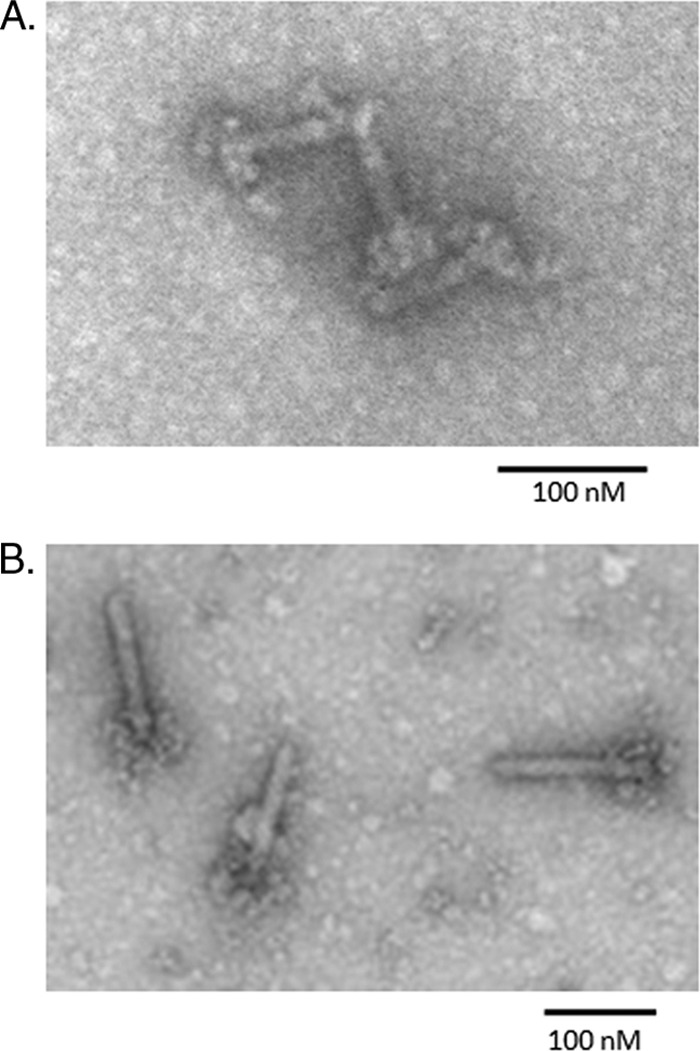
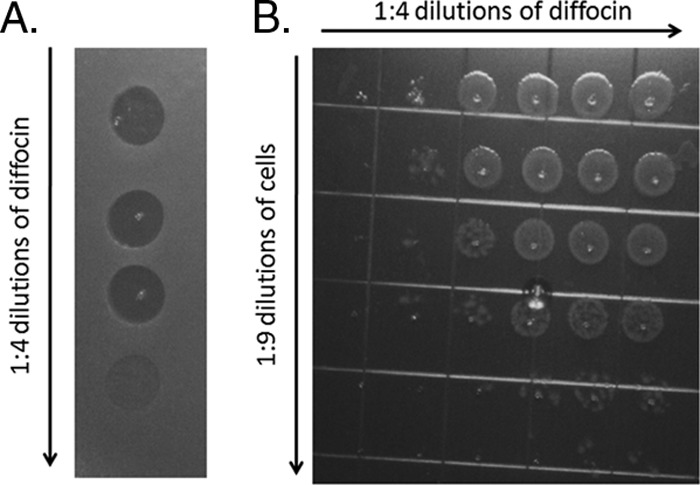
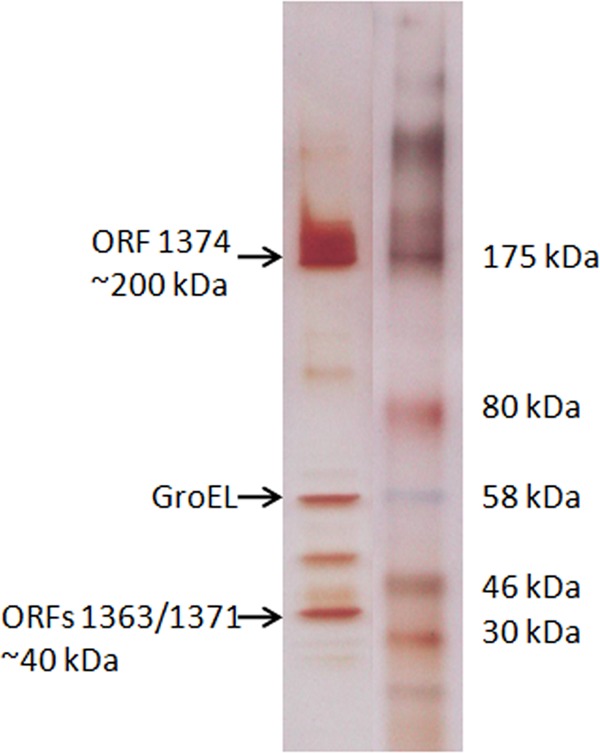
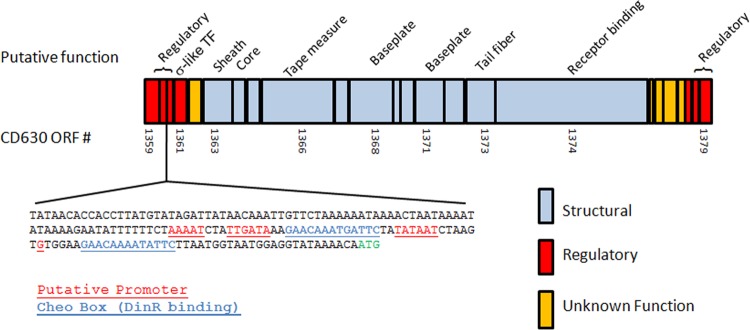
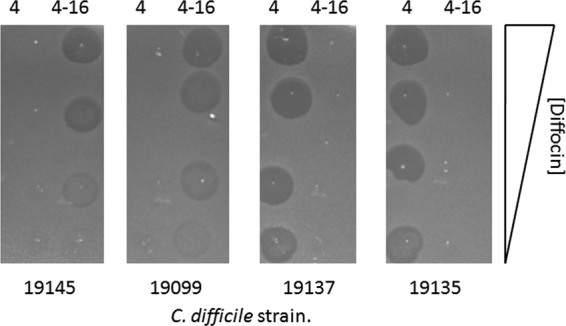
Clostridium difficile causes one of the leading nosocomial infections in developed countries, and therapeutic choices are limited. Some strains of C. difficile produce phage tail-like particles upon induction of the SOS response. These particles have bactericidal activity against other C. difficile strains and can therefore be classified as bacteriocins, similar to the R-type pyocins of Pseudomonas aeruginosa. These R-type bacteriocin particles, which have been purified from different strains, each have a different C. difficile-killing spectrum, with no one bacteriocin killing all C. difficile isolates tested. We have identified the genetic locus of these "diffocins" (open reading frames 1359 to 1376) and have found them to be common among the species. The entire diffocin genetic locus of more than 20 kb was cloned and expressed in Bacillus subtilis, and this resulted in production of bactericidal particles. One of the interesting features of these particles is a very large structural protein of ~200 kDa, the product of gene 1374. This large protein determines the killing spectrum of the particles and is likely the receptor-binding protein. Diffocins may provide an alternate bactericidal agent to prevent or treat infections and to decolonize individuals who are asymptomatic carriers.
Figures
References
-
- Ananthakrishnan AN. 2011. Clostridium difficile infection; epidemiology, risk factors, and management. Nat. Rev. Gastroenterol. Hepatol. 8:17–26 - PubMed
-
- Blackwell CC, Law JA. 1981. Typing of non-serogroupable Neisseria meningitidis by means of sensitivity to R-type pyocins of Pseudomonas aeruginosa. J. Infect. 3:370–378 - PubMed
-
- Blackwell CC, Winstanley FP, Telfer Brunton WA. 1982. Sensitivity of thermophilic campylobacters to R-type pyocins of Pseudomonas aeruginosa. J. Med. Microbiol. 15:247–251 - PubMed
-
- Brandt LJ, et al. 2012. Long-term follow-up of colonoscopic fecal microbiota transplant for recurrent Clostridium difficile infection. Am. J. Gastroenterol. 107:1079–1087 - PubMed
-
- Coetzee HL, De Klerk HC, Coetzee JN, Smit JA. 1968. Bacteriophage tail-like particles associated with intra-species killing of Proteus vulgaris. J. Gen. Virol. 2:29–36 - PubMed
Publication types
MeSH terms
Substances
LinkOut - more resources
Full Text Sources
Other Literature Sources
Molecular Biology Databases
