


Affective and neural reactivity to criticism in individuals high and low on perceived criticism
- PMID: 22984504
- PMCID: PMC3439418
- DOI: 10.1371/journal.pone.0044412
Affective and neural reactivity to criticism in individuals high and low on perceived criticism
Abstract
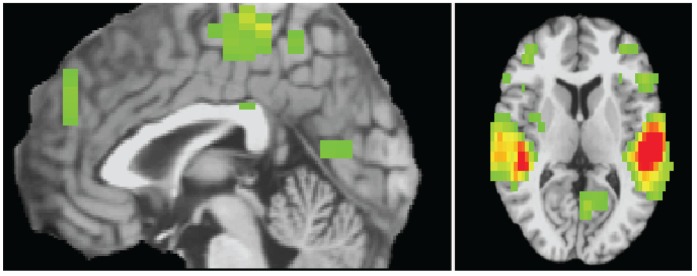
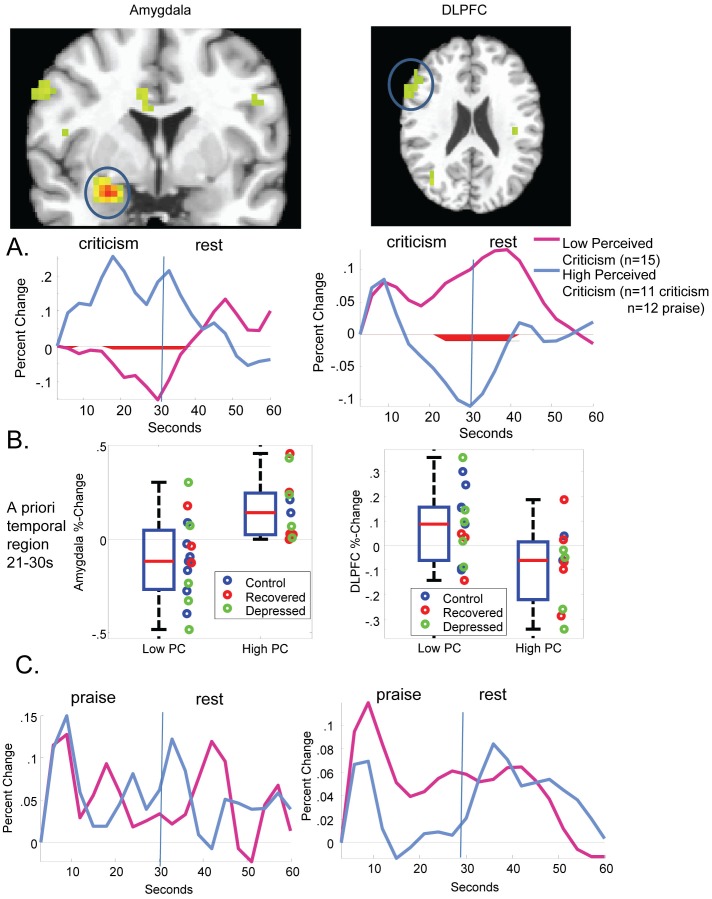
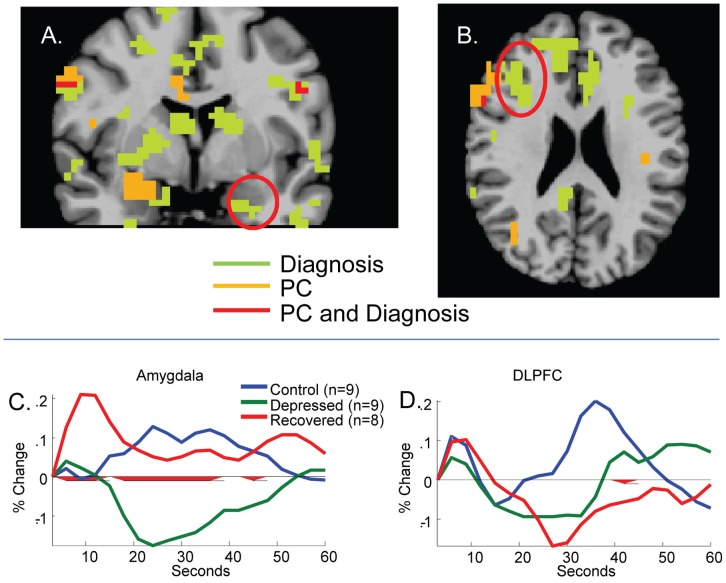
People who have remitted from depression are at increased risk for relapse if they rate their relatives as being critical of them on a simple self-report measure of Perceived Criticism (PC). To explore neural mechanisms associated with this we used functional magnetic resonance imaging (fMRI) to examine how people with different levels of PC responded to hearing criticism from their own mothers. To maximize variability in affective reactivity, depressed, recovered depressed, and healthy control participants (n = 33) were classified as high or low in PC based on a median split. They were then exposed to personally-relevant critical and praising comments from their mothers. Perceived Criticism levels were unrelated to depression status and to negative mood change after hearing criticism. However, compared to low PC participants, those who scored high on PC showed differential activation in a network of regions associated with emotion reactivity and regulation, including increased amygdala activity and decreased reactions in prefrontal regulatory regions when they heard criticism. This was not the case for praise. Criticism may be a risk factor for relapse because it helps to "train" pathways characteristic of depressive information processing. The Perceived Criticism measure may help identify people who are more susceptible to this vulnerability.
Conflict of interest statement
Figures
References
-
- Vaughn C, Leff J (1976) The influence of family and social factors on the course of psychiatric illness. Brit J Psychiat 129: 125–137. - PubMed
-
- Hooley JM, Orley J, Teasdale JD (1986) Levels of expressed emotion and relapse in depressed patients. Brit J Psychiat 148: 642–647. - PubMed
-
- Butzlaff RL, Hooley JM (1998) Expressed emotion and psychiatric relapse. Arch Gen Psychiat 55: 547–552. - PubMed
-
- O'Farrell TJ, Hooley JM, Fals-Stewart W, Cutter HSG (1998) Expressed emotion and relapse in alcoholic patients. J Cons Clin Psychol 66: 744–752. - PubMed
-
- Tarrier N, Sommerfield C, Pilgrim H (1999) Relatives’ expressed emotion (EE) and PTSD treatment outcome. Psychol Med 29: 801–811. - PubMed
Publication types
MeSH terms
Grants and funding
LinkOut - more resources
Full Text Sources
Medical
