


Detection of Mycobacterium tuberculosis GlcB or HspX Antigens or devR DNA impacts the rapid diagnosis of tuberculous meningitis in children
- PMID: 22984534
- PMCID: PMC3440320
- DOI: 10.1371/journal.pone.0044630
Detection of Mycobacterium tuberculosis GlcB or HspX Antigens or devR DNA impacts the rapid diagnosis of tuberculous meningitis in children
Abstract
Background: Tuberculous meningitis (TBM) is the most common form of neurotuberculosis and the fifth most common form of extrapulmonary TB. Early diagnosis and prompt treatment are the cornerstones of effective disease management. The accurate diagnosis of TBM poses a challenge due to an extensive differential diagnosis, low bacterial load and paucity of cerebrospinal fluid (CSF) especially in children.
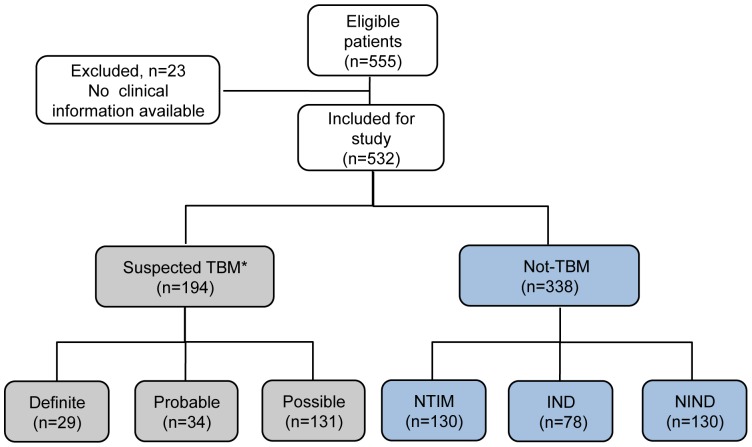
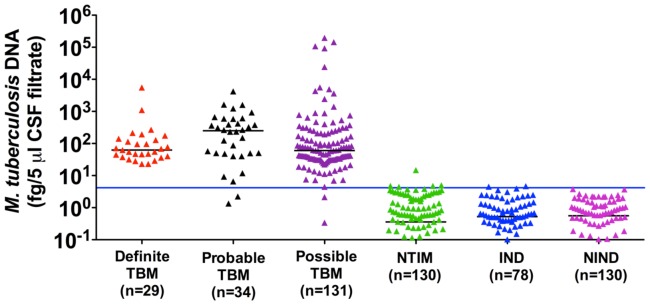
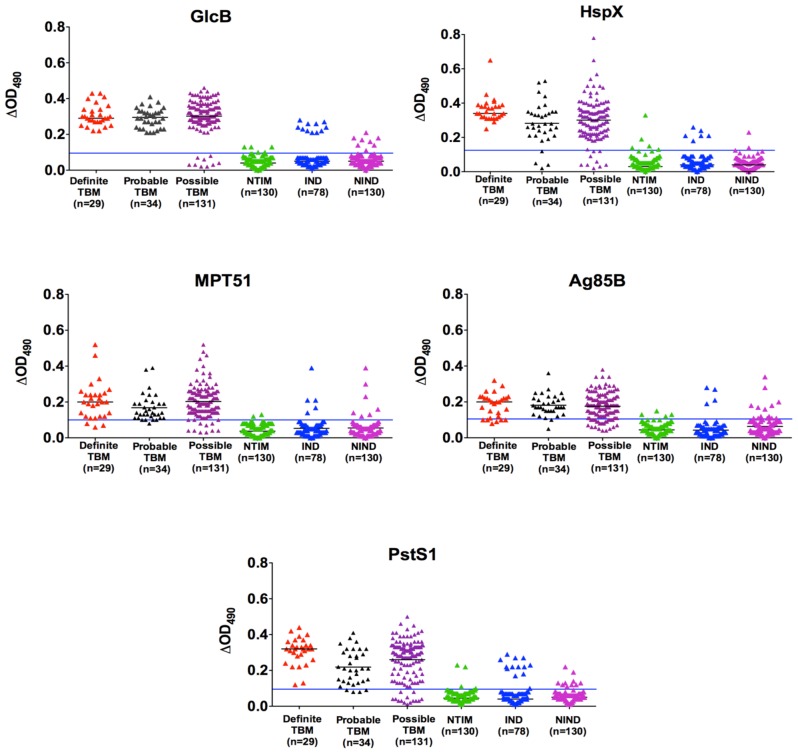
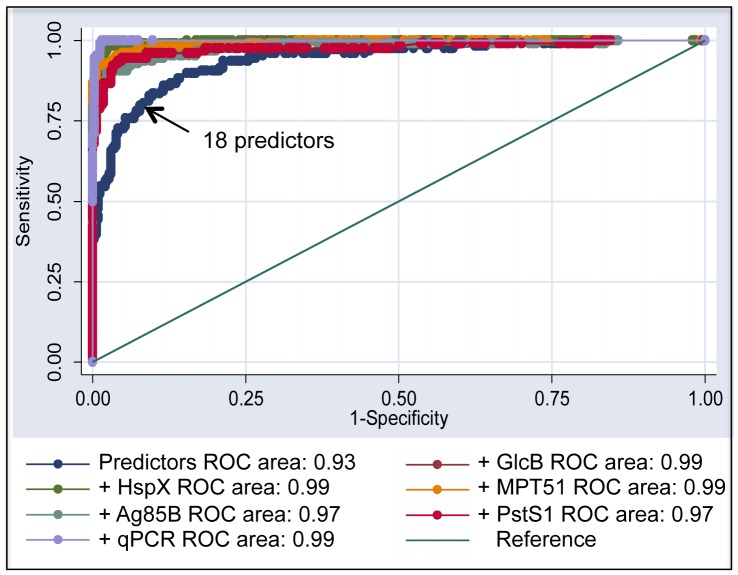
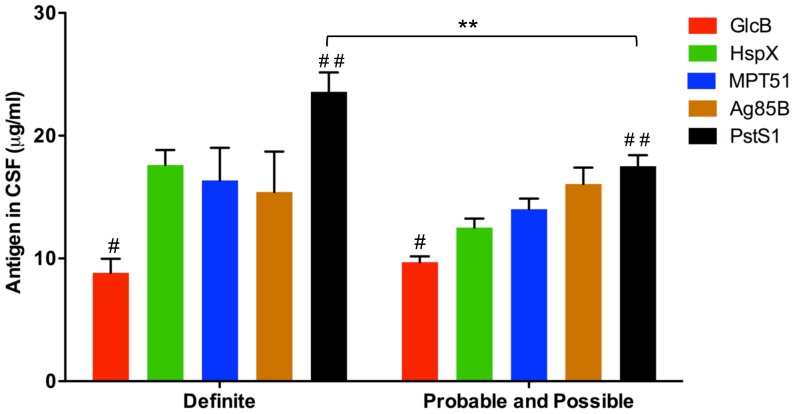
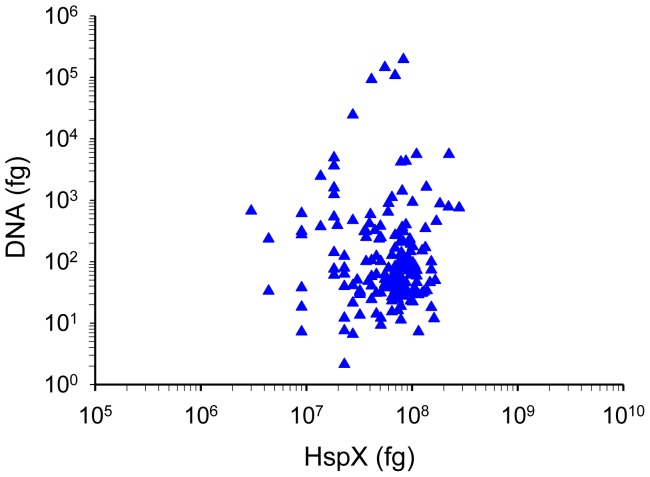
Methodology/principal findings: We describe the utility of ELISA and qPCR for the detection of Mycobacterium tuberculosis (M. tb) proteins (GlcB, HspX, MPT51, Ag85B and PstS1) and DNA for the rapid diagnosis of TBM. CSF filtrates (n = 532) derived from children were classified as 'Definite' TBM (M. tb culture positive, n = 29), 'Probable and Possible' TBM (n = 165) and 'Not-TBM' including other cases of meningitis or neurological disorders (n = 338). ROC curves were generated from ELISA and qPCR data of 'Definite' TBM and Non-Tuberculous infectious meningitis (NTIM) samples and cut-off values were derived to provide ≥ 95% specificity. devR qPCR, GlcB, HspX and PstS1 ELISAs showed 100% (88;100) sensitivity and 96-97% specificity in 'Definite' TBM samples. The application of these cut-offs to 'Probable and Possible' TBM groups yielded excellent sensitivity (98%, 94;99) and specificity (98%, 96;99) for qPCR and for GlcB, HspX and MPT51 antigen ELISAs (sensitivity 92-95% and specificity 93-96%). A test combination of qPCR with GlcB and HspX ELISAs accurately detected all TBM samples at a specificity of ~90%. Logistic regression analysis indicated that these tests significantly added value to the currently used algorithms for TBM diagnosis.
Conclusions: The detection of M. tb GlcB/HspX antigens/devR DNA in CSF is likely to improve the utility of existing algorithms for TBM diagnosis and also hasten the speed of diagnosis.
Conflict of interest statement
Figures
References
-
- WHO (2011) Global Tuberculosis Control. Geneva, Switzerland: World Health Organization.
-
- Chakraborty A (2000) Estimating mortality from tuberculous meningitis in a community: use of available epidemiological parameters in the Indian context. Ind J Tub 47: 9–14.
-
- Jatana SK, Nair MN, Lahiri KK, Sarin NP (2000) Polymerase chain reaction in the diagnosis of tuberculosis. Indian Pediatr 37: 375–382. - PubMed
-
- Haldar S, Sharma N, Gupta VK, Tyagi JS (2009) Efficient diagnosis of tuberculous meningitis by detection of Mycobacterium tuberculosis DNA in cerebrospinal fluid filtrates using PCR. J Med Microbiol 58: 616–624. - PubMed
Publication types
MeSH terms
Substances
LinkOut - more resources
Full Text Sources
Other Literature Sources
