


Validation of a cognitive assessment battery administered over the telephone
- PMID: 22985137
- PMCID: PMC3448122
- DOI: 10.1111/j.1532-5415.2012.04111.x
Validation of a cognitive assessment battery administered over the telephone
Abstract
Objectives: To evaluate the validity and reliability of a cognitive test battery and questionnaires administered by telephone.
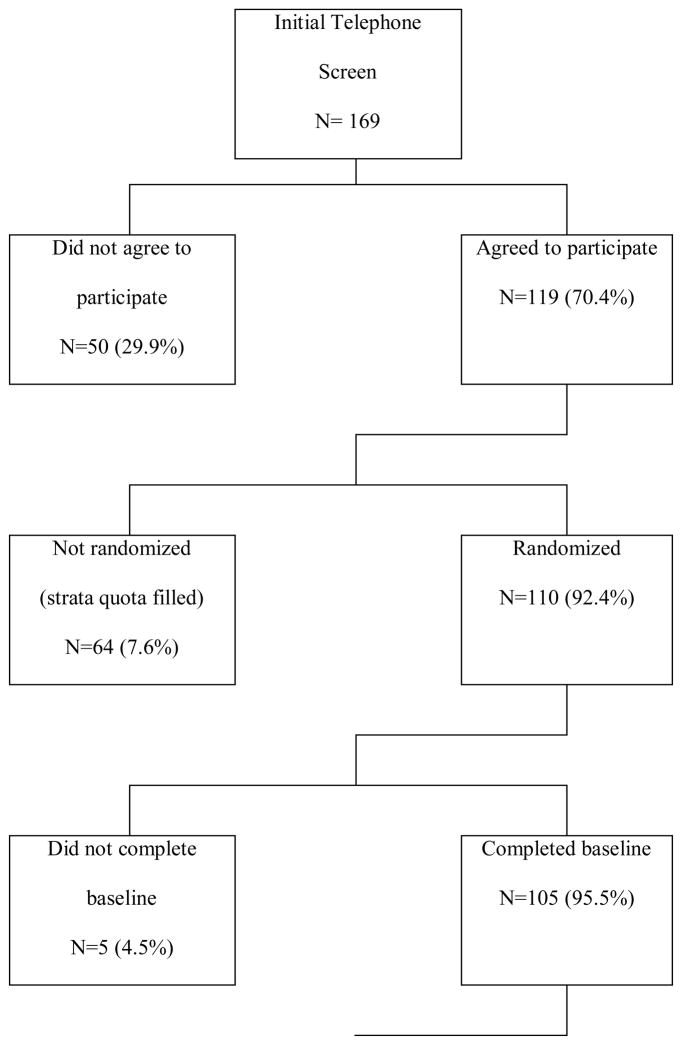
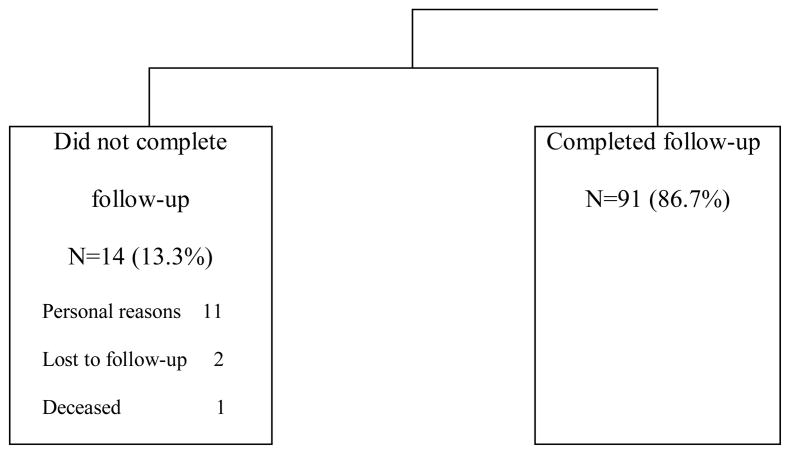
Design: Observational study; 110 participants randomly assigned to receive two administrations of the same cognitive test battery 6 months apart in one of four combinations (Time 1 administration/Time 2 administration): telephone/telephone, telephone/face to face, face to face/telephone, face to face/face to face.
Setting: Academic medical center.
Participants: One hundred ten women aged 65 to 90 without dementia.
Measurements: The battery included tests of attention; verbal learning and memory; verbal fluency; executive function; working memory; global cognitive functioning; and self-reported measures of perceived memory problems, depressive symptoms, sleep disturbance, and health-related quality of life. Test-retest reliability, concurrent validity, relative bias associated with telephone administration, and change scores were evaluated.
Results: There were no statistically significant differences in scores on any of the cognitive tests or questionnaires between participants randomly assigned to telephone or face-to-face administration at the Time 1 assessment, indicating equivalence across administration modes. There was no significant bias for tests or questionnaires administered by telephone (P's > .01), nor was there a difference in mean change scores between administration modes except for Category Fluency (P = .01) and California Verbal Learning Test long-delay free recall (P = .004). Mean test-retest coefficients for the battery were not significantly different between groups, although individual test-retest correlation coefficients were generally higher within modes than between modes.
Conclusion: Telephone administration of cognitive tests and questionnaires to older women is reliable and valid. Use of telephone batteries can substantially reduce the cost and burden of cognitive assessments and increase enrollment, retention, and data completeness, thereby improving study validity.
© 2012, Copyright the Authors Journal compilation © 2012, The American Geriatrics Society.
Figures
References
-
- Brandt J, Spencer M, Folstein MF. The telephone interview for cognitive status. Neuropsychiatry Neuropsychol Behav Neurol. 1988;1:111–117.
-
- Folstein MF, Folstein SE, McHugh PR. ‘Mini Mental State’: a practical method for grading the cognitive state of patients for the clinician. Journal of Psychiatry. 1975;12:189–198. - PubMed
-
- Barber M, Stott DJ. Validity of the Telephone Interview for Cognitive Status (TICS) in post-stroke subjects. Int J Geriatr Psychiatry. 2004 Jan;19(1):75–79. - PubMed
-
- Brandt J, Spencer M, Folstein M. The Telephone Interview for Cognitive Status. Neuropsychiatry, Neuropsychology, & Behavioral Neurology. 1988 Jun;1(2):111–117.
Publication types
MeSH terms
Grants and funding
LinkOut - more resources
Full Text Sources
