


Combined effects of agitation, macromolecular crowding, and interfaces on amyloidogenesis
- PMID: 22988239
- PMCID: PMC3488071
- DOI: 10.1074/jbc.M112.400580
Combined effects of agitation, macromolecular crowding, and interfaces on amyloidogenesis
Abstract
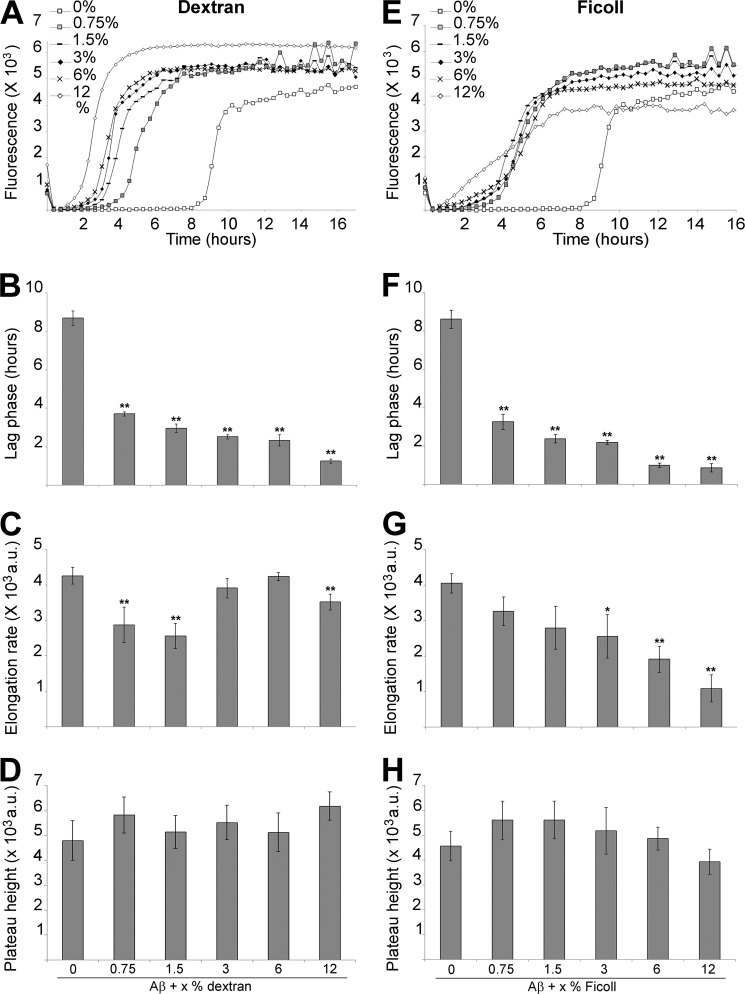
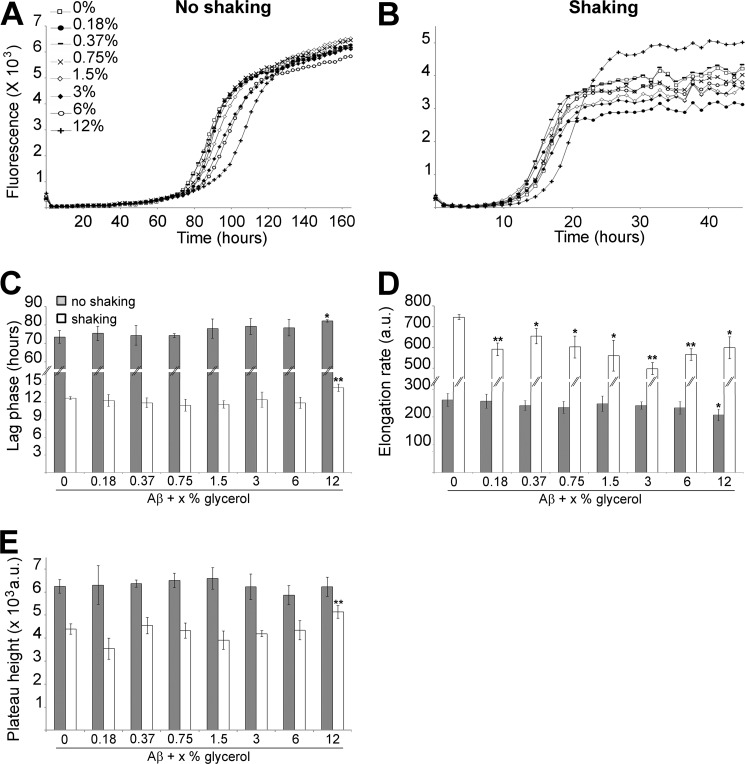
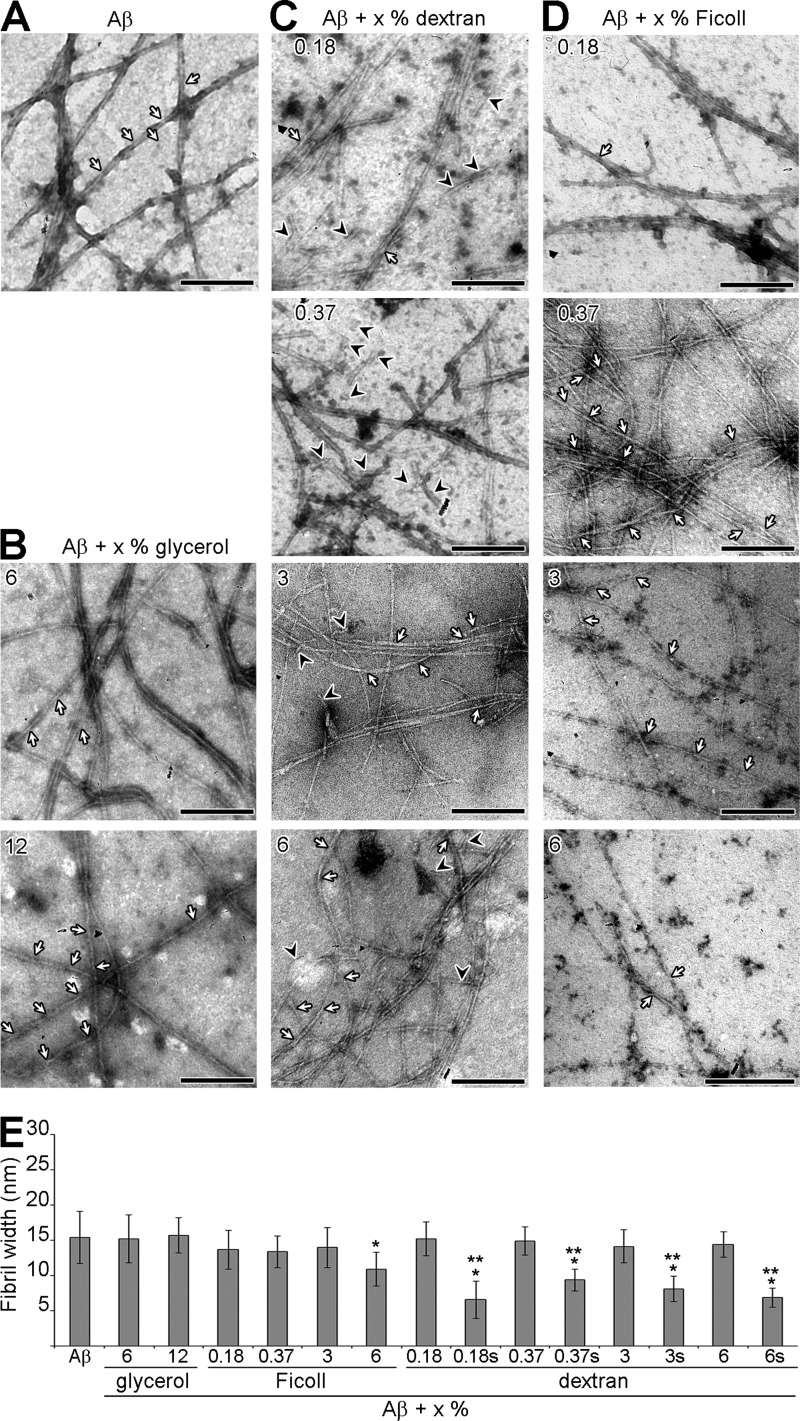
Amyloid formation and accumulation is a hallmark of protein misfolding diseases and is associated with diverse pathologies including type II diabetes and Alzheimer's disease (AD). In vitro, amyloidogenesis is widely studied in conditions that do not simulate the crowded and viscous in vivo environment. A high volume fraction of most biological fluids is occupied by various macromolecules, a phenomenon known as macromolecular crowding. For some amyloid systems (e.g. α-synuclein) and under shaking condition, the excluded volume effect of macromolecular crowding favors aggregation, whereas increased viscosity reduces the kinetics of these reactions. Amyloidogenesis can also be catalyzed by hydrophobic-hydrophilic interfaces, represented by the air-water interface in vitro and diverse heterogeneous interfaces in vivo (e.g. membranes). In this study, we investigated the effects of two different crowding polymers (dextran and Ficoll) and two different experimental conditions (with and without shaking) on the fibrilization of amyloid-β peptide, a major player in AD pathogenesis. Specifically, we demonstrate that, during macromolecular crowding, viscosity dominates over the excluded volume effect only when the system is spatially non homogeneous (i.e. an air-water interface is present). We also show that the surfactant activity of the crowding agents can critically influence the outcome of macromolecular crowding and that the structure of the amyloid species formed may depend on the polymer used. This suggests that, in vivo, the outcome of amyloidogenesis may be affected by both macromolecular crowding and spatial heterogeneity (e.g. membrane turn-over). More generally, our work suggests that any factors causing changes in crowding may be susceptibility factors in AD.
Figures





References
-
- Stefani M., Dobson C. M. (2003) Protein aggregation and aggregate toxicity: new insights into protein folding, misfolding diseases and biological evolution. J. Mol. Med. 81, 678–699 - PubMed
-
- Haass C., Selkoe D. J. (2007) Soluble protein oligomers in neurodegeneration: lessons from the Alzheimer's amyloid beta-peptide. Nat. Rev. Mol. Cell Biol. 8, 101–112 - PubMed
-
- Selkoe D. J. (2004) Cell biology of protein misfolding: the examples of Alzheimer's and Parkinson's diseases. Nat. Cell Biol. 6, 1054–1061 - PubMed
-
- Harper J. D., Lansbury P. T., Jr. (1997) Models of amyloid seeding in Alzheimer's disease and scrapie: mechanistic truths and physiological consequences of the time-dependent solubility of amyloid proteins. Annu. Rev. Biochem. 66, 385–407 - PubMed
-
- Lee C. F. (2009) Self-assembly of protein amyloids: A competition between amorphous and ordered aggregation Phys. Rev. E. 80, 031922 - PubMed
Publication types
MeSH terms
Substances
LinkOut - more resources
Full Text Sources
