


Fetal pulmonary arterial vascular impedance reflects changes in fetal oxygenation at near-term gestation in a nonhuman primate model
- PMID: 22991382
- PMCID: PMC3676239
- DOI: 10.1177/1933719112459224
Fetal pulmonary arterial vascular impedance reflects changes in fetal oxygenation at near-term gestation in a nonhuman primate model
Abstract
Objective: We tested the hypothesis that fetal pulmonary arterial circulation reacts to changes in fetal oxygenation status at near-term gestation.
Study design: A total of 20 rhesus macaques underwent fetal Doppler ultrasonography at near-term gestation. Right pulmonary artery (RPA), umbilical artery (UA), ductus arteriosus (DA), and ductus venosus (DV) blood velocity waveforms were obtained, and pulsatility index (PI) values were calculated. Fetal right and left ventricular cardiac outputs were determined. Ultrasonographic data were collected during 3 maternal oxygenation states: room air (baseline), hyperoxemia, and hypoxemia.
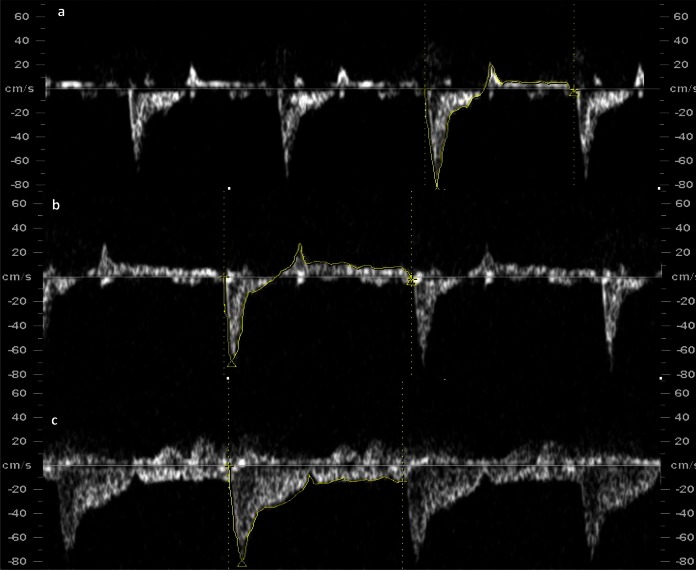
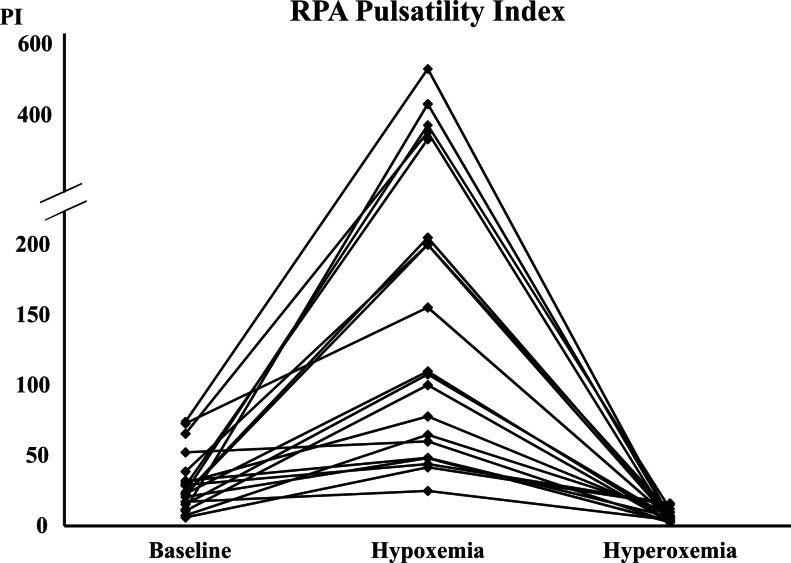
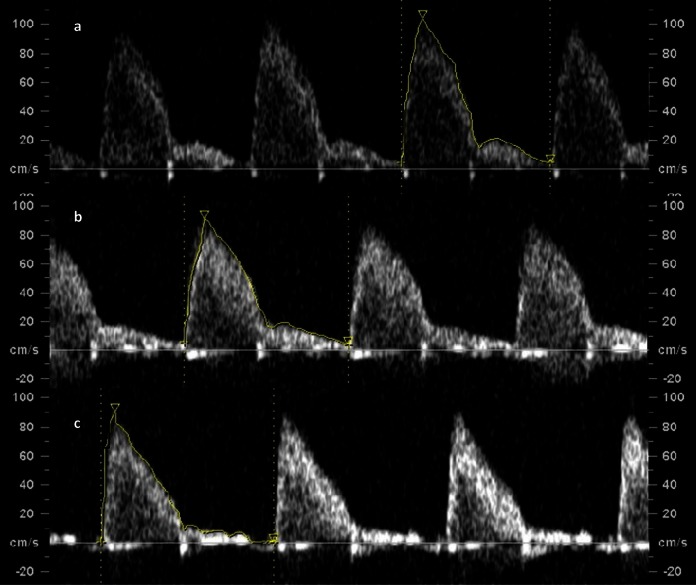
Results: Fetal RPA PI values increased (P < .05) during maternal hypoxemia and decreased (P < .05) during maternal hyperoxemia, compared with baseline. Maternal hyperoxemia increased (P < .05) DA PI values from baseline. Fetal cardiac outputs, UA, and DV PI values were not affected.
Conclusions: Our results demonstrate that at near-term gestation, fetal pulmonary arterial circulation is a dynamic vascular bed that reflects acute and short-term changes in fetal oxygenation.
Conflict of interest statement
Figures
References
-
- Cohn HE, Sacks EJ, Heymann MA, Rudolph AM. Cardiovascular responses to hypoxemia and acidemia in fetal lambs. Am J Obstet Gynecol. 1974;120(6):817–824 - PubMed
-
- Hanson MA. Do we now understand the control of the fetal circulation? Eur J Obstet Gynecol Reprod Biol. 1997;75(1):55–61 - PubMed
-
- Brace RA, Cheung CY, Davis LE, Gagnon R, Harding R, Widness JA. Sources of amniotic fluid erythropoietin during normoxia and hypoxia in fetal sheep. Am J Obstet Gynecol. 2006;195(1):246–254 - PubMed
-
- Loukovaara M, Teramo K, Alfthan H, Hamalainen E, Stefanovic V, Andersson S. Amniotic fluid S100B protein and erythropoietin in pregnancies at risk for fetal hypoxia. Eur J Obstet Gynecol Reprod Biol. 2009;142(2):115–118 - PubMed
Publication types
MeSH terms
Grants and funding
LinkOut - more resources
Full Text Sources
Research Materials
Miscellaneous
