


Staphylococcal pathogenicity island interference with helper phage reproduction is a paradigm of molecular parasitism
- PMID: 22991467
- PMCID: PMC3479557
- DOI: 10.1073/pnas.1204615109
Staphylococcal pathogenicity island interference with helper phage reproduction is a paradigm of molecular parasitism
Abstract
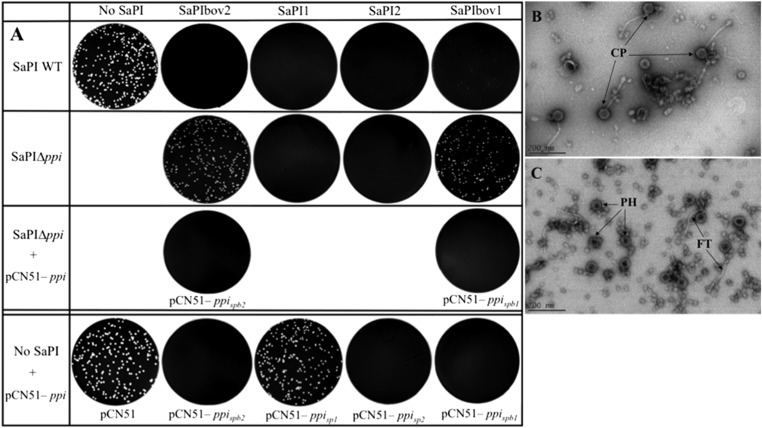
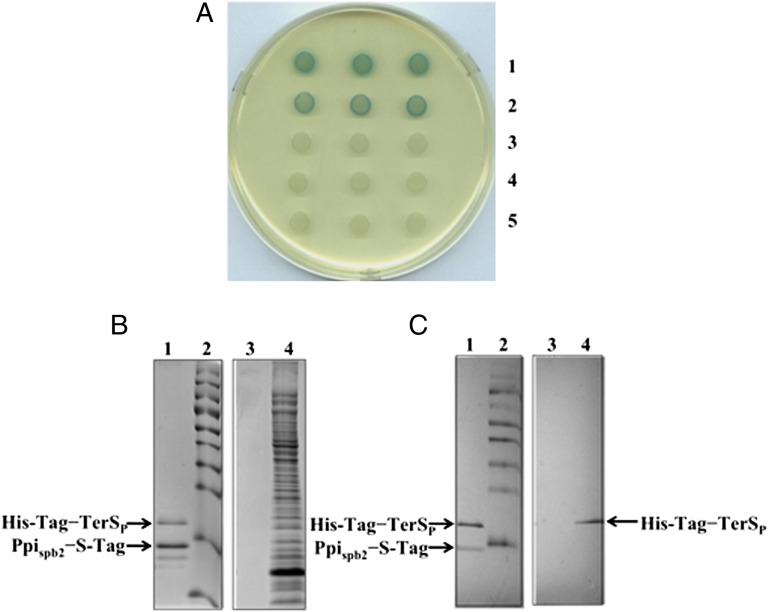
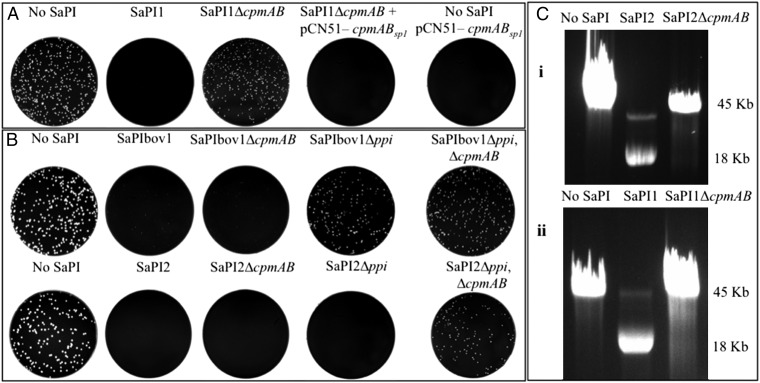
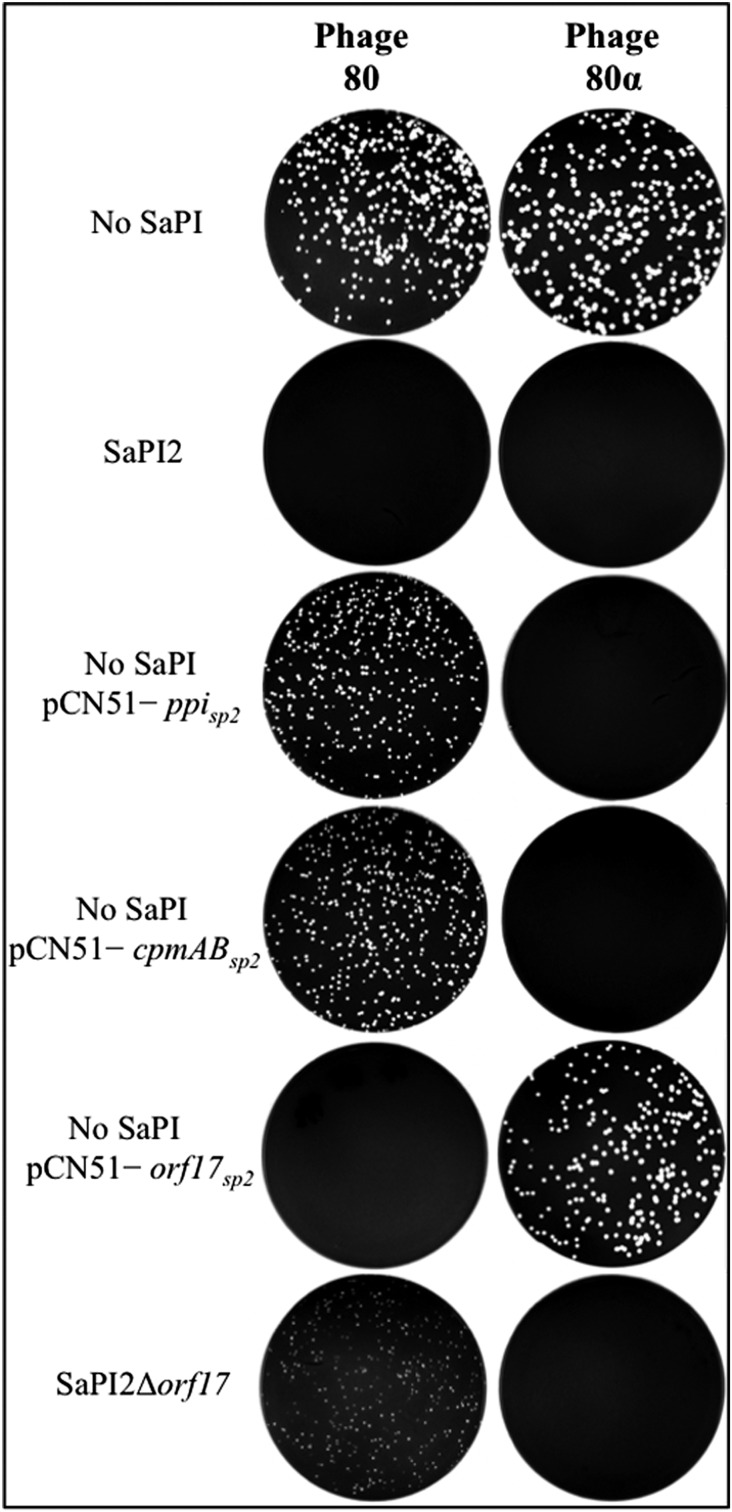
Staphylococcal pathogenicity islands (SaPIs) carry superantigen and resistance genes and are extremely widespread in Staphylococcus aureus and in other Gram-positive bacteria. SaPIs represent a major source of intrageneric horizontal gene transfer and a stealth conduit for intergeneric gene transfer; they are phage satellites that exploit the life cycle of their temperate helper phages with elegant precision to enable their rapid replication and promiscuous spread. SaPIs also interfere with helper phage reproduction, blocking plaque formation, sharply reducing burst size and enhancing the survival of host cells following phage infection. Here, we show that SaPIs use several different strategies for phage interference, presumably the result of convergent evolution. One strategy, not described previously in the bacteriophage microcosm, involves a SaPI-encoded protein that directly and specifically interferes with phage DNA packaging by blocking the phage terminase small subunit. Another strategy involves interference with phage reproduction by diversion of the vast majority of virion proteins to the formation of SaPI-specific small infectious particles. Several SaPIs use both of these strategies, and at least one uses neither but possesses a third. Our studies illuminate a key feature of the evolutionary strategy of these mobile genetic elements, in addition to their carriage of important genes-interference with helper phage reproduction, which could ensure their transferability and long-term persistence.
Conflict of interest statement
The authors declare no conflict of interest.
Figures
References
-
- Úbeda C, et al. SaPI mutations affecting replication and transfer and enabling autonomous replication in the absence of helper phage. Mol Microbiol. 2008;67:493–503. - PubMed
-
- Úbeda C, et al. Sip, an integrase protein with excision, circularization and integration activities, defines a new family of mobile Staphylococcus aureus pathogenicity islands. Mol Microbiol. 2003;49:193–210. - PubMed
Publication types
MeSH terms
Grants and funding
LinkOut - more resources
Full Text Sources
Other Literature Sources
Molecular Biology Databases
