


Effects of yoga interventions on fatigue: a meta-analysis
- PMID: 22991569
- PMCID: PMC3443845
- DOI: 10.1155/2012/124703
Effects of yoga interventions on fatigue: a meta-analysis
Abstract
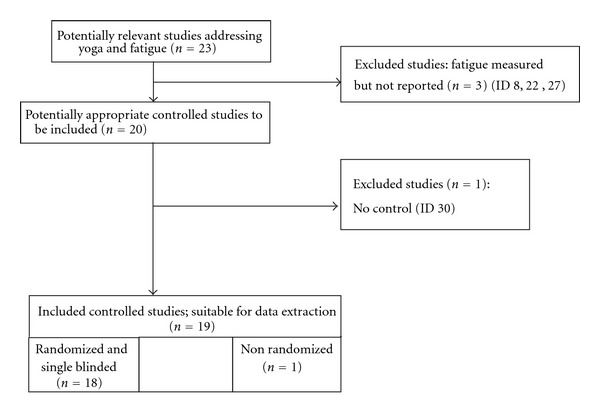
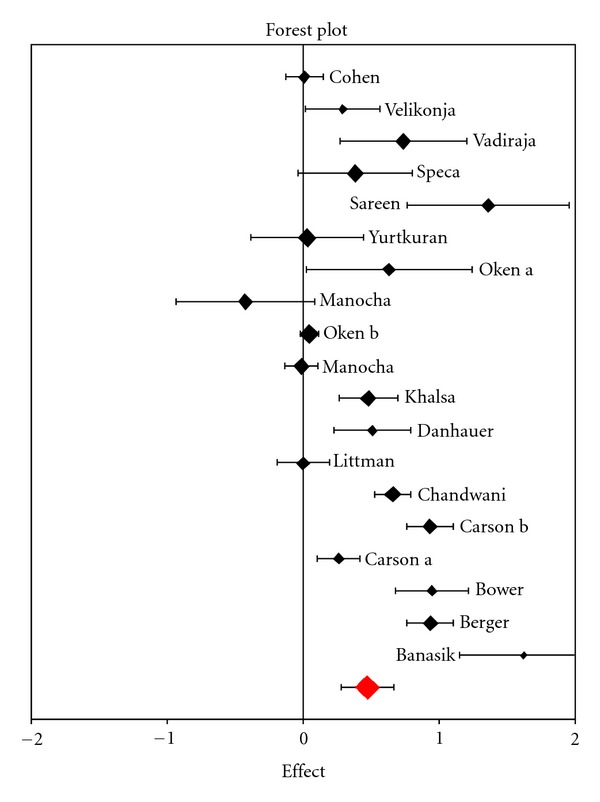
Background. Researchers aimed at systematically reviewing and meta-analyzing the effectiveness of yoga interventions for fatigue. Methods. PubMed/Medline was searched until January 2012 for controlled clinical studies. Two reviewers independently extracted the data. The methodological quality of the studies was assessed. A meta-analysis was performed. Results. Nineteen clinical studies (total n = 948) were included in this review. Investigated yoga styles included Hatha, Iyengar, Asanas, Patanjali, Sahaja, and Tibetan yoga. Participants were suffering from cancer, multiple sclerosis, dialysis, chronic pancreatitis, fibromyalgia, asthma, or were healthy. Yoga had a small positive effect on fatigue (SMD = 0.27, 59% CI = 0.23-0.31). Seven studies received 4 points on the Jadad score. There were baseline differences in at least 5 studies. Conclusion. Overall, the effects of yoga interventions on fatigue were only small, particularly in cancer patients. Although yoga is generally a safe therapeutic intervention and effective to attenuate other health-related symptoms, this meta-analysis was not able to define the powerful effect of yoga on patients suffering from fatigue. Treatment effects of yoga could be improved in well-designed future studies. According to the GRADE recommendations assessing the overall quality of evidence, there is a moderate effect of the confidence placed in the estimates of the effects discussed here.
Figures
References
-
- Walker EA, Katon WJ, Jemelka RP. Psychiatric disorders and medical care utilization among people in the general population who report fatigue. Journal of General Internal Medicine. 1993;8(8):436–440. - PubMed
-
- Fukuda K, Straus SE, Hickie I, Sharpe MC, Dobbins JG, Komaroff A. The chronic fatigue syndrome: a comprehensive approach to its definition and study. Annals of Internal Medicine. 1994;121(12):953–959. - PubMed
-
- Bower JE, Ganz PA, Aziz N, Olmstead R, Irwin MR, Cole SW. Inflammatory responses to psychological stress in fatigued breast cancer survivors: relationship to glucocorticoids. Brain, Behavior, and Immunity. 2007;21(3):251–258. - PubMed
LinkOut - more resources
Full Text Sources
