


Controlling cost escalation of healthcare: making universal health coverage sustainable in China
- PMID: 22992484
- PMCID: PMC3381703
- DOI: 10.1186/1471-2458-12-S1-S8
Controlling cost escalation of healthcare: making universal health coverage sustainable in China
Abstract
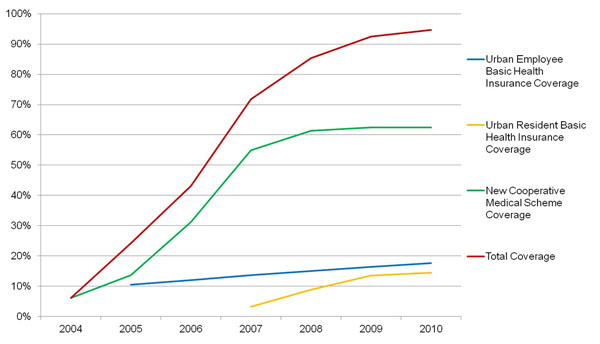
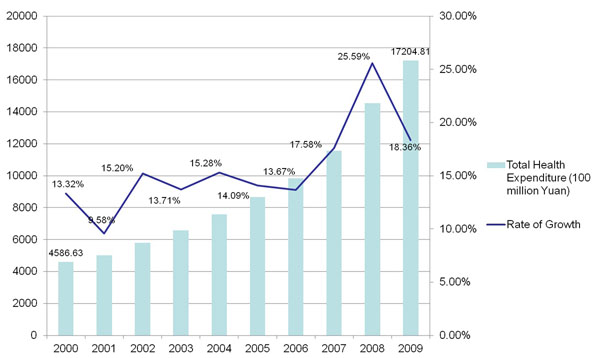
An increasingly number of low- and middle-income countries have developed and implemented a national policy towards universal coverage of healthcare for their citizens over the past decade. Among them is China which has expanded its population coverage by health insurance from around 29.7% in 2003 to over 90% at the end of 2010. While both central and local governments in China have significantly increased financial inputs into the two newly established health insurance schemes: new cooperative medical scheme (NCMS) for the rural population, and urban resident basic health insurance (URBMI), the cost of healthcare in China has also been rising rapidly at the annual rate of 17.0%% over the period of the past two decades years. The total health expenditure increased from 74.7 billion Chinese yuan in 1990 to 1998 billion Chinese yuan in 2010, while average health expenditure per capital reached the level of 1490.1 Chinese yuan per person in 2010, rising from 65.4 Chinese yuan per person in 1990. The repaid increased population coverage by government supported health insurance schemes has stimulated a rising use of healthcare, and thus given rise to more pressure on cost control in China.There are many effective measures of supply-side and demand-side cost control in healthcare available. Over the past three decades China had introduced many measures to control demand for health care, via a series of co-payment mechanisms. The paper introduces and discusses new initiatives and measures employed to control cost escalation of healthcare in China, including alternative provider payment methods, reforming drug procurement systems, and strengthening the application of standard clinical paths in treating patients at hospitals, and analyses the impacts of these initiatives and measures. The paper finally proposes ways forward to make universal health coverage in China more sustainable.
Figures
References
-
- State Council and Central Committee of Communist Party of China. Decisions on further strengthening rural health development. Beijing; 2002. No. 13.
-
- Ministry of Health China. China Health Statistics Yearbook of 2010. Beijing; 2010.
Publication types
MeSH terms
LinkOut - more resources
Full Text Sources
Medical
Miscellaneous
