


Aging and the neurovascular unit
- PMID: 22994231
- PMCID: PMC3677020
- DOI: 10.1111/j.1749-6632.2012.06686.x
Aging and the neurovascular unit
Abstract
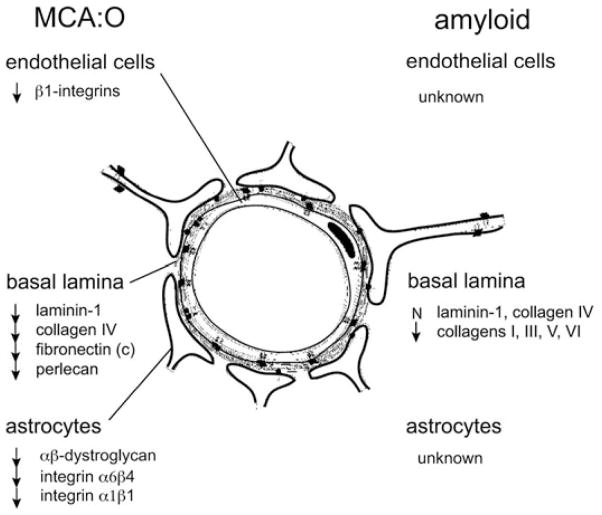
With the demonstration that acute recanalization of obstructed symptomatic cerebral arteries during ischemic stroke can result in substantial improvement in clinical outcome, the variability in clinical responses, and in hemorrhagic transformation, requires attention. This short review addresses the effect of aging and amyloid deposition disease on microvessel integrity, interactions within the neurovascular unit, cerebral tissue susceptibility to ischemic injury, and postischemic inflammation, and ultimately on the outcomes and safety of acute recanalization during ischemic stroke. Microvessels and neighboring neurons respond simultaneously to focal ischemia. The cellular components and matrix barriers of the neurovascular unit all respond to ischemia; however, their coordinate interactions are not understood. Furthermore, there is little known about the cell-cell and cell-matrix interactions within the unit, or about the effect of β-amyloid on microvessel responses during ischemia. These considerations indicate the need for a coordinated research effort to understand the origins of the variability in recanalization outcome.
© 2012 New York Academy of Sciences.
Conflict of interest statement
The author declares no conflicts of interest.
Figures
References
-
- del Zoppo GJ. Stroke and neurovascular protection. N Engl J Med. 2006;354:553–555. - PubMed
-
- Zonta M, et al. Neuron-to-astrocyte signaling is central to the dynamic control of brain microcirculation. Nat Neurosci. 2003;6:43–50. - PubMed
-
- Parri R, Crunelli V. An astrocyte bridge from synapse to blood flow. Nat Neurosci. 2003;6:5–6. - PubMed
-
- Tagaya M, et al. Rapid loss of microvascular integrin expression during focal brain ischemia reflects neuron injury. J Cereb Blood Flow Metab. 2001;21:835–846. - PubMed
Publication types
MeSH terms
Substances
Grants and funding
LinkOut - more resources
Full Text Sources
Medical
Miscellaneous
