


Aquaporin 1, Nox1, and Ask1 mediate oxidant-induced smooth muscle cell hypertrophy
- PMID: 22997161
- PMCID: PMC3527765
- DOI: 10.1093/cvr/cvs295
Aquaporin 1, Nox1, and Ask1 mediate oxidant-induced smooth muscle cell hypertrophy
Abstract
Aims: Reactive oxygen species (ROS)-mediated intracellular signalling is well described in the vasculature, yet the precise roles of ROS in paracrine signalling are not known. Studies implicate interstitial ROS hydrogen peroxide (H(2)O(2)) in vascular disease, and plasma H(2)O(2) levels in the micromolar range are detectable in animal models and humans with hypertension. Recently, H(2)O(2) was shown to cross biological membranes of non-vascular cells via aquaporin (Aqp) water channels. Previous findings suggest that H(2)O(2) activates NADPH oxidase (Nox) enzymes in vascular cells and apoptosis signal-regulating kinase 1 (Ask1) in non-vascular cells. We hypothesized that extracellular H(2)O(2) induces smooth muscle cell (SMC) hypertrophy by a mechanism involving Aqp1, Nox1, and Ask1.
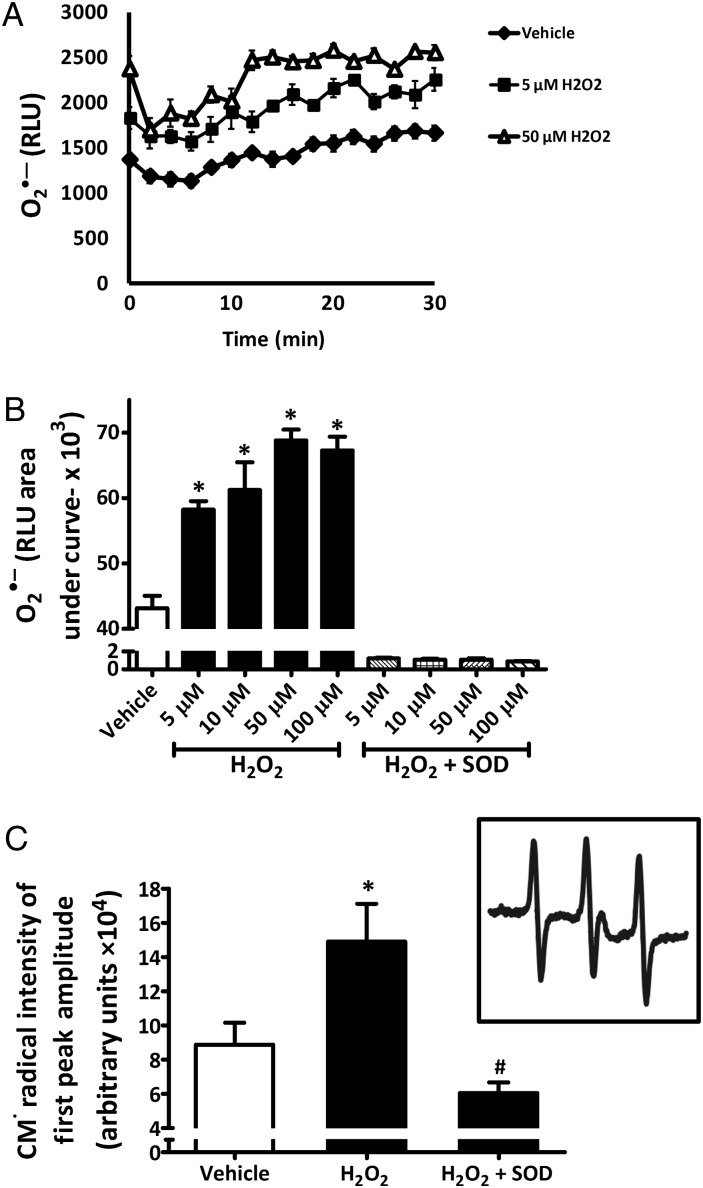
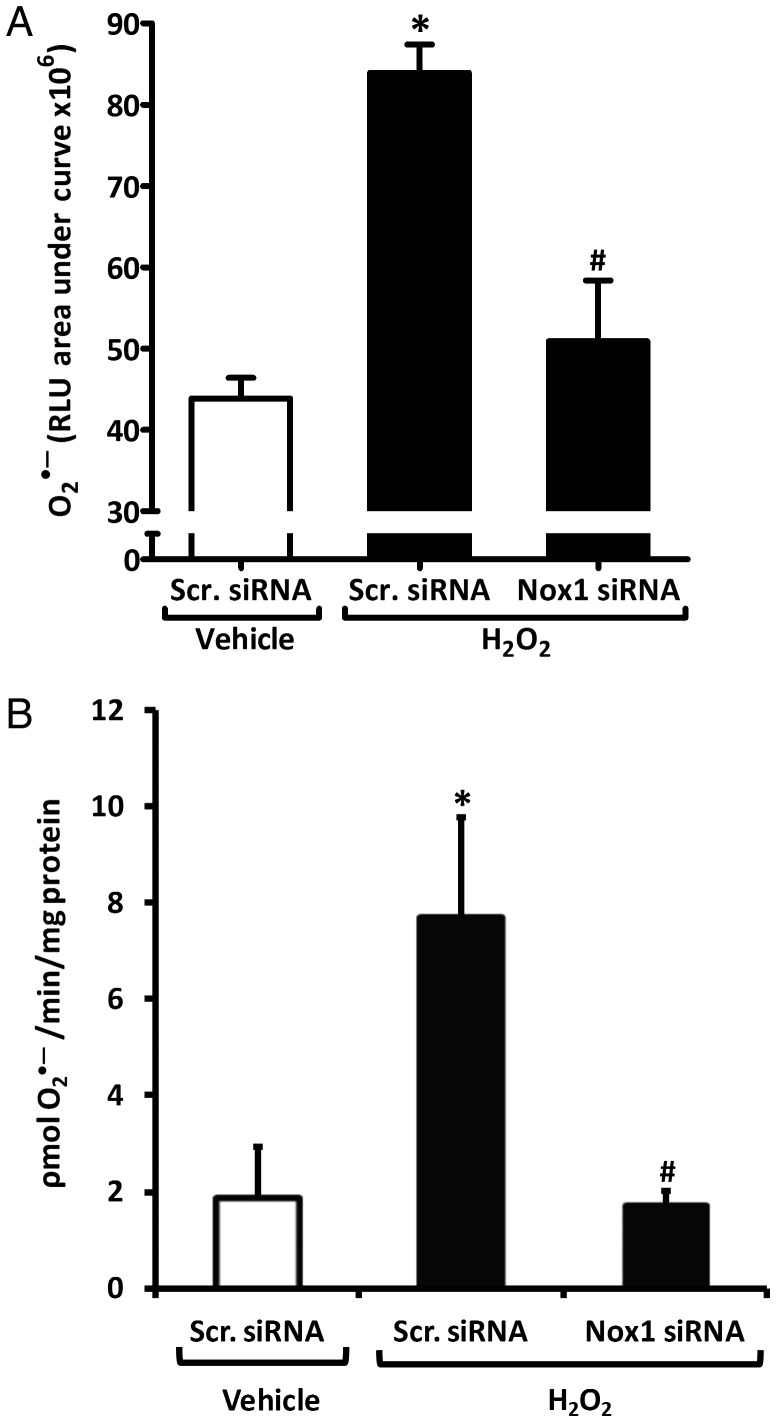
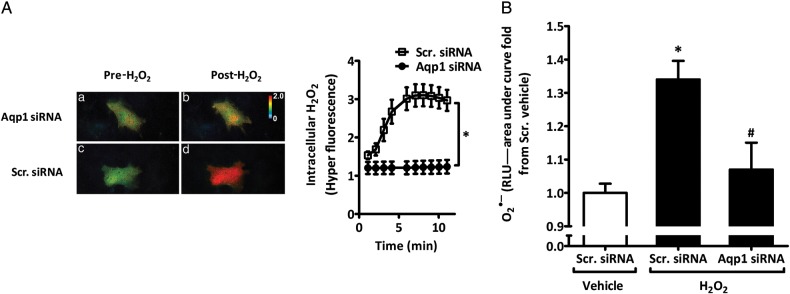
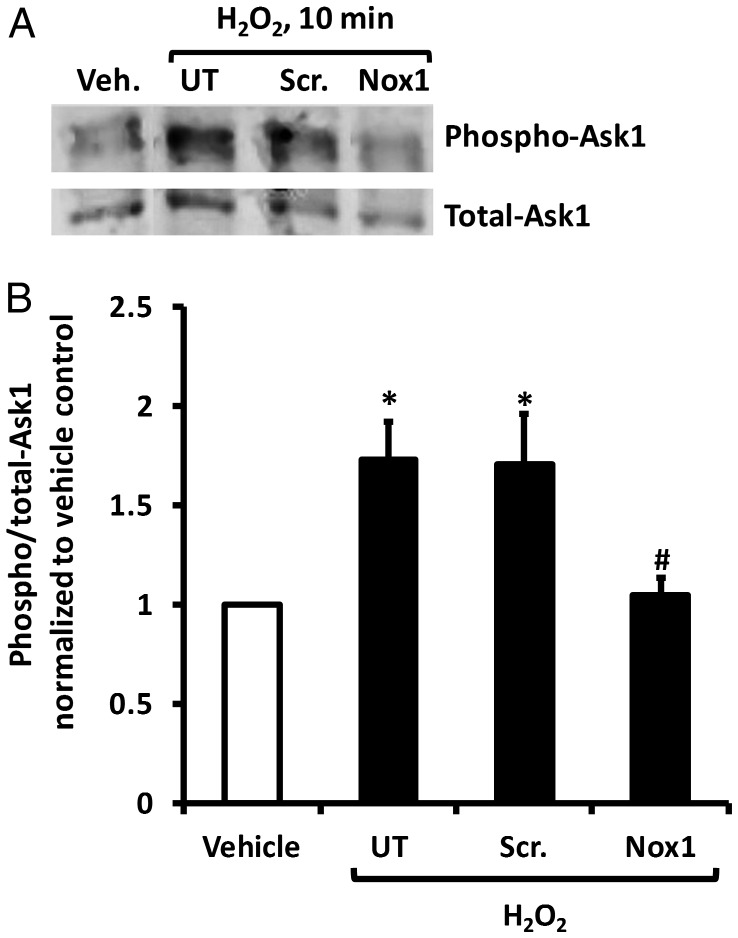
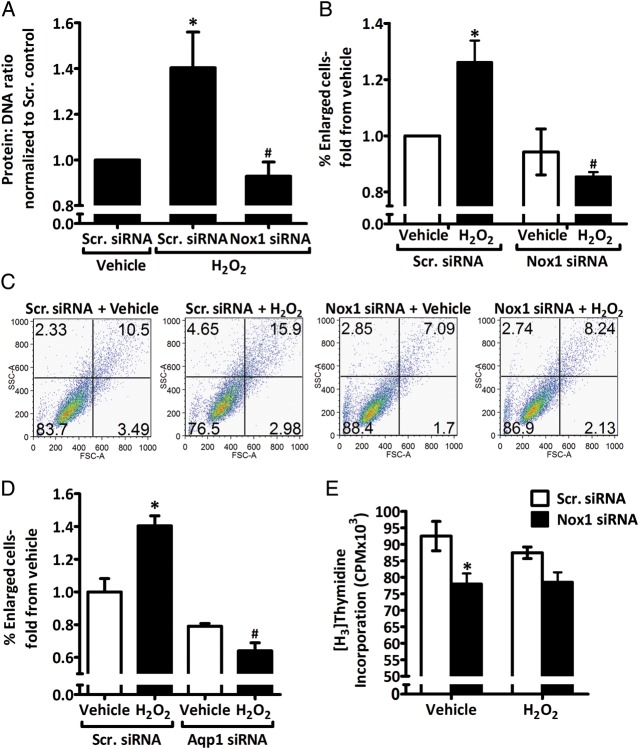
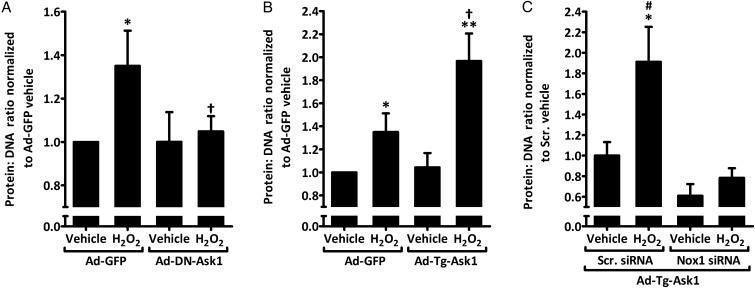
Methods and results: Treatment of rat aortic SMCs (rASMC) with exogenous H(2)O(2) resulted in a concentration-dependent increase in Nox-derived superoxide (O(2)(•-)), determined by L-012 chemiluminescence, cytochrome c and electron paramagnetic resonance. Nox1 was verified as the source of O(2)(·-) by siRNA. Aqp1 siRNA attenuated H(2)O(2) cellular entry and H(2)O(2)-induced O(2)(•-) production. H(2)O(2) treatment increased Ask1 activation and induced rASMC hypertrophy in a Nox1-dependent mechanism. Adenoviral-dominant-negative Ask1 attenuated H(2)O(2)-induced rASMC hypertrophy and adenoviral overexpression of Ask1 augmented it.
Conclusion: Our results demonstrate for the first time that extracellular H(2)O(2), at pathophysiological concentrations, stimulates rASMC Nox1-derived O(2)(•-), subsequent Ask1 activation and SMC hypertrophy. The data demonstrate a novel pathway by which H(2)O(2) enters vascular cells via aquaporins and activates Nox, leading to hypertrophy, and provide multiple novel targets for combinatorial therapeutics development targeting hypertrophy and vascular disease.
Figures
References
-
- Al Ghouleh I, Khoo NK, Knaus UG, Griendling KK, Touyz RM, Thannickal VJ, et al. Oxidases and peroxidases in cardiovascular and lung disease: new concepts in reactive oxygen species signaling. Free Radic Biol Med. 2011;51:1271–1288. doi:10.1016/j.freeradbiomed.2011.06.011. - DOI - PMC - PubMed
-
- Csanyi G, Taylor WR, Pagano PJ. NOX and inflammation in the vascular adventitia. Free Radic Biol Med. 2009;47:1254–1266. doi:10.1016/j.freeradbiomed.2009.07.022. - DOI - PMC - PubMed
-
- Liu J, Ormsby A, Oja-Tebbe N, Pagano PJ. Gene transfer of NAD(P)H oxidase inhibitor to the vascular adventitia attenuates medial smooth muscle hypertrophy. CircRes. 2004;95:587–594. - PubMed
-
- Cascino T, Csanyi G, Al Ghouleh I, Montezano AC, Touyz RM, Haurani MJ, et al. Adventitia-derived hydrogen peroxide impairs relaxation of the rat carotid artery via smooth muscle cell p38 mitogen-activated protein kinase. Antioxid Redox Signal. 2011;15:1507–1515. doi:10.1089/ars.2010.3631. - DOI - PMC - PubMed
-
- Miller EW, Dickinson BC, Chang CJ. Aquaporin-3 mediates hydrogen peroxide uptake to regulate downstream intracellular signaling. Proc Natl Acad Sci USA. 2010;107:15681–15686. doi:10.1073/pnas.1005776107. - DOI - PMC - PubMed
Publication types
MeSH terms
Substances
Grants and funding
LinkOut - more resources
Full Text Sources
Miscellaneous
