. 2012 Oct 16;51(41):8154-62.
doi: 10.1021/bi3012548. Epub 2012 Oct 1.

Alternative pathways of human islet amyloid polypeptide aggregation distinguished by (19)f nuclear magnetic resonance-detected kinetics of monomer consumption

Affiliations

Alternative pathways of human islet amyloid polypeptide aggregation distinguished by (19)f nuclear magnetic resonance-detected kinetics of monomer consumption

Yuta Suzuki et al. Biochemistry. .

Abstract

Amyloid formation, a complex process involving many intermediate states, is proposed to be the driving force for amyloid-related toxicity in common degenerative diseases. Unfortunately, the details of this process have been obscured by the limitations in the methods that can follow this reaction in real time. We show that alternative pathways of aggregation can be distinguished by using (19)F nuclear magnetic resonance (NMR) to monitor monomer consumption along with complementary measurements of fibrillogenesis. The utility of this technique is demonstrated by tracking amyloid formation in the diabetes-related islet amyloid polypeptide (IAPP). Using this technique, we show IAPP fibrillizes without an appreciable buildup of nonfibrillar intermediates, in contrast to the well-studied Aβ and α-synuclein proteins. To further develop the usage of (19)F NMR, we have tracked the influence of the polyphenolic amyloid inhibitor epigallocatechin gallate (EGCG) on the aggregation pathway. Polyphenols have been shown to strongly inhibit amyloid formation in many systems. However, spectroscopic measurements of amyloid inhibition by these compounds can be severely compromised by background signals and competitive binding with extrinsic probes. Using (19)F NMR, we show that thioflavin T strongly competes with EGCG for binding sites on IAPP fibers. By comparing the rates of monomer consumption and fiber formation, we are able to show that EGCG stabilizes nonfibrillar large aggregates during fibrillogenesis.


Figures
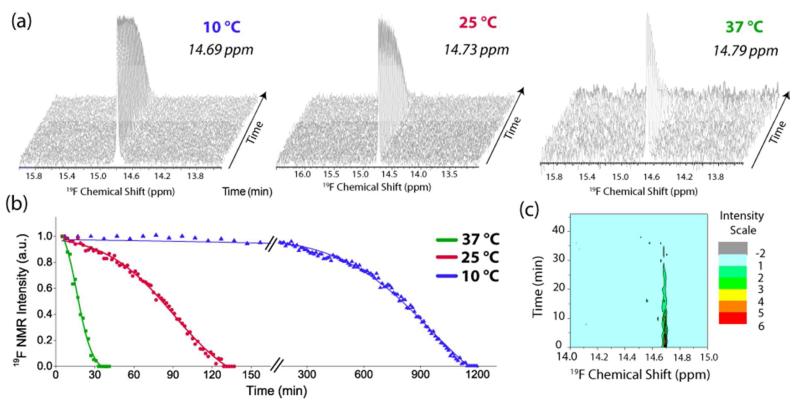
Figure 1
Figure 1. Kinetics of the disappearance the IAPP-tfmF23 monomer followed by 19F NMR
(A) Stacked plots of 19F NMR spectra (TFE = 0.0 ppm). The experiment was conducted at 10 °C (left), 25 °C (center), and 37 °C (right) at pH 7.3 (B) Plots of peak intensity of the main resonance from (A) as a function of time. Solid lines represent sigmoidal fits to the 19F data. (C) Contour plot of the 19F NMR spectra at 37 °C showing the absence of new peaks.
Figure 2
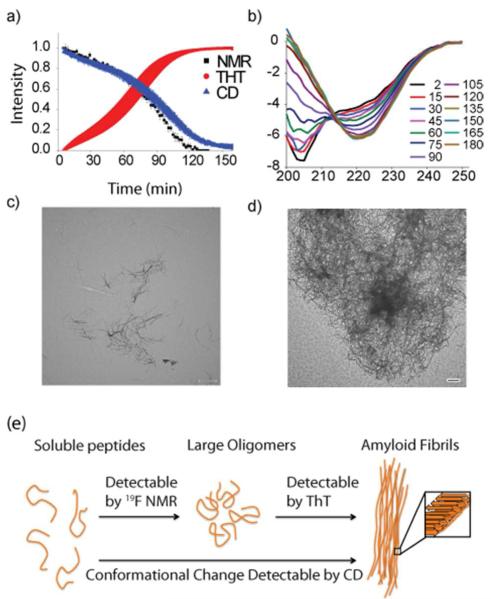
Figure 2. Comparison of the rates of monomer consumption and fiber formation
(a) Overlay of kinetic traces from obtained 19F NMR (black), ThT fluorescence (red), and CD (blue). Solid lines represent sigmoidal fits to the 19F and CD data. Error bars indicate standard error of measurement (n=4 for NMR and CD and n=5 for ThT). The close correspondence between the curves suggests fiber formation closely follows monomer consumption. (b) CD spectra showing the time evolution of secondary structure. (c, d) TEM images of IAPP-tfmF23 after 1/2 (c) and complete (d) depletion of the 19F signal intensity at 25 °C. Scale bars represent 500 nm. (e) Cartoon showing the sensitivities of each method.
Figure 3
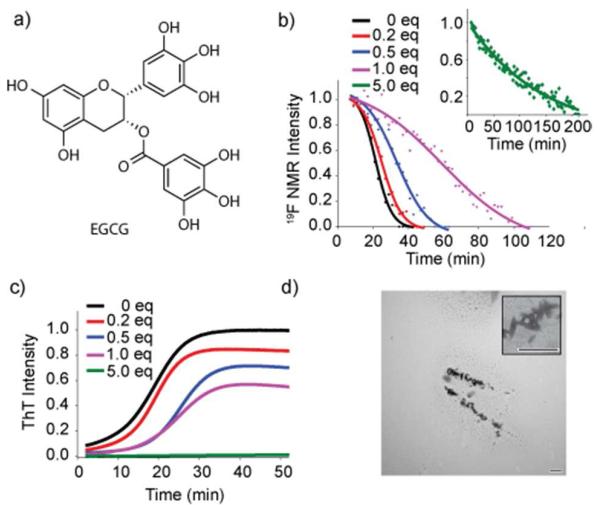
Figure 3. EGCG inhibits IAPP-tfmF23 amyloid fibrillogenesis
(a) Structure of EGCG. (b, c) Time course for peptide aggregation followed by 19F NMR (b) and ThT fluorescence (c) of IAPP-tfmF23 alone (85 μM, black) and at 1:5 (red) 1:2 (blue), 1:1 (magenta), 5:1 (green) molar ratios of EGCG to IAPP at pH 7.3, 37°C. Solid lines represent sigmoidal fits to the 19F data. 100 μM ThT is present in the ThT samples (c) but is absent in the NMR samples (b). (d) TEM images of a 1:5 mixture of IAPP and EGCG after the complete depletion of the 19F signal intensity. Scale bar represents 500 nm.
Figure 4
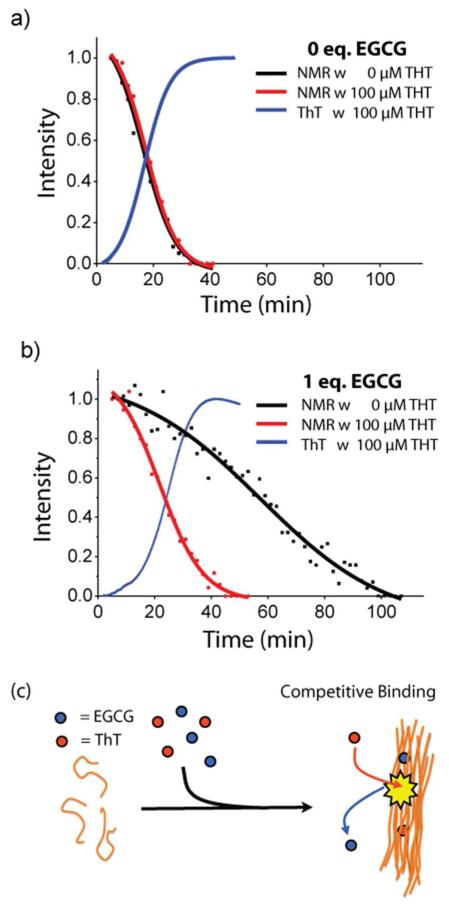
Figure 4. Competition for amyloid binding between ThT and EGCG
(a) Overlay of kinetic traces from 19F NMR (black: 0 μM ThT and red: 100 μM ThT) and ThT fluorescence (blue: 100 μM ThT) without EGCG. Solid lines represent sigmoidal fits to the 19F data. (b) Kinetic traces obtained under the same conditions but performed in the presence of 1 equivalents of EGCG to peptide. Kinetic traces in the presence of 0.5 equivalents of EGCG can be found in Fig. S8. (c) Cartoon schematic of competitive binding effect.
Figure 5
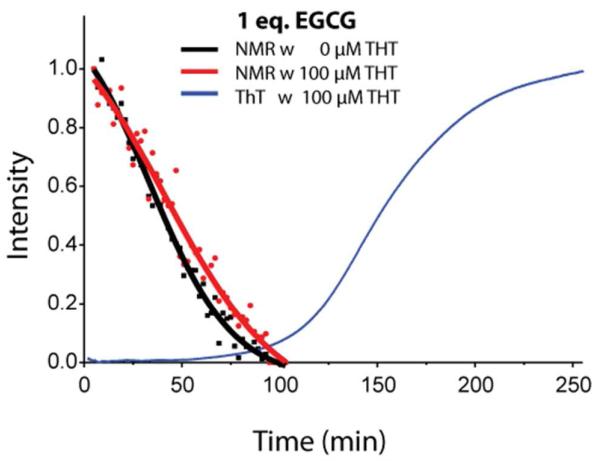
Figure 5. Competition between ThT and EGCG is decreased at lower ThT concentrations
Overlay of kinetic traces from 19F NMR (black: 0 μM ThT and red: 10 μM ThT) and ThT fluorescence (blue: 10μM) with 1eq. of EGCG. Solid lines represent sigmoidal fits to the 19F data.
Figure 6
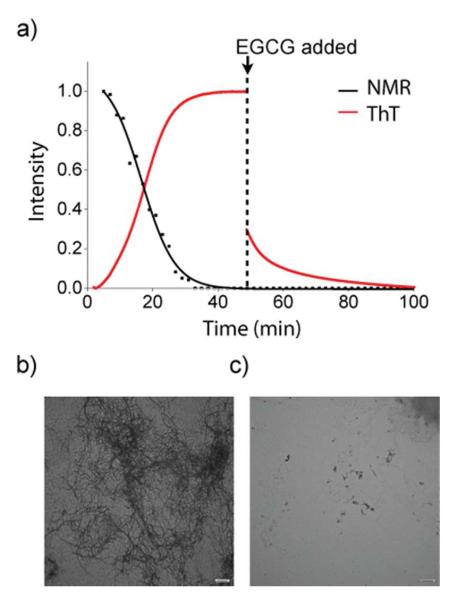
Figure 6. Disaggregation of amyloid fibrils due to the addition of EGCG
(a) Kinetic traces from 19F NMR (black) and ThT fluorescence (red) measurements at 37 °C. Disaggregation of amyloid fibril formation was complete by the addition of 5 equivalents of EGCG at the time point indicated. Solid lines represent sigmoidal fits to the 19F data. (b) TEM image just before the addition of EGCG (c) TEM image after complete depletion of ThT fluorescence intensity (100 minutes). Scale bars represent 500 nm.

References

    1. Chiti F, Dobson CM. Protein misfolding, functional amyloid, and human disease. Annu. Rev. Biochem. 2006;75:333–366. - PubMed
    1. Luca S, Yau WM, Leapman R, Tycko R. Peptide conformation and supramolecular organization in amylin fibrils: Constraints from solid-state NMR. Biochemistry. 2007;46:13505–13522. - PMC - PubMed
    1. Nelson R, Eisenberg D. Recent atomic models of amyloid fibril structure. Curr. Opin. Struct. Biol. 2006;16:260–265. - PubMed
    1. Tycko R. Solid-state NMR studies of amyloid fibril structure. Annu. Rev. Phys. Chem. 2011;62:279–299. - PMC - PubMed
    1. Harrison RS, Sharpe PC, Singh Y, Fairlie DP. Amyloid peptides and proteins in review. Rev. Physiol. Biochem. Pharmacol. 2007;159:1–77. - PubMed

Publication types