Review
. 2013 Jan;34(1):33-40.
doi: 10.1016/j.it.2012.08.005. Epub 2012 Sep 19.

Basic principles of tumor-associated regulatory T cell biology

Affiliations
Review

Basic principles of tumor-associated regulatory T cell biology

Peter A Savage et al. Trends Immunol. 2013 Jan.

Abstract

Due to the critical role of forkhead box (Fox)p3(+) regulatory T cells (Tregs) in the regulation of immunity and the enrichment of Tregs within many human tumors, several emerging therapeutic strategies for cancer involve the depletion or modulation of Tregs, with the aim of eliciting enhanced antitumor immune responses. Here, we review recent advances in understanding of the fundamental biology of Tregs, and discuss the implications of these findings for current models of tumor-associated Treg biology. In particular, we discuss the context-dependent functional diversity of Tregs, the developmental origins of these cells, and the nature of the antigens that they recognize within the tumor environment. In addition, we highlight critical areas of focus for future research.


Figures

Figure 1
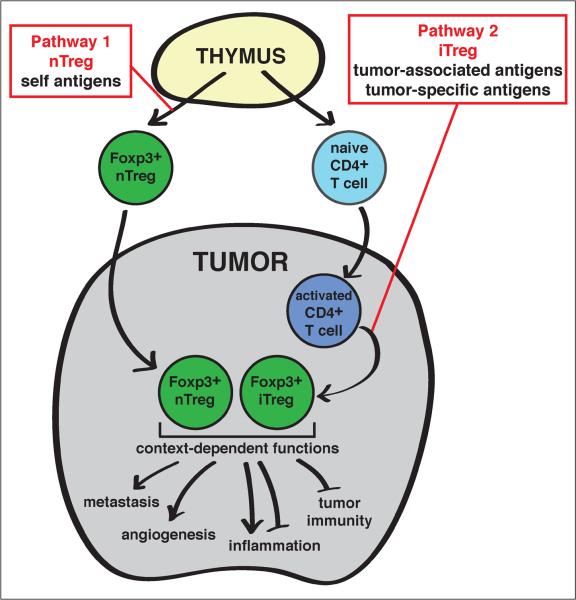
Figure 1. Conceptual model describing the biology of tumor-associated Tregs
Tumor-associated Tregs are thought to follow one of two developmental pathways in order to enter the Foxp3+ Treg lineage. First, a developing thymocyte may recognize self antigen presented within the thymus during T cell maturation (Pathway 1, referred to as natural Tregs (“nTregs”)). Alternatively, a conventional CD4+ T cell may encounter a tumor-associated (self) or tumor-specific (“neo”) antigen in the tumor environment, become activated, and under the influence of an immunosuppressive tumor microenvironment, differentiate into a Foxp3+ Treg (Pathway 2, referred to as induced Tregs “iTregs”)). Next, within the tumor environment, Tregs may respond to context-dependent inflammatory signals (e.g. Th1, Th2, or Th17 inflammation), the tissue or organ type (e.g. colon, breast, or prostate) and even the immediate proximal microenvironment (e.g. stroma, tumor bed, or lymphoid cluster). From these environmental cues, Tregs are capable of mediating distinct functions, which may include promotion of angiogenesis or metastasis, regulation of inflammation, and suppression of anti-tumor adaptive immune responses.

References

    1. Hodi FS, et al. Improved survival with ipilimumab in patients with metastatic melanoma. N Engl J Med. 2010;363(8):711–723. - PMC - PubMed
    1. Galluzzi L, et al. Trial Watch: Adoptive cell transfer immunotherapy. Oncoimmunology. 2012;1(3):306–315. - PMC - PubMed
    1. Kantoff PW, et al. Sipuleucel-T immunotherapy for castration-resistant prostate cancer. N Engl J Med. 2010;363(5):411–422. - PubMed
    1. Colombo MP, Piconese S. Regulatory-T-cell inhibition versus depletion: the right choice in cancer immunotherapy. Nat Rev Cancer. 2007;7(11):880–887. - PubMed
    1. Curiel TJ. Regulatory T cells and treatment of cancer. Curr Opin Immunol. 2008;20(2):241–246. - PMC - PubMed

Publication types