Review
. 2013 Feb;18(3-4):116-27.
doi: 10.1016/j.drudis.2012.09.003. Epub 2012 Sep 19.

Mechanistic systems modeling to guide drug discovery and development

Affiliations
Review

Mechanistic systems modeling to guide drug discovery and development

Brian J Schmidt et al. Drug Discov Today. 2013 Feb.

Abstract

A crucial question that must be addressed in the drug development process is whether the proposed therapeutic target will yield the desired effect in the clinical population. Pharmaceutical and biotechnology companies place a large investment on research and development, long before confirmatory data are available from human trials. Basic science has greatly expanded the computable knowledge of disease processes, both through the generation of large omics data sets and a compendium of studies assessing cellular and systemic responses to physiologic and pathophysiologic stimuli. Given inherent uncertainties in drug development, mechanistic systems models can better inform target selection and the decision process for advancing compounds through preclinical and clinical research.


Figures

FIGURE 1
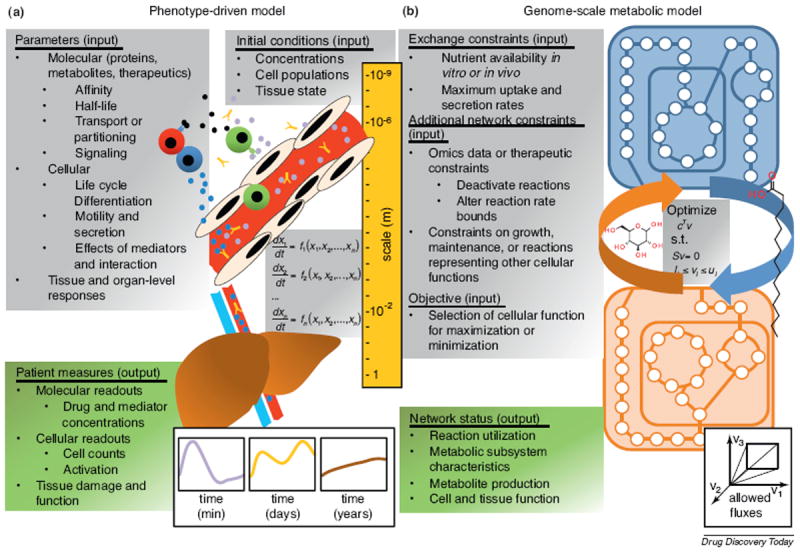
FIGURE 1. The scope, input and output of two modeling paradigms
(a) Phenotype-driven models integrate biological processes relevant to disease across length scales, from molecular mediators to tissue responses. Once the model is built and parameters are defined, either from the literature or experimental measures, a simulation solves a large system of ordinary differential equations. The result is the prediction of the dynamics of therapeutic and mediator concentrations, cell populations and composition, and tissue-level function. Simulations must span multiple time scales to capture important events such as the administration of therapeutics as well as clinical disease progression. (b) Genome-scale metabolic models use knowledge of metabolic reactions in a given cell type to construct stoichiometrically defined reaction networks. Reactions are frequently associated with enzymes from known genetic loci, which makes the task of informing the model with high-throughput data, such as proteomics or transcriptomics, more tractable. The network is often assumed to be at steady-state, with constant reaction, metabolite consumption and metabolite production rates. The formulation of cellular goals, or objectives, enables the application of methods from linear programming. Flux balance analysis and related mathematical approaches result in a description of allowable fluxes, the rates at which reactions are used for metabolic conversions, in the network. This description of the network state can be further analyzed to deduce cellular function, including the optimization of goals such as growth, ATP production, or glucose production, as well as the effect of perturbations in the network originating from disease or therapy.
FIGURE 2
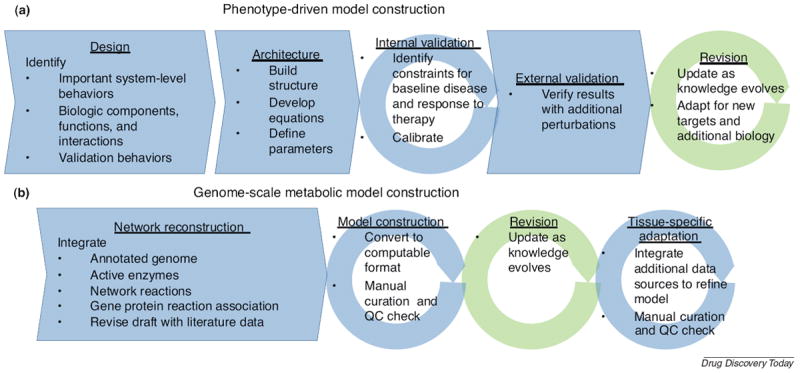
FIGURE 2. Construction of large-scale mechanistic models
(a) The process of constructing a phenotype-driven model is reviewed here briefly. In the design phase, the model scope, including crucial model behaviors, components and validation behaviors are identified. This phase includes an extensive literature review to ensure important aspects of the disease and validation data are identified. Next, the development of the architecture involves defining the equations that will govern the model behavior and developing parameter estimates. An internal validation step is performed. The calibration may use both manual and automated optimization techniques. Frequently, acceptable perturbations to multiple aspects of the biology, such as therapeutics with distinct mechanisms of action, are used. Often, the goal is to match average population behaviors, and such a carefully calibrated internal validation result serves as a reference virtual patient. During external validation, the responses to additional perturbations (not included in the calibration step) are tested. The model can then be applied for research purposes. However, the model may be recalibrated as additional data become available. An existing model may also be used as a basis for exploring new targets as additional information about relevant pathways becomes available, although such a model enhancement will require a similar, albeit smaller, process of design, architecture development, internal validation and external validation. (b) The process of constructing a genome-scale metabolic network reconstruction is illustrated. First, a general network reconstruction must be built. An annotated draft genome is integrated with databases containing the relevant enzymes and network reactions. After assigning gene protein reaction associations and performing an initial manual curation step, the reconstruction should be converted to a computable format. Once this is done, additional quality control and manual curation steps can be performed, such as verifying that metabolic pathways support fluxes and inspecting dead-end reactions. Once these steps are satisfactorily completed, one has a high-quality metabolic network reconstruction that may be revised as the knowledge base grows. For application to different therapeutic areas, tissue-specific adaptations of the generic model must be constructed.
FIGURE 3
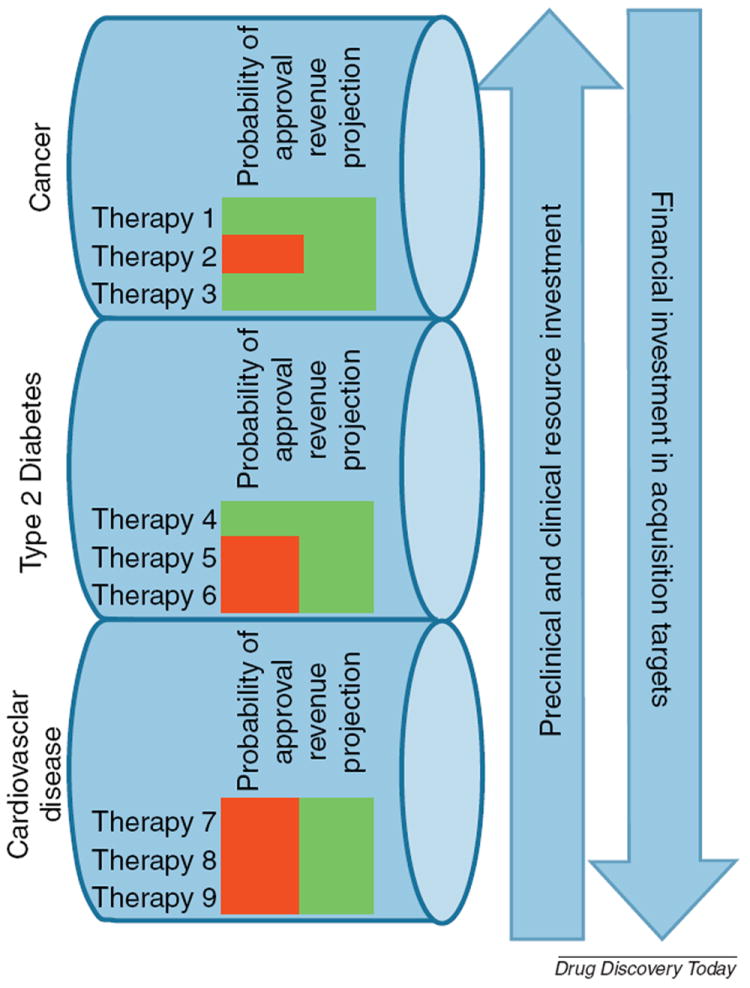
FIGURE 3
Portfolio and organization-level pipeline management decisions can be improved using systems modeling approaches. It is important to note that predictions derived from modeling yield increased or decreased confidence in the clinical success of a therapy, and therefore may be incorporated directly into corporate strategy. A hypothetical scenario is shown where a company is developing nine leads, all of which have been vetted for high potential returns, across three therapeutic areas. Modeling has improved confidence in the likelihood of success of two cancer targets, and dedicated research and development resources can be allocated as needed to maximize productivity through lower risk, high reward projects. In this scenario, the cardiovascular leads under development have not demonstrated great potential for translating through the pipeline through phase 3 successfully, and the company may want to explore acquisition options.

References

    1. Kubinyi H. Success stories of computer-aided design. In: Ekins S, editor. Computer Applications in Pharmaceutical Research and Development. John Wiley & Sons, Inc; 2006.
    1. Fernald GH, et al. Bioinformatics challenges for personalized medicine. Bioinformatics. 2011;27:1741–1748. - PMC - PubMed
    1. Khleif SN, et al. AACR-FDA-NCI Cancer Biomarkers Collaborative consensus report: advancing the use of biomarkers in cancer drug development. Clin Cancer Res. 2010;16:3299–3318. - PubMed
    1. Oberhardt MA, et al. Applications of genome-scale metabolic reconstructions. Mol Syst Biol. 2009;5:320. - PMC - PubMed
    1. Michelson S, et al. Target identification and validation using human simulation models. In: León D, Markel S, editors. In Silico Technologies in Drug Target Identification and Validation. Vol. 6. CRC Press/Taylor & Francis Group; 2006.

Publication types

LinkOut - more resources