


The effects of free-living interval-walking training on glycemic control, body composition, and physical fitness in type 2 diabetic patients: a randomized, controlled trial
- PMID: 23002086
- PMCID: PMC3554285
- DOI: 10.2337/dc12-0658
The effects of free-living interval-walking training on glycemic control, body composition, and physical fitness in type 2 diabetic patients: a randomized, controlled trial
Abstract
Objective: To evaluate the feasibility of free-living walking training in type 2 diabetic patients and to investigate the effects of interval-walking training versus continuous-walking training upon physical fitness, body composition, and glycemic control.
Research design and methods: Subjects with type 2 diabetes were randomized to a control (n = 8), continuous-walking (n = 12), or interval-walking group (n = 12). Training groups were prescribed five sessions per week (60 min/session) and were controlled with an accelerometer and a heart-rate monitor. Continuous walkers performed all training at moderate intensity, whereas interval walkers alternated 3-min repetitions at low and high intensity. Before and after the 4-month intervention, the following variables were measured: VO(2)max, body composition, and glycemic control (fasting glucose, HbA(1c), oral glucose tolerance test, and continuous glucose monitoring [CGM]).
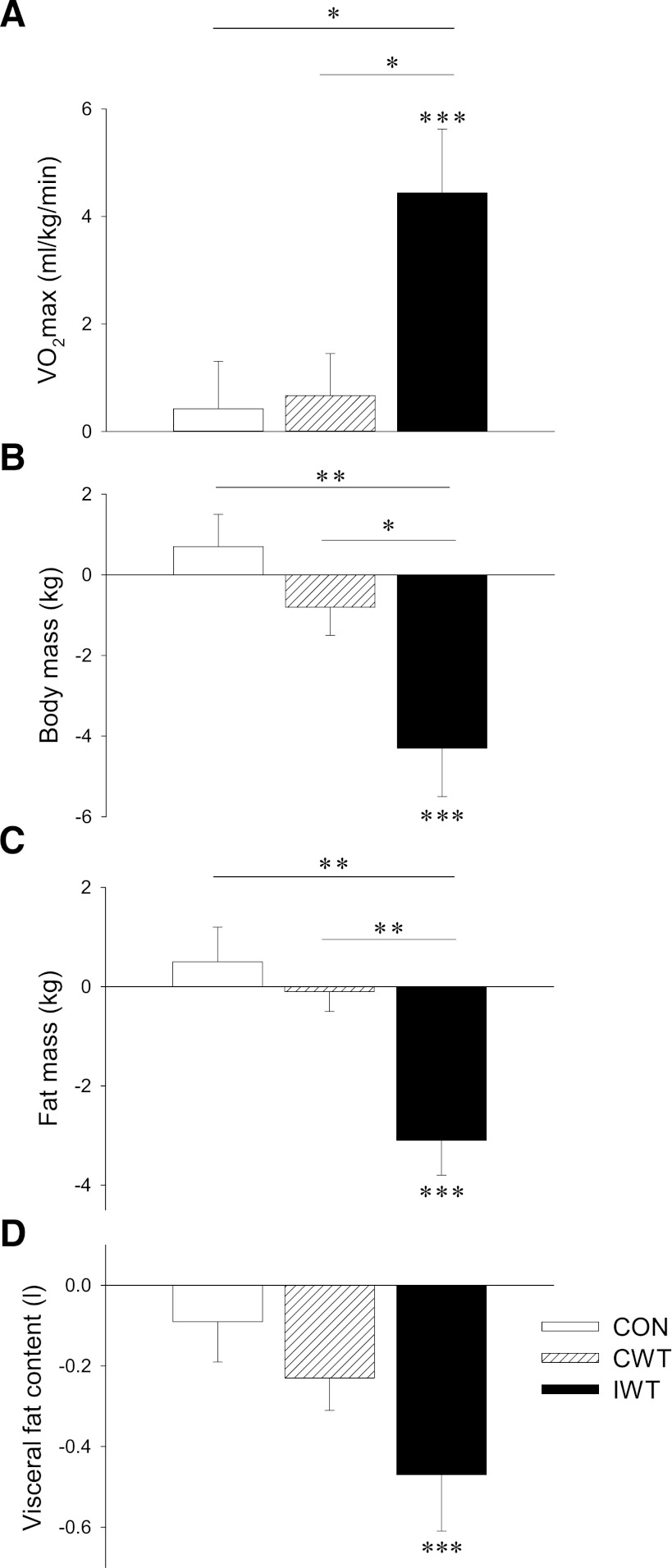
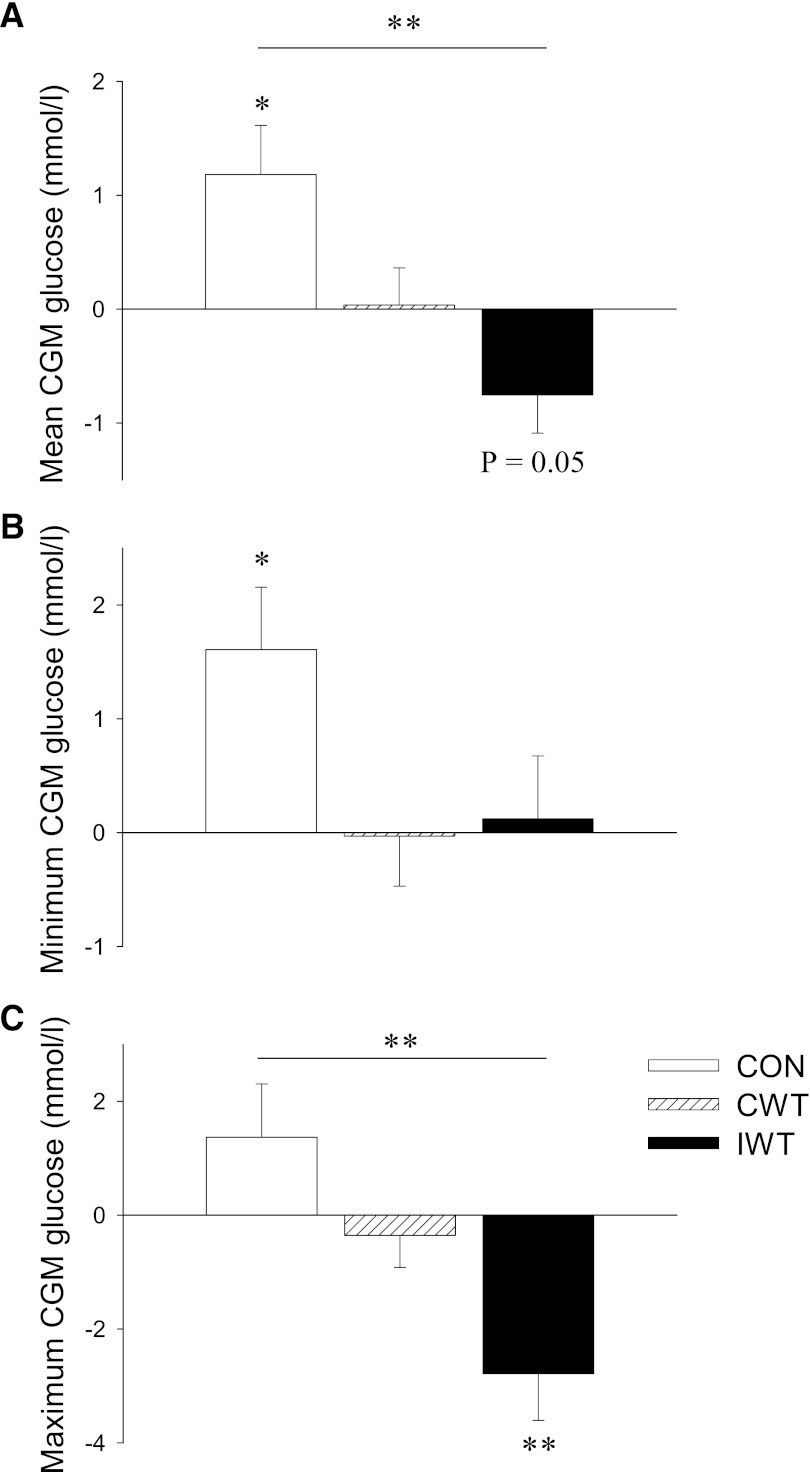
Results: Training adherence was high (89 ± 4%), and training energy expenditure and mean intensity were comparable. VO(2)max increased 16.1 ± 3.7% in the interval-walking group (P < 0.05), whereas no changes were observed in the continuous-walking or control group. Body mass and adiposity (fat mass and visceral fat) decreased in the interval-walking group only (P < 0.05). Glycemic control (elevated mean CGM glucose levels and increased fasting insulin) worsened in the control group (P < 0.05), whereas mean (P = 0.05) and maximum (P < 0.05) CGM glucose levels decreased in the interval-walking group. The continuous walkers showed no changes in glycemic control.
Conclusions: Free-living walking training is feasible in type 2 diabetic patients. Continuous walking offsets the deterioration in glycemia seen in the control group, and interval walking is superior to energy expenditure-matched continuous walking for improving physical fitness, body composition, and glycemic control.
Trial registration: ClinicalTrials.gov NCT01234155.
Figures
References
-
- Shaw JE, Sicree RA, Zimmet PZ. Global estimates of the prevalence of diabetes for 2010 and 2030. Diabetes Res Clin Pract 2010;87:4–14 - PubMed
-
- Snowling NJ, Hopkins WG. Effects of different modes of exercise training on glucose control and risk factors for complications in type 2 diabetic patients: a meta-analysis. Diabetes Care 2006;29:2518–2527 - PubMed
-
- Boulé NG, Haddad E, Kenny GP, Wells GA, Sigal RJ. Effects of exercise on glycemic control and body mass in type 2 diabetes mellitus: a meta-analysis of controlled clinical trials. JAMA 2001;286:1218–1227 - PubMed
-
- Myers J, Prakash M, Froelicher V, Do D, Partington S, Atwood JE. Exercise capacity and mortality among men referred for exercise testing. N Engl J Med 2002;346:793–801 - PubMed
-
- Wei M, Gibbons LW, Kampert JB, Nichaman MZ, Blair SN. Low cardiorespiratory fitness and physical inactivity as predictors of mortality in men with type 2 diabetes. Ann Intern Med 2000;132:605–611 - PubMed
