


Review
doi: 10.4103/1319-3767.101123.
Hepatic encephalopathy
Affiliations
- PMID: 23006457
- PMCID: PMC3500018
- DOI: 10.4103/1319-3767.101123
Item in Clipboard
Review
Hepatic encephalopathy
Saudi J Gastroenterol.
2012 Sep-Oct.
Abstract
Chronic liver disease and cirrhosis affect hundreds of millions of patients all over the world. The majority of patients with cirrhosis will eventually develop complications related to portal hypertension. One of these recurrent and difficult to treat complications is hepatic encephalopathy. Studies have indicated that overt hepatic encephalopathy affects 30 to 45% of patients with cirrhosis and a higher percentage may be affected by minimal degree of encephalopathy. All of these factors add to the impact of hepatic encephalopathy on the healthcare system and presents a major challenge to the gastroenterologist, hospitalist and primary care physician.
Conflict of interest statement
Figures
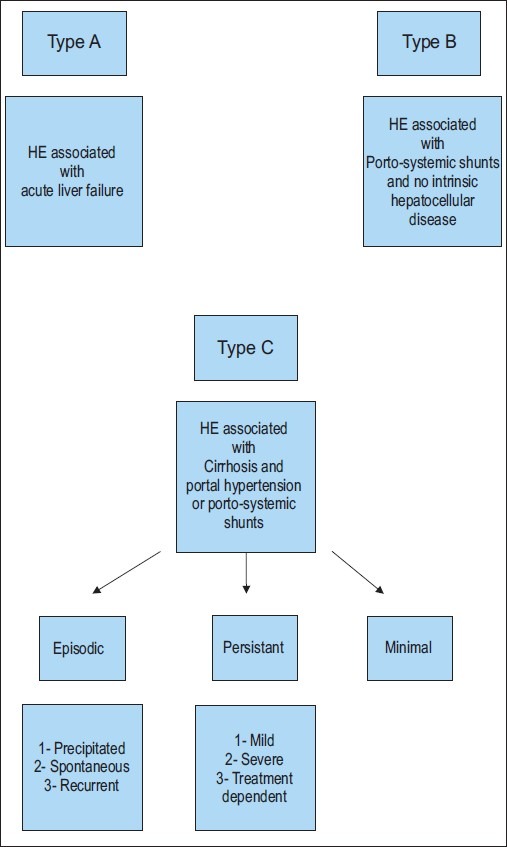
Classification of hepatic encephalopathy according to the working party at the 11th World Congress of Gastroenterology, Vienna, 1998.[6]
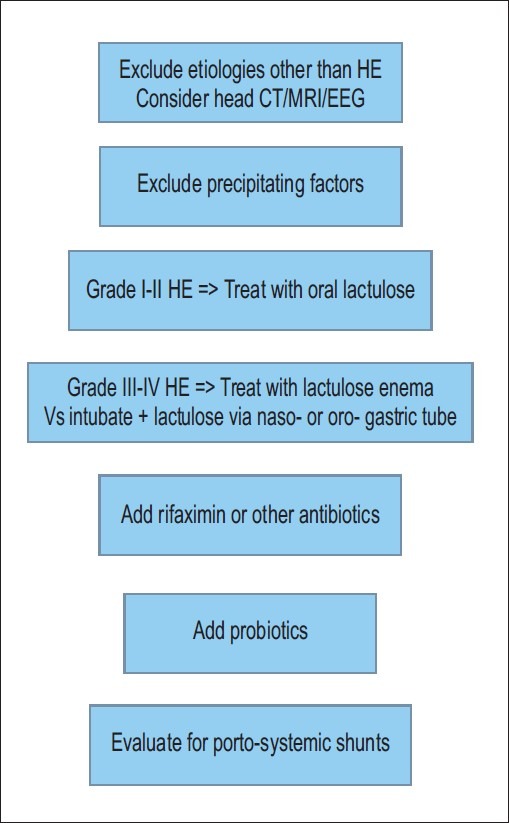
Algorithm for evaluation and treatment of HE
Comment in
-
Rifaximin as treatment for hepatic encephalopathy: some considerations.Saudi J Gastroenterol. 2013 Jan-Feb;19(1):56. doi: 10.4103/1319-3767.105930. Saudi J Gastroenterol. 2013. PMID: 23319040 Free PMC article. No abstract available.
References
-
- Bismuth M, Funakoshi N, Cadranel JF, Blanc P. Hepatic encephalopathy: From pathophysiology to therapeutic management. Eur J Gastroenterol Hepatol. 2011;23:8–22. - PubMed
-
- Butterworth RF. Editorial: Rifaximin and minimal hepatic encephalopathy. Am J Gastroenterol. 2011;106:317–8. - PubMed
-
- McPhail MJ, Bajaj JS, Thomas HC, Taylor-Robinson SD. Pathogenesis and diagnosis of hepatic encephalopathy. Expert Rev Gastroenterol Hepatol. 2010;4:365–78. - PubMed
Publication types
MeSH terms
LinkOut - more resources
Full Text Sources
Medical