Systems biology of circadian-immune interactions
- PMID: 23006670
- PMCID: PMC3717386
- DOI: 10.1159/000342427
Systems biology of circadian-immune interactions
Abstract
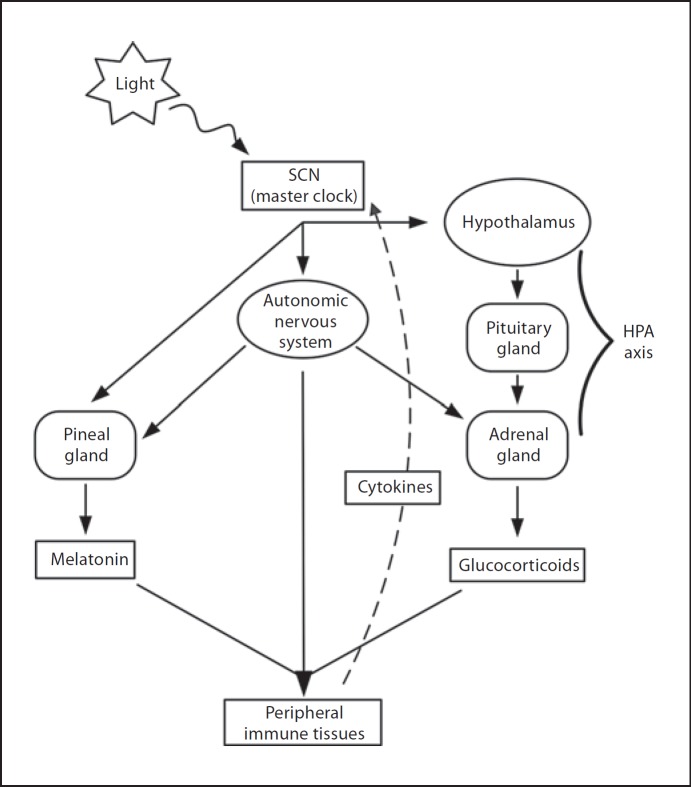
There is increasing evidence that the immune system is regulated by circadian rhythms. A wide range of immune parameters, such as the number of red blood cells and peripheral blood mononuclear cells as well as the level of critical immune mediators, such as cytokines, undergo daily fluctuations. Current experimental data indicate that circadian information reaches immune tissues mainly through diurnal patterns of autonomic and endocrine rhythms. In addition, immune factors such as cytokines can also influence the phase of the circadian clock, providing bidirectional flow of circadian information between the neuroendocrine and immune systems. This network of neuroendocrine-immune interactions consists of complexly integrated molecular feedback and feedforward loops that function in synchrony in order to optimize immune response. Chronic stress can disrupt this intrinsic orchestration, as several endocrine signals of chronically stressed patients present blunted rhythmic characteristics. Reprogramming of biological rhythms has recently gained much attention as a potent method to leverage homeostatic circadian controls to ultimately improve clinical outcomes. Elucidation of the intrinsic properties of such complex systems and optimization of intervention strategies require not only an accurate identification of the signaling pathways that mediate host responses, but also a system-level description and evaluation.
Copyright © 2012 S. Karger AG, Basel.
Figures
References
-
- Bornstein SR, Licinio J, Tauchnitz R, Engelmann L, Negrao AB, Gold P, Chrousos GP. Plasma leptin levels are increased in survivors of acute sepsis: associated loss of diurnal rhythm, in cortisol and leptin secretion. J Clin Endocrinol Metab. 1998;83:280–283. - PubMed
-
- Sephton SE, Sapolsky RM, Kraemer HC, Spiegel D. Diurnal cortisol rhythm as a predictor of breast cancer survival. J Natl Cancer Inst. 2000;92:994–1000. - PubMed
Publication types
MeSH terms
Grants and funding
LinkOut - more resources
Full Text Sources
Other Literature Sources
Medical