


Growth control in colon epithelial cells: gadolinium enhances calcium-mediated growth regulation
- PMID: 23008064
- PMCID: PMC3661021
- DOI: 10.1007/s12011-012-9503-9
Growth control in colon epithelial cells: gadolinium enhances calcium-mediated growth regulation
Abstract
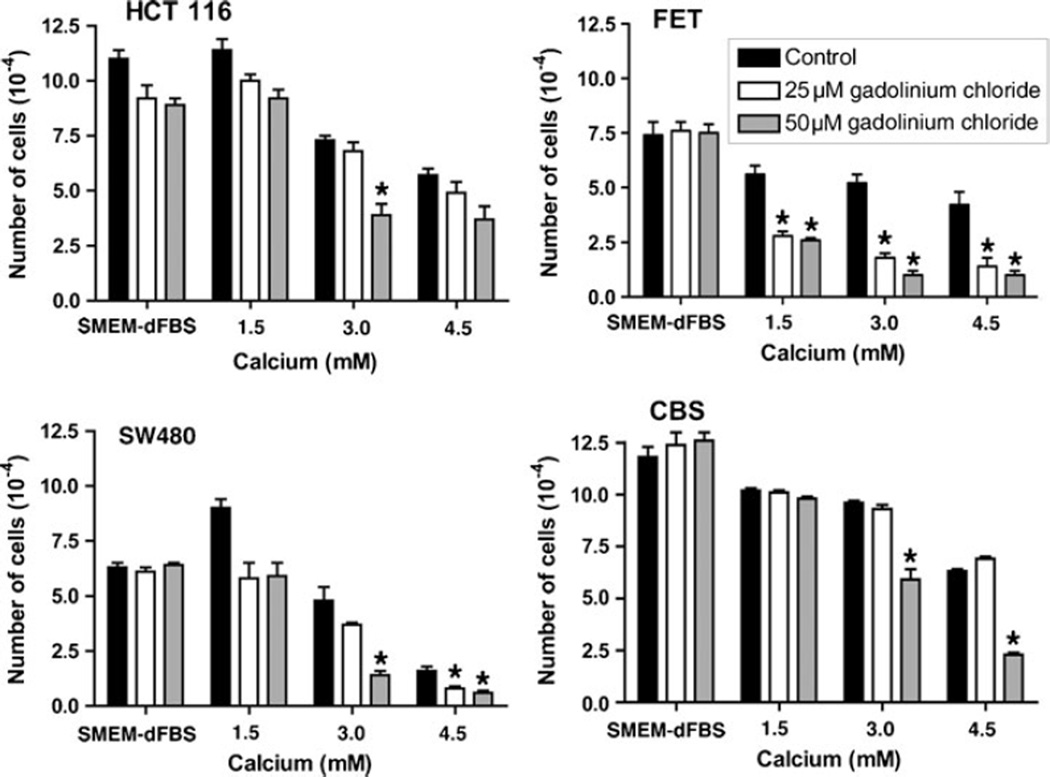
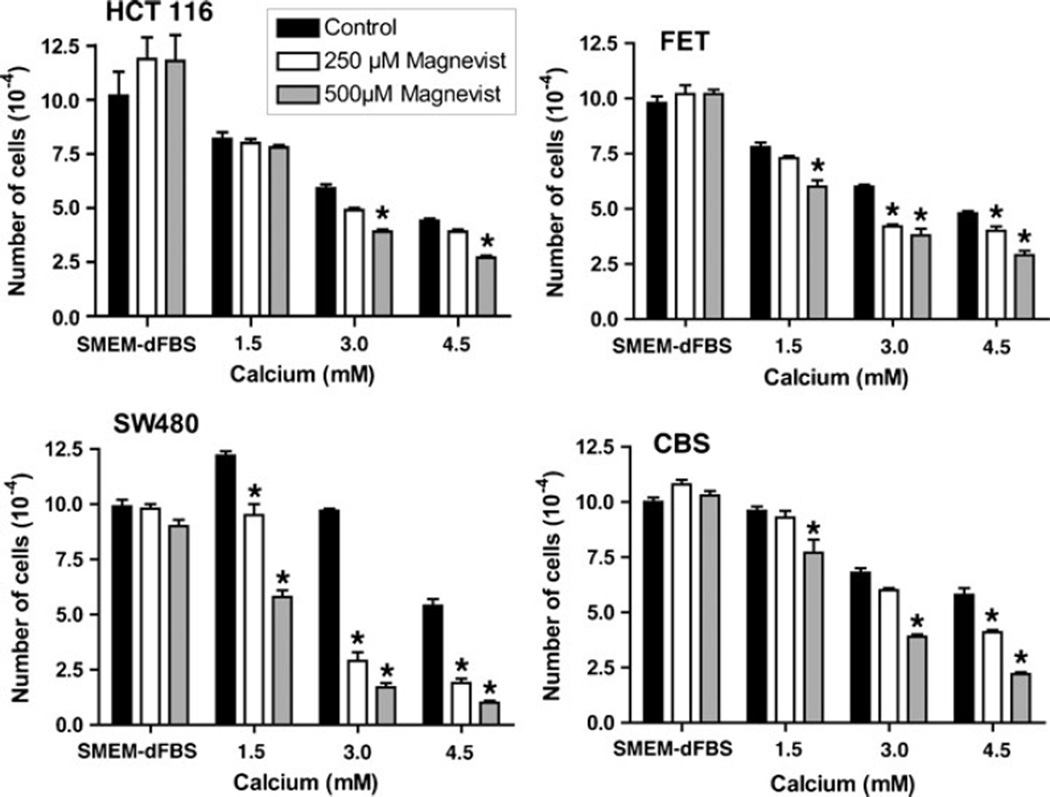
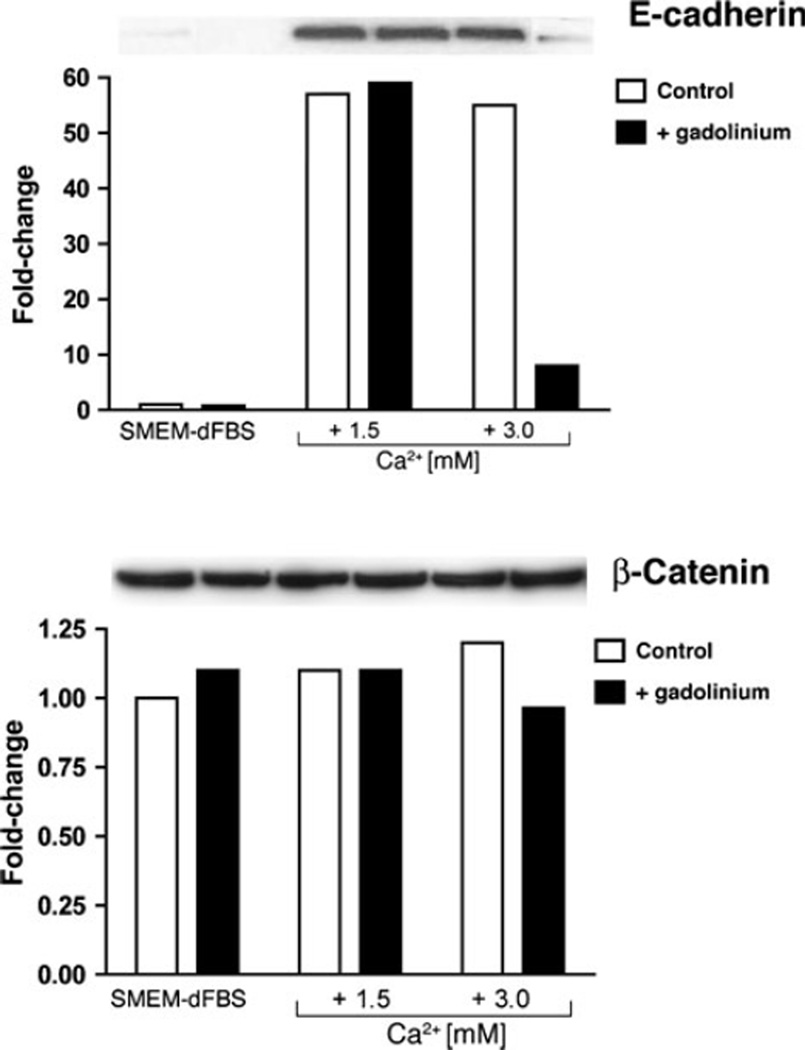
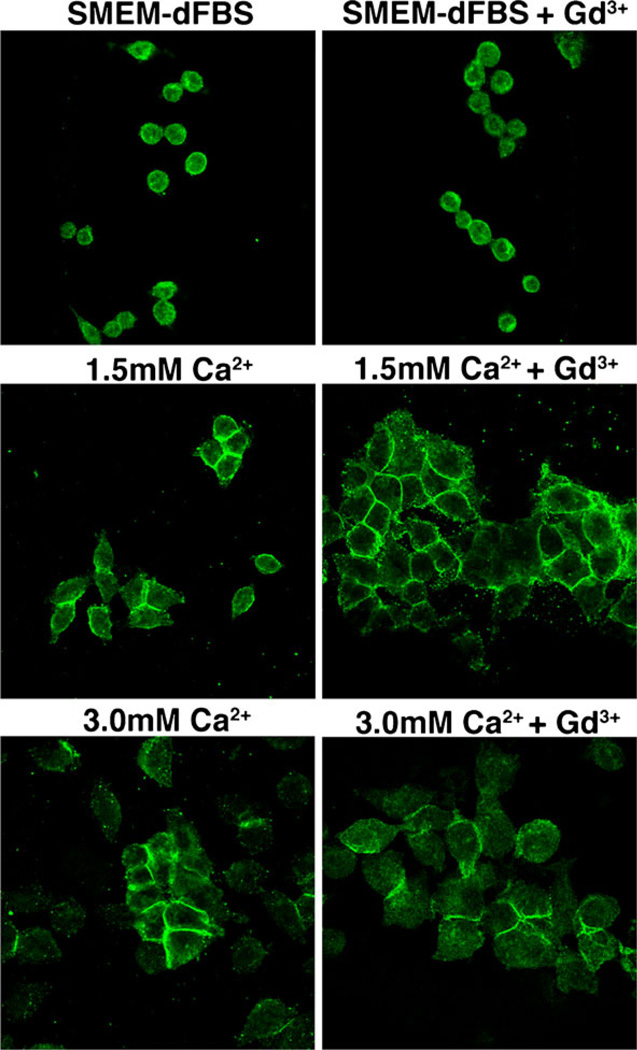
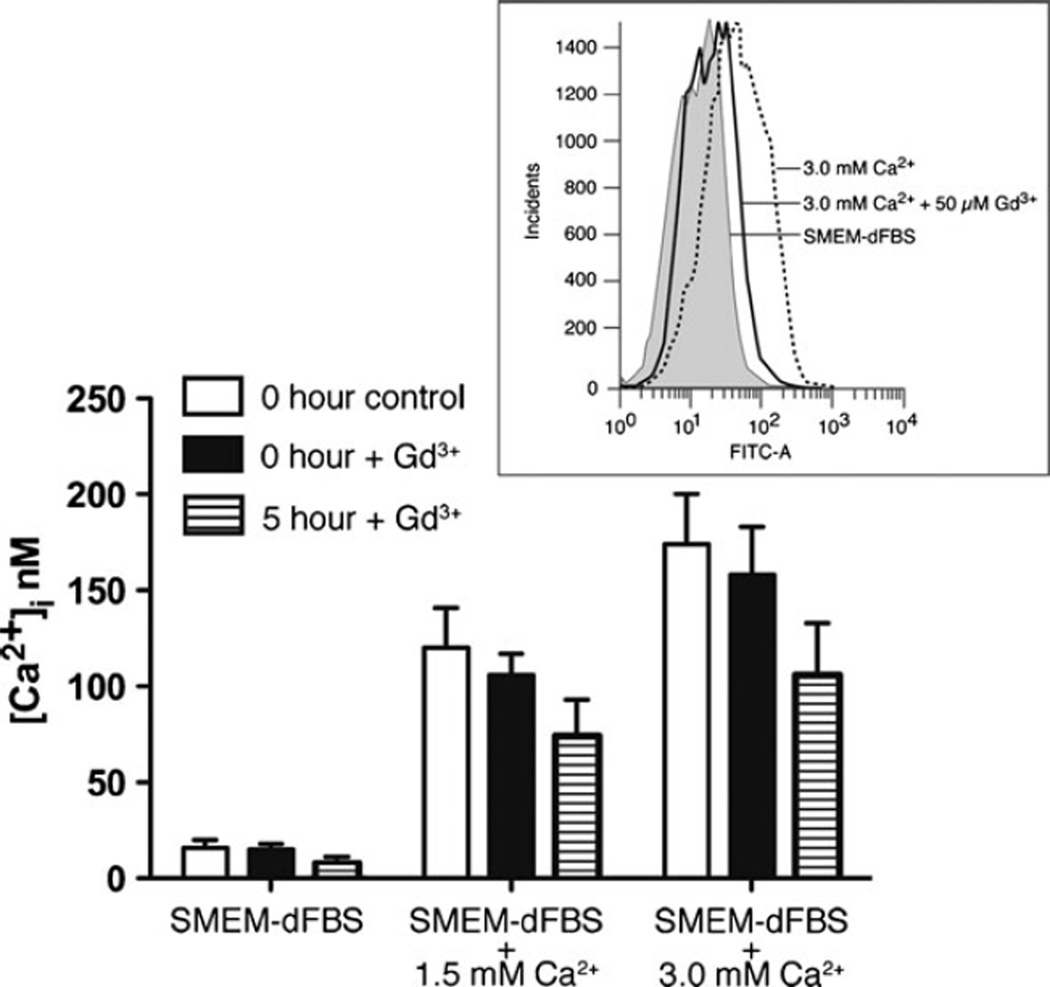
Gadolinium, a member of the lanthanoid family of transition metals, interacts with calcium-binding sites on proteins and other biological molecules. The overall goal of the present investigation was to determine if gadolinium could enhance calcium-induced epithelial cell growth inhibition in the colon. Gadolinium at concentrations as low as 1-5 μM combined with calcium inhibits proliferation of human colonic epithelial cells more effectively than calcium alone. Gadolinium had no detectable effect on calcium-induced differentiation in the same cells based on change in cell morphology, induction of E-cadherin synthesis, and translocation of E-cadherin from the cytosol to the cell surface. When the colon epithelial cells were treated with gadolinium and then exposed to increased calcium concentrations, movement of extracellular calcium into the cell was suppressed. In contrast, gadolinium treatment had no effect on ionomycin-induced release of stored intracellular calcium into the cytoplasm. Whether these in vitro observations can be translated into an approach for reducing abnormal proliferation in the colonic mucosa (including polyp formation) is not known. These results do, however, provide an explanation for our recent findings that a multi-mineral supplement containing all of the naturally occurring lanthanoid metals including gadolinium are more effective than calcium alone in preventing colon polyp formation in mice on a high-fat diet.
Figures
References
-
- Bostick RM, Potter JD, Sellers TA, McKenzie DR, Kushi LH, Folsom AR. Calcium, vitamin D, dairy foods intake to incidence of colon cancer among older women. The Iowa women’s health study. Am J Epidemiol. 1993;137:1302–1317. - PubMed
-
- Kampman E, Giovannucci E, van ‘t Veer P, Rimm E, Stampfer MJ, Colditz GA, Kok FJ, Willett WC. Calcium, vitamin D, dairy foods, and the occurrence of colorectal adenomas among men and women in two prospective studies. Am J Epidemiol. 1994;139:16–29. - PubMed
-
- Kampman E, Slattery ML, Caan B, Potter JD. Calcium, vitamin D, sunshine exposure, dairy products and colon cancer risk (United States) Cancer Causes Control. 2000;11:459–466. - PubMed
-
- McCullough ML, Robertson AS, Rodriguez C, Jacobs EJ, Chao A, Carolyn J, Calle EE, Willett WC, Thun MJ. Calcium, vitamin D, dairy products, and risk of colorectal cancer in the Cancer Prevention Study II Nutrition Cohort (United States) Cancer Causes Control. 2003;14:1–12. - PubMed
-
- Flood A, Peters U, Chatterjee N, Lacey JV, Jr, Schairer C, Schatzkin A. Calcium from diet and supplements is associated with reduced risk of colorectal cancer in a prospective cohort of women. Cancer Epidemiol Biomarkers Prev. 2005;14:126–132. - PubMed
Publication types
MeSH terms
Substances
Grants and funding
LinkOut - more resources
Full Text Sources
Medical
