Pattern of intestinal parasitic infection among food handlers in riyadh, saudi arabia
- PMID: 23008653
- PMCID: PMC3439746
Pattern of intestinal parasitic infection among food handlers in riyadh, saudi arabia
Abstract
Objective: Identify the types and prevalence of intestinal parasites among food handlers, and test the effectiveness of the current pre-employment screening policy.
Methods: A cross sectional survey was carried out in the catchment areas of seven primary health care centres (PHCCs) to represent various sections of Riyadh city. A total of 700 food handlers working in restaurants were randomly selected from the study area. All study subjects were asked to complete a data collection form and to bring a fresh stool specimen on the specified day to the designated PHCC.
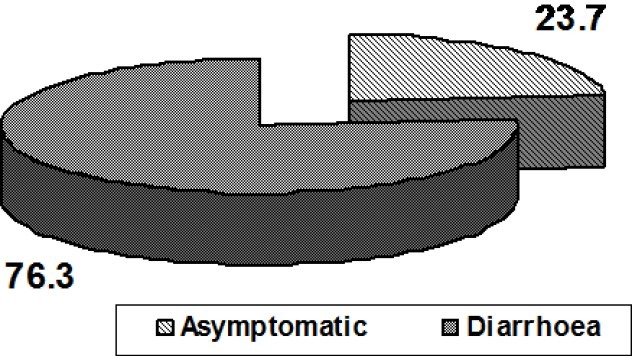
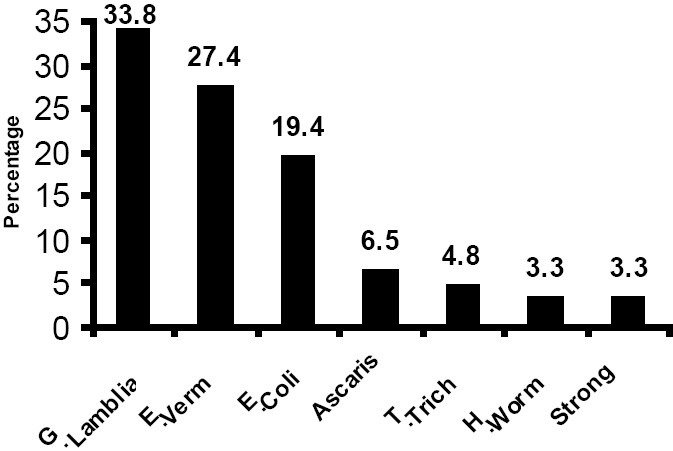
Results: About 66% of the selected subjects complied in bringing fresh stool specimens. Fifty nine (12.8%) of the specimens were positive for parasites. There was a significant association between the food handler's nationality and the likelihood of a positive specimen result, being highest among the Bangladeshis (20.2%) and Indians (18.5%) and the lowest among the Arabs (3.4%) and the Turks (10%). The commonest intestinal parasites isolated were Giardia lamblia (33.8%), followed by Enterobius vermicularis (27.4%). The current screening policy does not seem effective, as there was an absence of significant association between holding a valid PEHC and the test result, with 81% of the positive results from persons holding valid pre-employment health certificates (PEHCs).
Conclusions: Though it is obligatory for food handlers to hold a PEHC in Saudi Arabia, the prevalence of intestinal parasites remains high. Possible solutions include health education on hygiene, more frequent stool tests, and assessment of the current annual screening procedure.
Keywords: Intestinal parasites; Saudi Arabia; foodhandlers; health education.
Figures
References
-
- Musaiger AO, Gregory WB. Change in parasitic infections among school children in Bahrain, 1980-1986: A preliminary study 1990. Saudi Med J. 1990;11(2):113–5.
-
- World Health Organization. Prevention and control of intestinal parasitic infections. 1987;749:7–18. - PubMed
-
- Al-Shammari S, Khoja T, Al-Khwasky F, Gad A. Intestinal Parasitic diseases in Riyadh, Saudi Arabia: Prevalence, Sociodemographic and environmental associates. Tropical Medicine and International Health. 2001;6(3):184–9. - PubMed
-
- Khan MU, Amir SE, Eid OM, Aggrewal S. Parasitic infestation in expatriates in Riyadh, Saudi Arabia. Ann Saudi Med. 1989;9(5):471–4.
-
- Khan MU, Shahidullah M, Barua DK, Begum T. Efficacy of periodic deworming in an urban Slum population for parasite control. Ind J Med Res. 1984;83:82–8. - PubMed
LinkOut - more resources
Full Text Sources