


Influence of bisphosphonate treatment on medullary macrophages and osteoclasts: an experimental study
- PMID: 23008775
- PMCID: PMC3449103
- DOI: 10.1155/2012/526236
Influence of bisphosphonate treatment on medullary macrophages and osteoclasts: an experimental study
Abstract
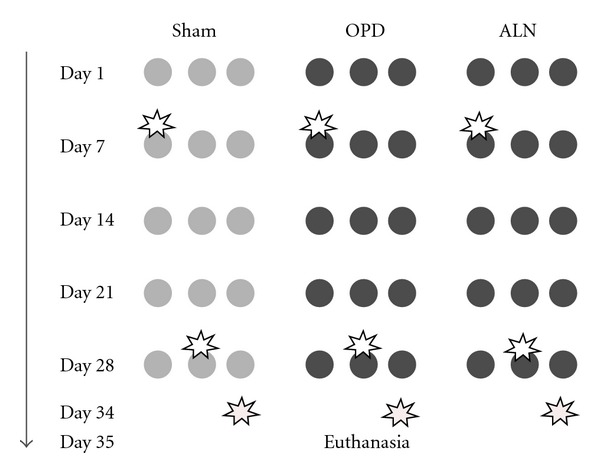
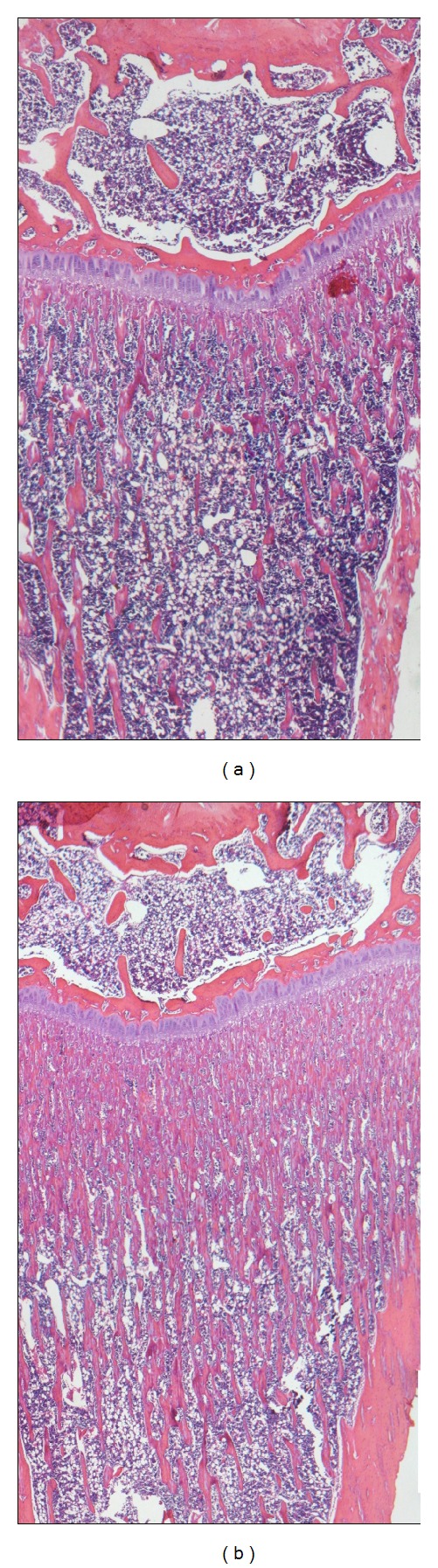
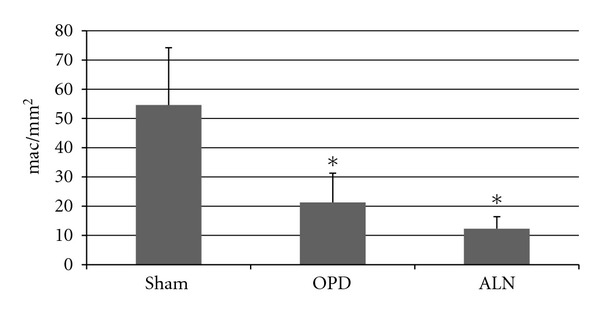
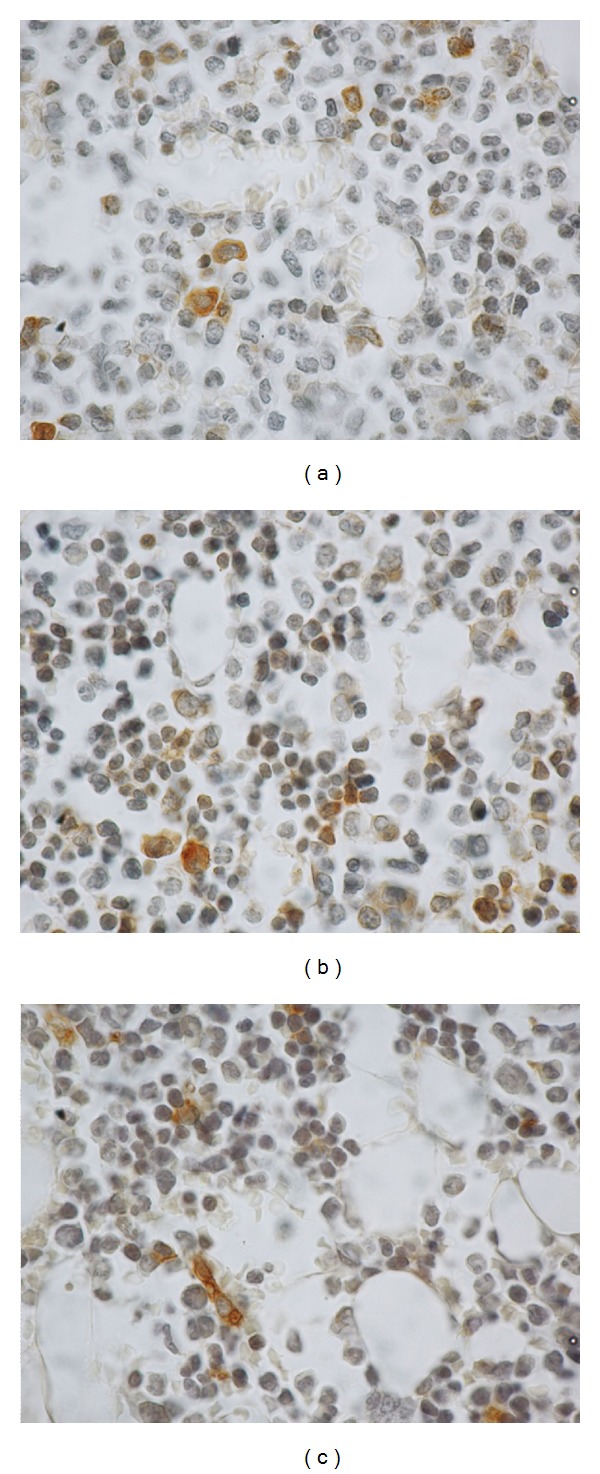
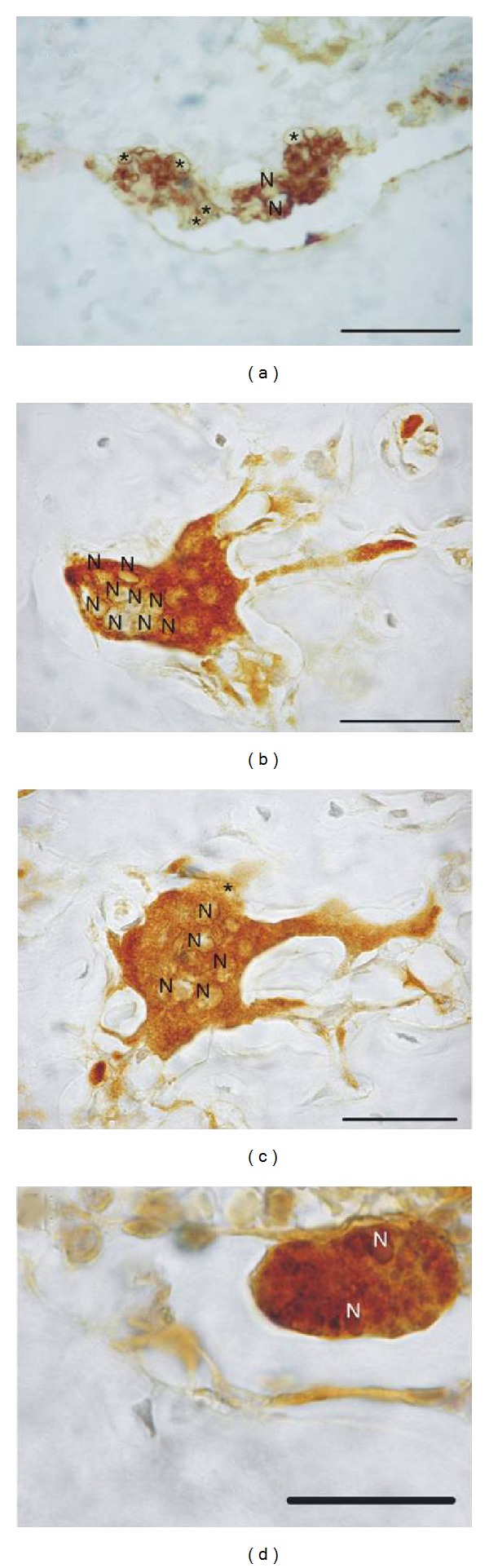
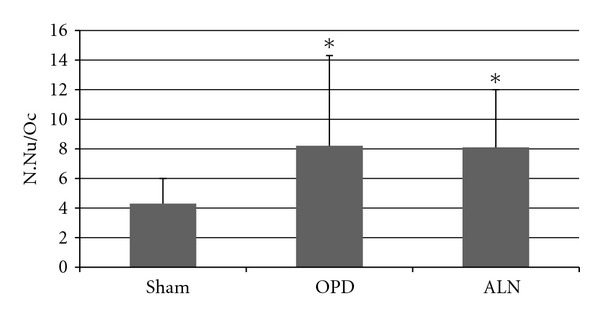
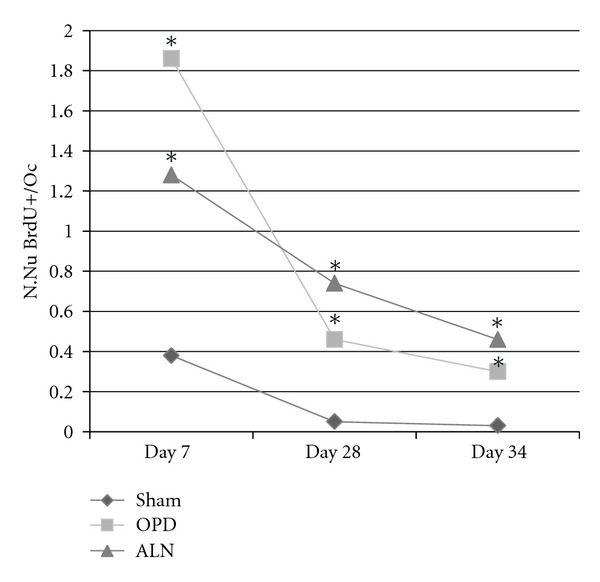
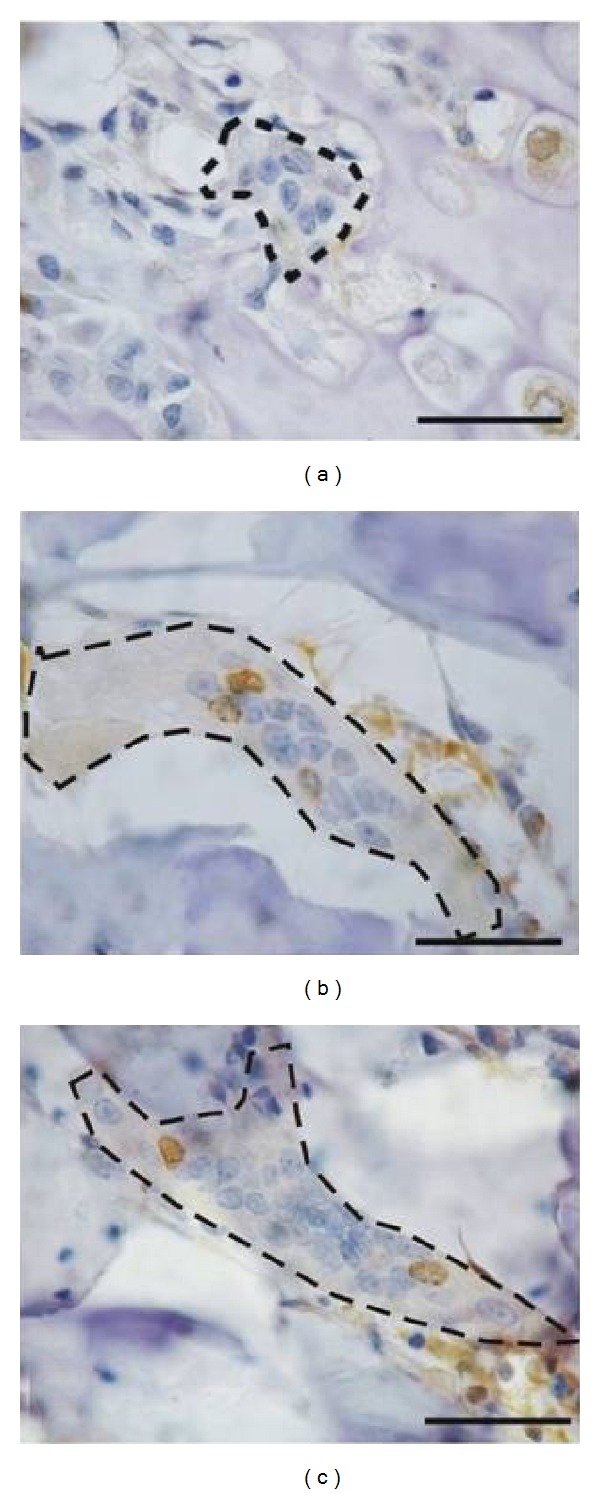
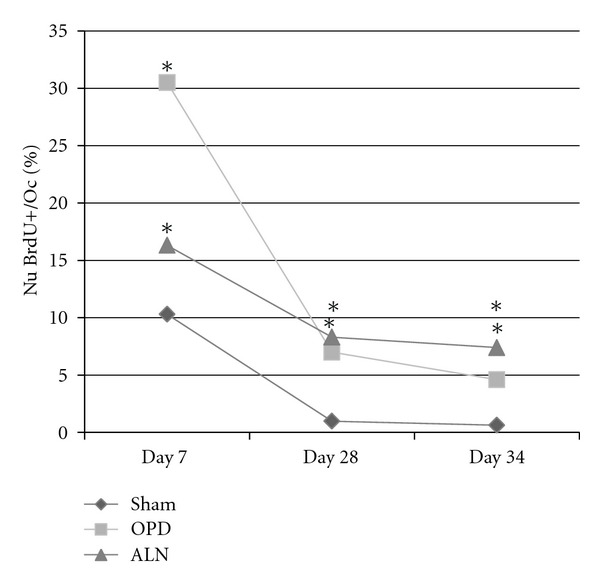
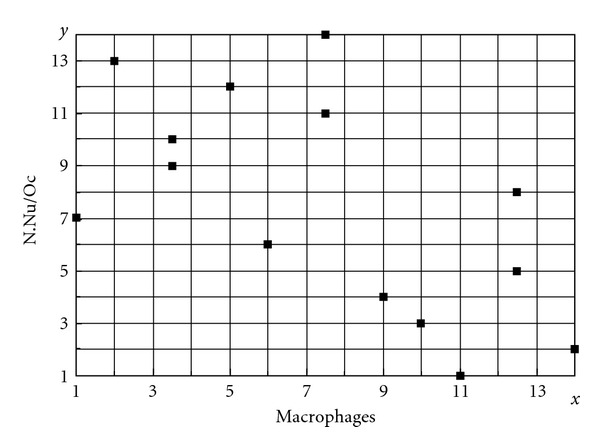
Nitrogen-containing bisphosphonates are widely used for treating diverse bone pathologies. They are anticatabolic drugs that act on osteoclasts inhibiting bone resorption. It remains unknown whether the mechanism of action is by decreasing osteoclast number, impairing osteoclast function, or whether they continue to effectively inhibit bone resorption despite the increase in osteoclast number. There is increasing evidence that bisphosphonates also act on bone marrow cells like macrophages and monocytes. The present work sought to evaluate the dynamics of preosteoclast fusion and possible changes in medullary macrophage number in bisphosphonate-treated animals. Healthy female Wistar rats received olpadronate, alendronate, or vehicle during 5 weeks, and 5-bromo-2-deoxyuridine (BrdU) on day 7, 28, or 34 of the experiment. Histomorphometric studies were performed to study femurs and evaluate: number of nuclei per osteoclast (N.Nu/Oc); number of BrdU-positive nuclei (N.Nu BrdU+/Oc); percentage of BrdU-positive nuclei per osteoclast (%Nu.BrdU+/Oc); medullary macrophage number (mac/mm(2)) and correlation between N.Nu/Oc and mac/mm(2). Results showed bisphosphonate-treated animals exhibited increased N.Nu/Oc, caused by an increase in preosteoclast fusion rate and evidenced by higher N.Nu BrdU+/Oc, and significantly decreased mac/mm(2). Considering the common origin of osteoclasts and macrophages, the increased demand for precursors of the osteoclast lineage may occur at the expense of macrophage lineage precursors.
Figures
References
-
- Hiroi-Furuya E, Kameda T, Hiura K, et al. Etidronate (EHDP) inhibits osteoclastic-bone resorption, promotes apoptosis and disrupts actin rings in isolate-mature osteoclasts. Calcified Tissue International. 1999;64(3):219–223. - PubMed
-
- Benford HL, McGowan NWA, Helfrich MH, Nuttall ME, Rogers MJ. Visualization of bisphosphonate-induced caspase-3 activity in apoptotic osteoclasts in vitro. Bone. 2001;28(5):465–473. - PubMed
-
- Van Beek ER, Löwik CWGM, Papapoulos SE. Bisphosphonates suppress bone resorption by a direct effect on early osteoclast precursors without affecting the osteoclastogenic capacity of osteogenic cells: the role of protein geranylgeranylation in the action of nitrogencontaining bisphosphonates on osteoclast precursors. Bone. 2002;30(1):64–70. - PubMed
-
- Sudhoff H, Jung JY, Ebmeyer J, Faddis BT, Hildmann H, Chole RA. Zoledronic acid inhibits osteoclastogenesis in vitro and in a mouse model of inflammatory osteolysis. Annals of Otology, Rhinology and Laryngology. 2003;112(9):780–786. - PubMed
-
- Kwak HB, Kim JY, Kim KJ, et al. Risedronate directly inhibits osteoclast differentiation and inflammatory bone loss. Biological and Pharmaceutical Bulletin. 2009;32(7):1193–1198. - PubMed
LinkOut - more resources
Full Text Sources
Research Materials
