


The reciprocal relationship between alliance and symptom improvement across the treatment of childhood anxiety
- PMID: 23009693
- PMCID: PMC4224949
- DOI: 10.1080/15374416.2012.723261
The reciprocal relationship between alliance and symptom improvement across the treatment of childhood anxiety
Abstract
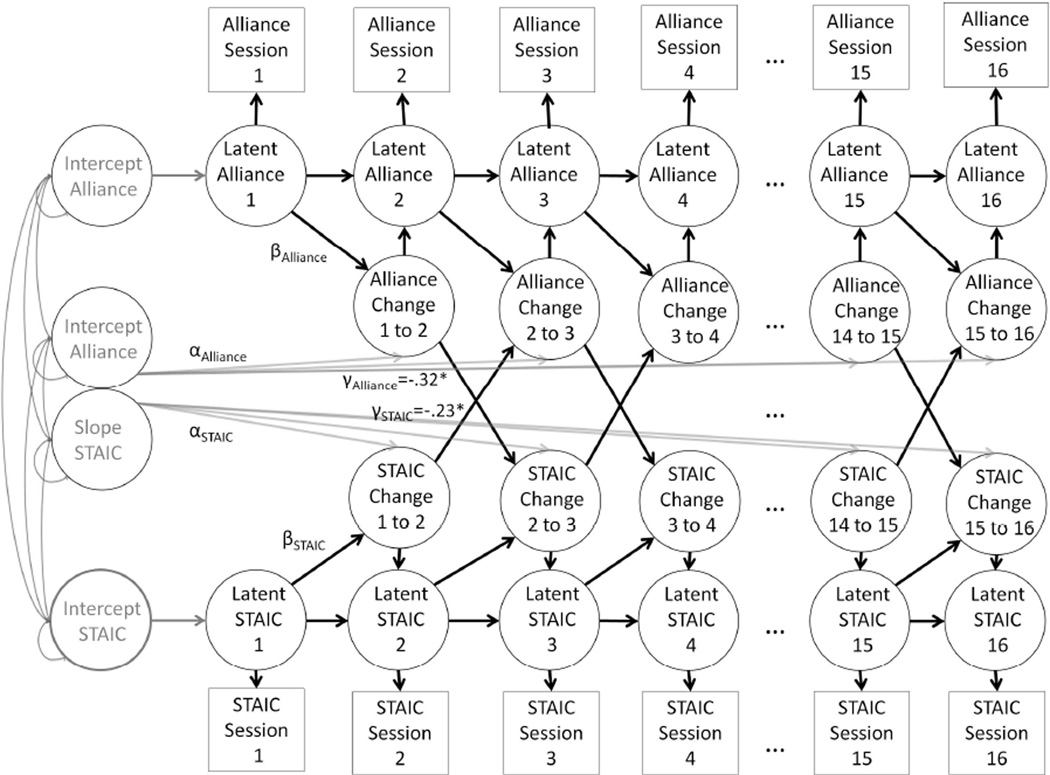
This study examined changes in the therapeutic alliance and in self-reported anxiety over the course of 16 weeks of manual-based family treatment for child anxiety disorders. Eighty-six children (51.3% female; aged 7.15-14.44; 86.2% Caucasian, 14.8% minority) with a principal diagnosis of separation anxiety disorder, generalized anxiety disorder, and/or social phobia, and their parents, received family treatment for anxiety disorders in youth. Child, therapist, and parent ratings of therapeutic alliance and child ratings of state anxiety were measured each session. Latent difference score growth modeling investigated the interacting relationship. Therapeutic alliance change, as rated by the mother and by the therapist, was a significant predictor (medium effect) of latter change in child anxiety (with greater therapeutic alliance leading to later reduction in anxiety). However, changes in child-reported anxiety also predicted latter change in father- and therapist-reported alliance (small-to-medium effect). Prospective relationships between child-reported therapeutic alliance and child-reported symptom improvement were not significant. Results provide partial support for a reciprocal model in which therapeutic alliance improves outcome, and anxiety reduction improves therapeutic alliance.
Figures
References
-
- Ackerman S, Hilsenroth M. A review of therapist characteristics and techniques positively impacting the therapeutic alliance. Clinical Psychology Review. 2003;23(1):1–33. - PubMed
-
- Albano AM, Silverman WK. Clinical manual for the Anxiety Disorders Interview Schedule for DSM-IV-Child Version. San Antonio, TX: The Psychological Corporation; 1996.
-
- Asparouhov T, Muthén B. Bayesian analysis of latent variable models using Mplus. Technical Report. 2010 Retrieved from http://statmodel.com/papers.shtml.
-
- Barber JP, Connolly MB, Crits-Christoph P, Gladis L, Siqueland L. Alliance predicts patients’ outcome beyond in-treatment change in symptoms. Journal of Consulting and Clinical Psychology. 2000;68:1027–1032. - PubMed
-
- Baldwin SA, Wampold BE, Imel ZE. Untangling the alliance-outcome correlation: Exploring the relative importance of therapist and patient variability in the alliance. Journal of Consulting and Clinical Psychology. 2007;75(6):842–852. - PubMed
Publication types
MeSH terms
Grants and funding
LinkOut - more resources
Full Text Sources
Other Literature Sources
Medical
