


CKD impairs barrier function and alters microbial flora of the intestine: a major link to inflammation and uremic toxicity
- PMID: 23010760
- PMCID: PMC3756830
- DOI: 10.1097/MNH.0b013e328358c8d5
CKD impairs barrier function and alters microbial flora of the intestine: a major link to inflammation and uremic toxicity
Abstract
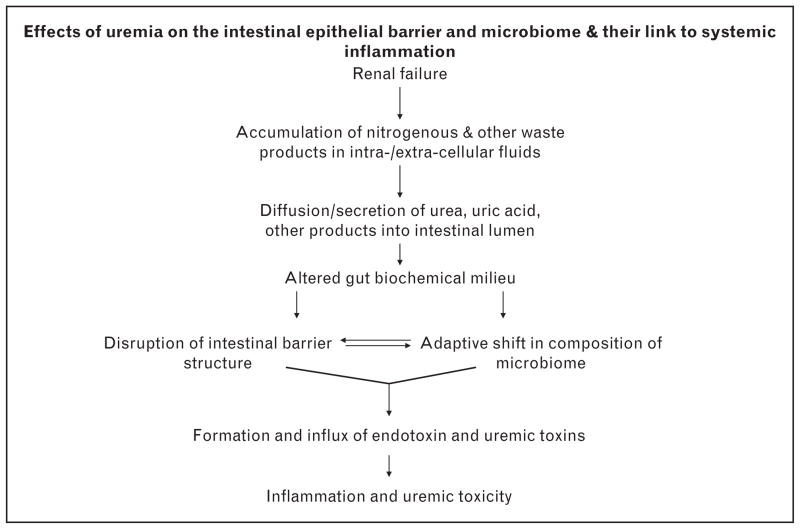
Purpose of review: Chronic kidney disease (CKD) is associated with oxidative stress and inflammation which contribute to progression of kidney disease and its numerous complications. Until recently, little attention had been paid to the role of the intestine and its microbial flora in the pathogenesis of CKD-associated inflammation. This article is intended to provide an over view of the impact of uremia on the structure and function of the gut and its microbial flora and their potential link to the associated systemic inflammation.
Recent findings: Recent studies conducted in the author's laboratories have demonstrated marked disintegration of the colonic epithelial barrier structure and significant alteration of the colonic bacterial flora in humans and animals with advanced CKD. The observed disruption of the intestinal epithelial barrier complex can play an important part in the development of systemic inflammation by enabling influx of endotoxin and other noxious luminal contents into the systemic circulation. Similarly via disruption of the normal symbiotic relationship and production, absorption and retention of noxious products, alteration of the microbial flora can contribute to systemic inflammation and uremic toxicity. In fact recent studies have documented the role of colonic bacteria as the primary source of several well known pro-inflammatory/pro-oxidant uremic toxins as well as many as-yet unidentified retained compounds.
Summary: CKD results in disruption of the intestinal barrier structure and marked alteration of its microbial flora - events that play a major role in the pathogenesis of inflammation and uremic toxicity.
Conflict of interest statement
There are no conflicts of interest.
Figures
References
-
- Himmelfarb J, Hakim RM. Oxidative stress in uremia. Curr Opin Nephrol Hypertens. 2003;12:593–598. - PubMed
-
- Himmelfarb J, Stenvinkel P, Ikizler TA, Hakim RM. The elephant in uremia: oxidant stress as a unifying concept of cardiovascular disease in uremia. Kidney Int. 2002;62:1524–1538. - PubMed
-
- Vaziri ND. Roles of oxidative stress and antioxidant therapy in chronic kidney disease and hypertension. Curr Opin Nephrol Hypertens. 2004;13:93–99. - PubMed
-
- Vaziri ND. Oxidative stress in uremia: nature, mechanisms, and potential consequences. Semin Nephrol. 2004;24:469–473. - PubMed
-
- Cachofeiro V, Goicochea M, de Vinuesa SG, et al. Oxidative stress and inflammation, a link between chronic kidney disease and cardiovascular disease. Kidney Int Suppl. 2008;111:S4–S9. - PubMed
Publication types
MeSH terms
Substances
Grants and funding
LinkOut - more resources
Full Text Sources
Medical
Research Materials
