


Posterior spinal cord herniation: a novel occurrence following surgery for an intramedullary cyst at the thoracolumbar junction
- PMID: 23014740
- PMCID: PMC3641245
- DOI: 10.1007/s00586-012-2515-5
Posterior spinal cord herniation: a novel occurrence following surgery for an intramedullary cyst at the thoracolumbar junction
Abstract
Background: Dorsal herniation of the spinal cord through the dura is an uncommon phenomenon and this is only the fifth reported case in the thoracolumbar spine, the first following surgery at the thoracolumbar junction.
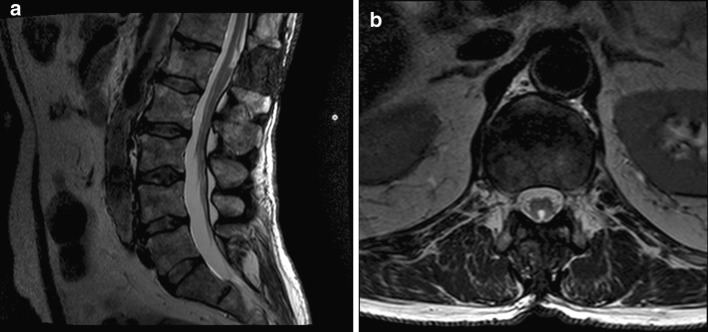
Case: A 57-year-old male underwent marsupialisation of a benign intramedullary cyst at the T12-L1 level and subsequently returned with symptoms of dorsal column compromise. He was found to have a posterior herniation of the cord into a pseudomeningocele at the level of the previous surgery.
Conclusion: The hernia was reduced surgically and the defect closed directly without the need for a dural patch leading to a full recovery. Posterior cord herniation, its possible aetiologies and management strategies are discussed.
Figures


References
-
- Groen RJM, Middel B, Meilof JF, et al. Operative treatment of anterior thoracic spinal cord herniation: three new cases and an individual patient data meta-analysis of 126 case reports. Neurosurgery. 2009;64(3 Suppl):145–159. - PubMed
-
- Mizuno J, Nakagawa H, Iwata K. Postoperative spinal cord herniation diagnosed by metrizamide CT: a case report. No Shinkei Geka. Neurol Surg. 1986;14(5):681–685. - PubMed
Publication types
MeSH terms
LinkOut - more resources
Full Text Sources
Medical
