Examination of ERα signaling pathways in bone of mutant mouse models reveals the importance of ERE-dependent signaling
- PMID: 23015293
- PMCID: PMC3473212
- DOI: 10.1210/en.2012-1721
Examination of ERα signaling pathways in bone of mutant mouse models reveals the importance of ERE-dependent signaling
Abstract
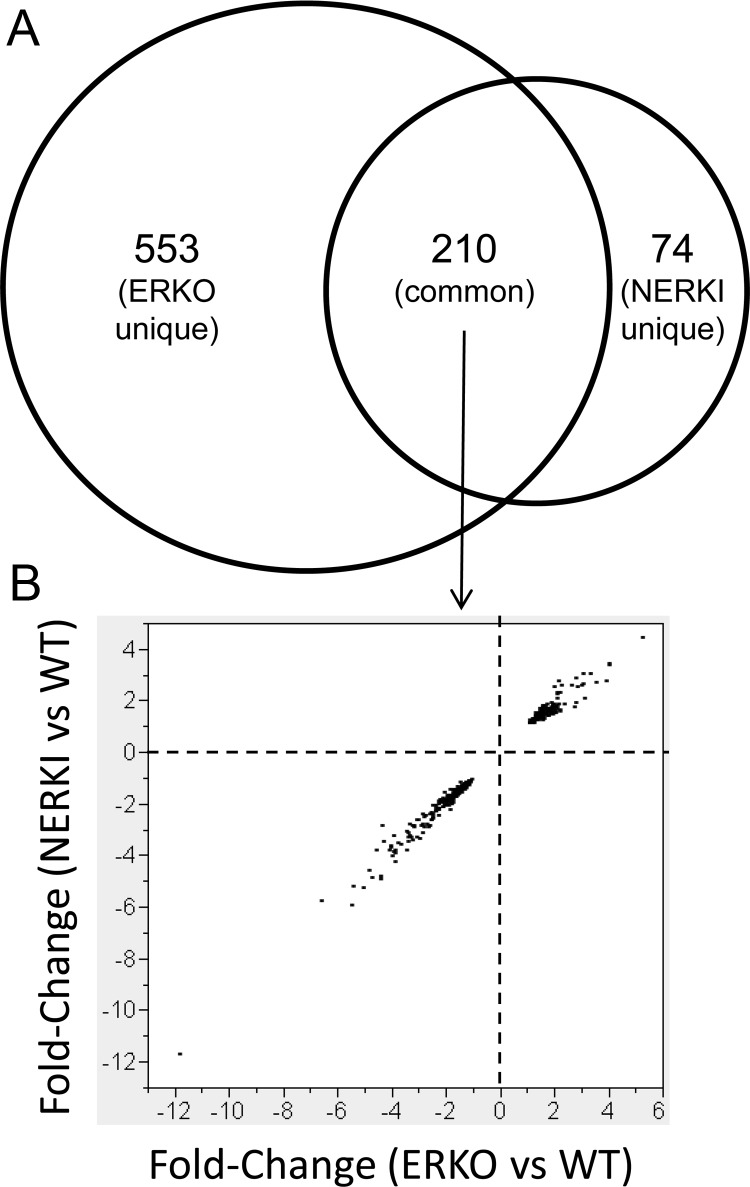
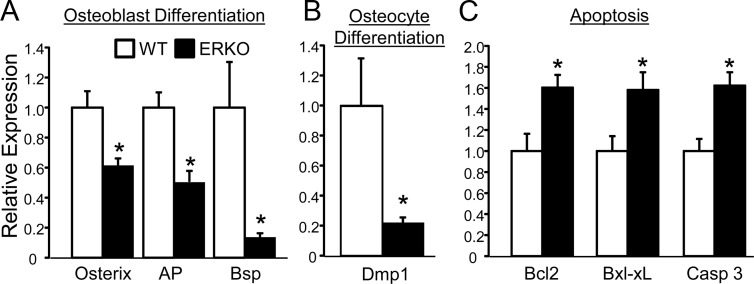
The mechanisms of estrogen receptor (ER)-α activity can be categorized into those involving direct (classical) or indirect (nonclassical) DNA binding. Although various mouse models have demonstrated the importance of ERα in bone, the specific gene expression patterns affected by these modes of ERα action are unknown. In this report, the gene expression patterns of ERα-deficient (ERKO) mice and nonclassical ER knock-in (NERKI) mice, which can function only by nonclassical means, were analyzed. Three-month-old mice were ovariectomized and implanted with estrogen pellets for 1 month to normalize estrogen levels. Microarray analysis of flushed cortical bone revealed 28% (210 of 763) of the genes differentially expressed in ERKO mice were altered in NERKI mice, suggesting estrogen response element-dependent regulation of these genes in bone. Pathway analysis revealed alterations in genes involved in focal adhesion and extracellular matrix interactions. However, the majority of genes regulated in ERKO mice (72%) were unique (i.e. not altered in NERKI mice), suggesting these are regulated by nonclassical mechanisms. To further explore the pathways affected in ERKO mice, we performed focused quantitative PCR arrays for genes involved in various aspects of bone physiology. Genes involved in bone formation, senescence, apoptosis, and autophagy were significantly regulated. Overall, the majority of the genes regulated by ERα in bone are via nonclassical pathways. However, because NERKI mice display an osteoporotic phenotype, it can be deduced that the minority of the estrogen response element-dependent genes/pathways play critical roles in the regulation of bone physiology. These data demonstrate the importance of classical ERα signaling in regulating bone metabolism.
Figures
References
-
- Monroe DG, Spelsberg TC, Khosla S. 2006. Sex steroid effects on bone metabolism. In: Seibel MJ, Robins SP, Bilezikian JP, eds. Dynamics of bone and cartilage metabolism. San Diego: Academic Press; 327–343
-
- Jakacka M, Ito M, Martinson F, Ishikawa T, Lee EJ, Jameson JL. 2002. An estrogen receptor (ER) α deoxyribonucleic acid-binding domain knock-in mutation provides evidence for nonclassical ER pathway signaling in vivo. Mol Endocrinol 16:2188–2201 - PubMed
-
- Syed FA, Fraser DG, Spelsberg TC, Rosen CJ, Krust A, Chambon P, Jameson JL, Khosla S. 2007. Effects of loss of classical estrogen response element signaling on bone in male mice. Endocrinology 148:1902–1910 - PubMed
Publication types
MeSH terms
Substances
Grants and funding
LinkOut - more resources
Full Text Sources
Molecular Biology Databases