


doi: 10.1128/JCM.01680-12.
Epub 2012 Sep 26.
Human parechovirus in respiratory specimens from children in Kansas City, Missouri
Affiliations
- PMID: 23015672
- PMCID: PMC3502961
- DOI: 10.1128/JCM.01680-12
Item in Clipboard
Human parechovirus in respiratory specimens from children in Kansas City, Missouri
J Clin Microbiol.
2012 Dec.
Abstract
We detected a 3% prevalence rate for human parechovirus (HPeV) in 720 respiratory specimens collected from 637 children seen in our hospital in 2009. Fifteen of 20 were HPeV-3 and two were HPeV-1. Only nonspecific, modest respiratory symptoms were evident in patients with detectable HPeV in respiratory specimens. Seven patients had concurrent respiratory and central nervous system (CNS) HPeV-3 infection, suggesting a possible respiratory route of acquisition.
Figures
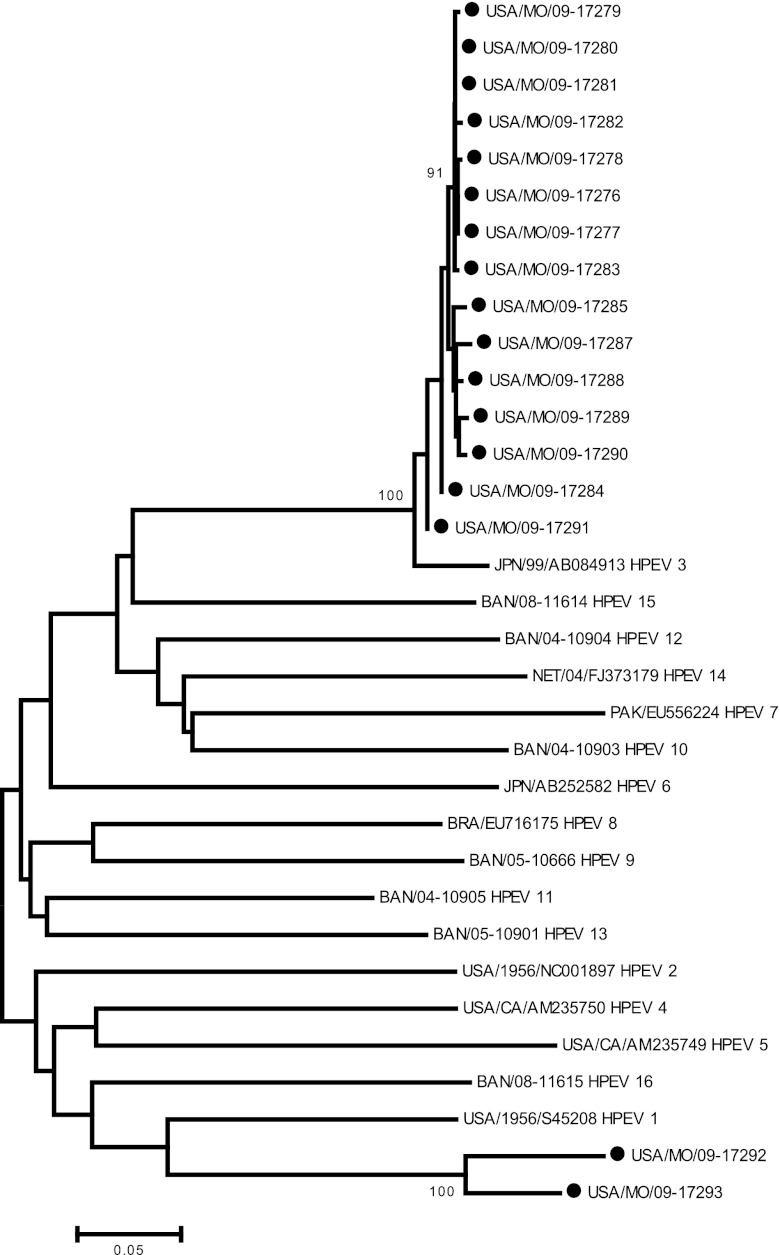
Dendrogram of VP1 sequences from HPeV isolated from respiratory specimens in children from Kansas City and HPeV types 1 to 16. Evolutionary history was inferred using the neighbor-joining method. HPeV viral isolates are indicated by the country of origin: BAN, Bangladesh; BRA, Brazil; JPN, Japan; PAK, Pakistan; NET, Netherlands; USA, United States.
References
-
- Benschop KSM, et al. 2006. Human parechovirus infections in Dutch children and the association between serotype and disease severity. Clin. Infect. Dis. 42:204–210 - PubMed
-
- Chieochansin T, Vichiwattana P, Korkong S, Theamboonlers A, Poovorawan Y. 2011. Molecular epidemiology, genome characterization, and recombination event of human parechovirus. Virology 421:159–166 - PubMed
Publication types
MeSH terms
LinkOut - more resources
Full Text Sources
