Cryptococcal genotype influences immunologic response and human clinical outcome after meningitis
- PMID: 23015735
- PMCID: PMC3448160
- DOI: 10.1128/mBio.00196-12
Cryptococcal genotype influences immunologic response and human clinical outcome after meningitis
Abstract
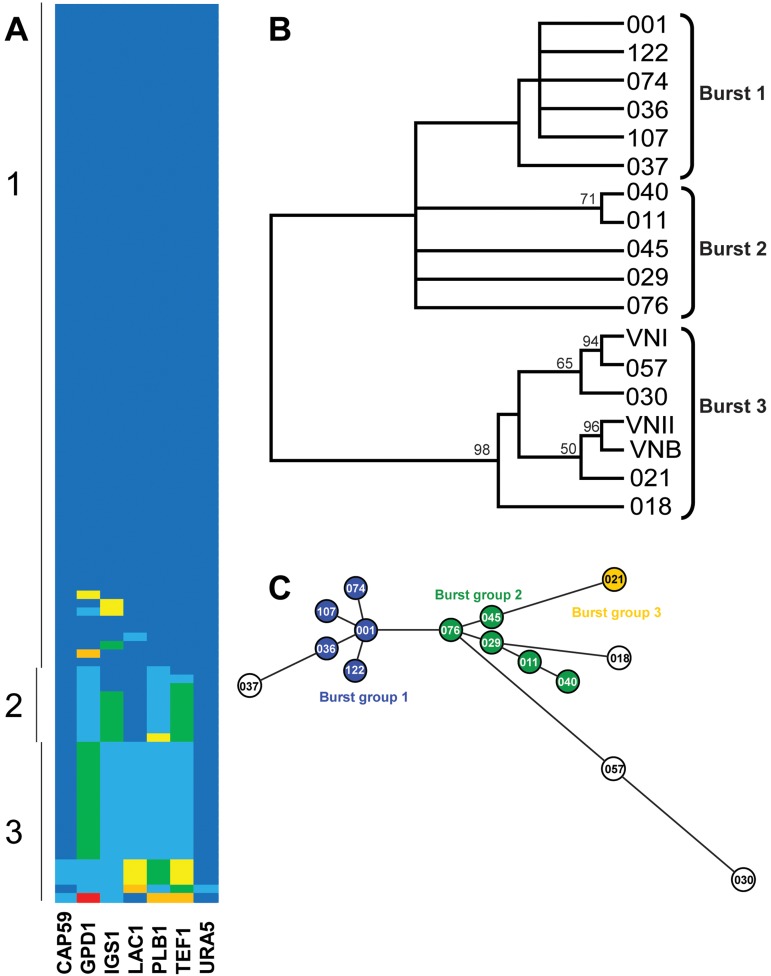
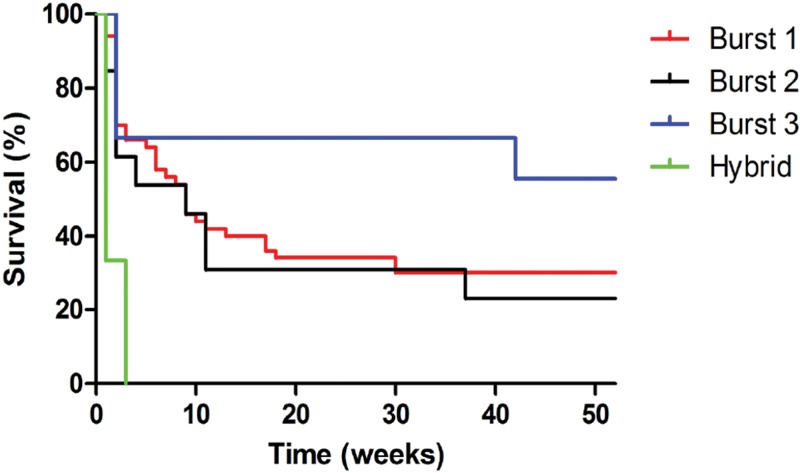
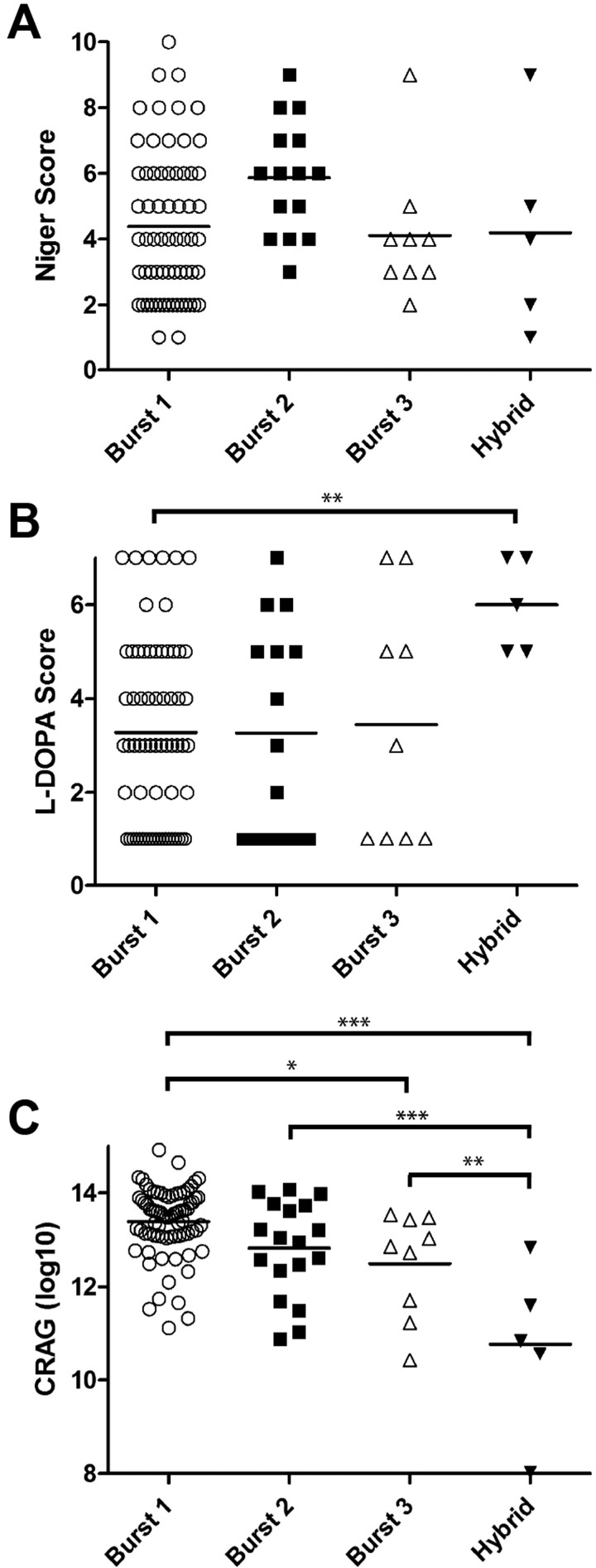
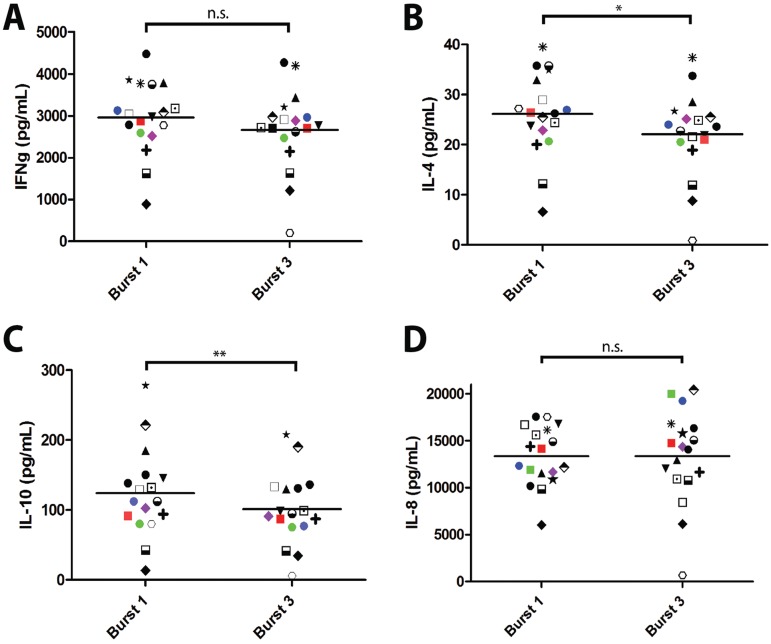
In sub-Saharan Africa, cryptococcal meningitis (CM) continues to be a predominant cause of AIDS-related mortality. Understanding virulence and improving clinical treatments remain important. To characterize the role of the fungal strain genotype in clinical disease, we analyzed 140 Cryptococcus isolates from 111 Ugandans with AIDS and CM. Isolates consisted of 107 nonredundant Cryptococcus neoformans var. grubii strains and 8 C. neoformans var. grubii/neoformans hybrid strains. Multilocus sequence typing (MLST) was used to characterize genotypes, yielding 15 sequence types and 4 clonal clusters. The largest clonal cluster consisted of 74 isolates. The results of Burst and phylogenetic analysis suggested that the C. neoformans var. grubii strains could be separated into three nonredundant evolutionary groups (Burst group 1 to group 3). Patient mortality was differentially associated with the different evolutionary groups (P = 0.04), with the highest mortality observed among Burst group 1, Burst group 2, and hybrid strains. Compared to Burst group 3 strains, Burst group 1 strains were associated with higher mortality (P = 0.02), exhibited increased capsule shedding (P = 0.02), and elicited a more pronounced Th(2) response during ex vivo cytokine release assays with strain-specific capsule stimulation (P = 0.02). The results of these analyses suggest that cryptococcal strain variation can be an important determinant of human immune responses and mortality.
Importance: Cryptococcus neoformans is a common life-threatening human fungal pathogen that is responsible for an estimated 1 million cases of meningitis in HIV-infected patients annually. Virulence factors that are important in human disease have been identified, yet the impacts of the fungal strain genotype on virulence and outcomes of human infection remain poorly understood. Using an analysis of strain variation based on in vitro assays and clinical data from Ugandans living with AIDS and cryptococcal infection, we report that strain genotype predicts the type of immune response and mortality risk. These studies suggest that knowledge of the strain genotype during human infections could be used to predict disease outcomes and lead to improved treatment approaches aimed at targeting the specific combination of pathogen virulence and host response.
Figures
References
-
- Joint United Nations Programme on HIV/AIDS. UNAIDS 2011. World AIDS Day Report. Joint United Nations Programme on HIV/AIDS (U.N. AIDS), Geneva, Switzerland
-
- Park BJ, et al. 2009. Estimation of the current global burden of cryptococcal meningitis among persons living with HIV/AIDS. AIDS 23:525–530 - PubMed
-
- Boulware DR, et al. 2010. Clinical features and serum biomarkers in HIV immune reconstitution inflammatory syndrome after cryptococcal meningitis: a prospective cohort study. PLoS Med. 7:e1000384 http://dx.doi.org/10.1371/journal.pmed.1000384 - PMC - PubMed
-
- Bicanic T, et al. 2009. Immune reconstitution inflammatory syndrome in HIV-associated cryptococcal meningitis: a prospective study. J. Acquir. Immune Defic. Syndr. 51:130–134 - PubMed
-
- Perfect JR. 2005. Cryptococcus neoformans: a sugar-coated killer with designer genes. FEMS Immunol. Med. Microbiol. 45:395–404 - PubMed
Publication types
MeSH terms
Substances
Grants and funding
LinkOut - more resources
Full Text Sources
Other Literature Sources