


Risk factors for medical withdrawals in United States tennis association junior national tennis tournaments: a descriptive epidemiologic study
- PMID: 23015877
- PMCID: PMC3445251
- DOI: 10.1177/1941738109334274
Risk factors for medical withdrawals in United States tennis association junior national tennis tournaments: a descriptive epidemiologic study
Abstract
Background: There have been no large-scale epidemiologic studies designed to determine the risk factors related to medical withdrawal in United States Tennis Association junior national tennis tournaments.
Hypothesis: Risk of medical withdrawal will increase on the basis of cumulative match volume within a tournament.
Methods: A retrospective, cross-sectional analysis was performed of data collected for every match of all 4 United States Tennis Association supernational tournaments (spring, summer, fall, winter) for the boys and girls divisions and for all age divisions (12, 14, 16, 18) during a single year (2005). Logistic regression analysis was performed to determine relative risk of all risk factors. Additional analysis was performed to determine the threshold (ie, match number) at which a player would substantially increase his or her risk of medical withdrawal.
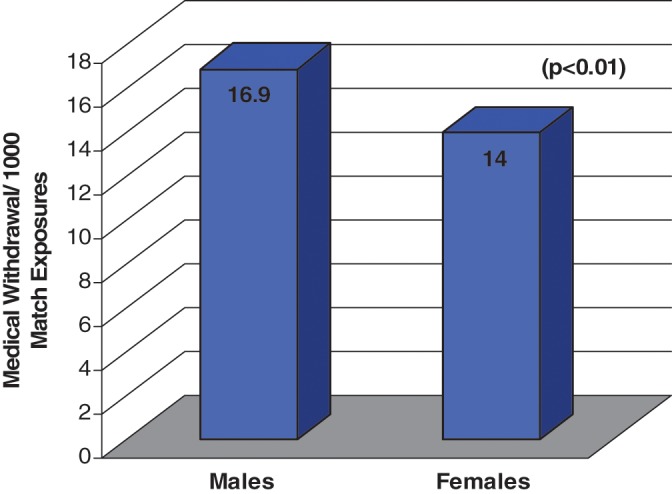
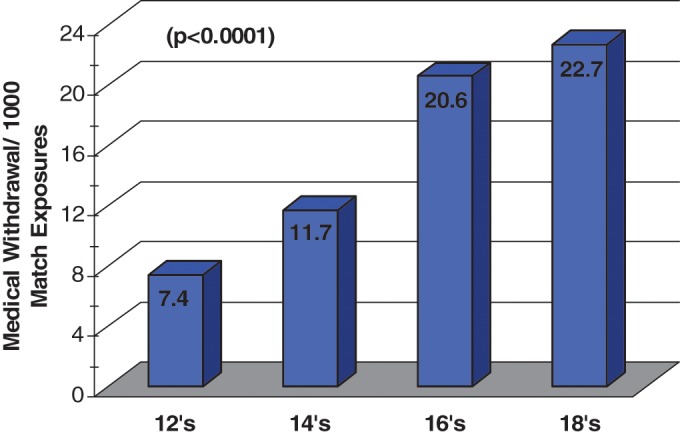
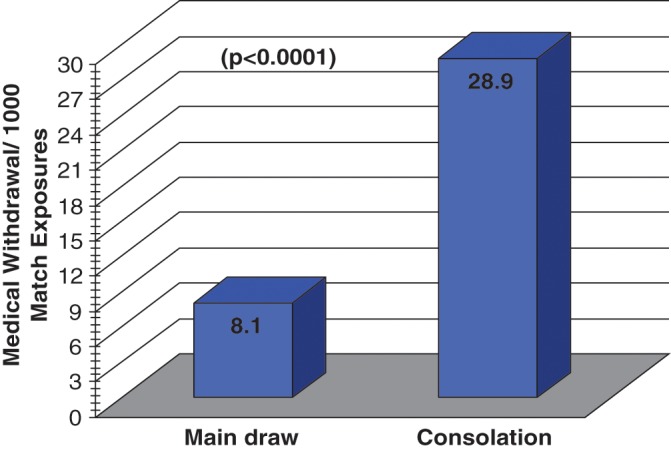
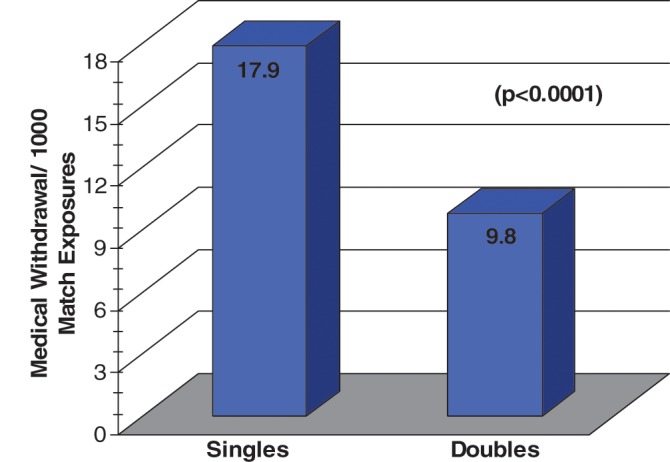
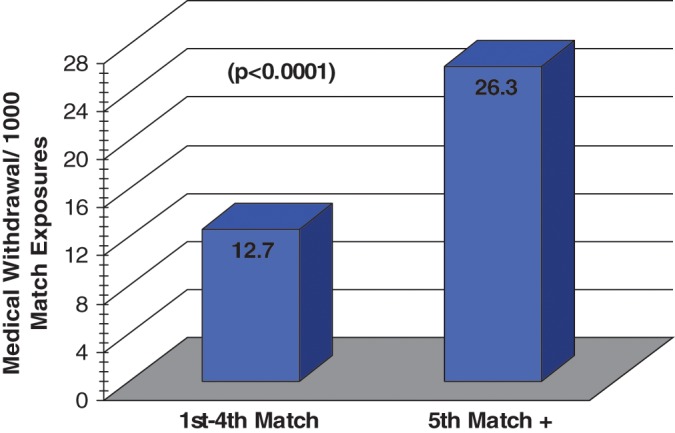
Results: A total of 28336 match exposures were analyzed, with an even distribution with respect to sex and age. The total medical withdrawal rate was 15.6 per 1000 match exposures. Every factor of interest was highly significant in predicting a higher rate of medical withdrawal per 1000 match exposures. The medical withdrawal rate was significantly higher in the fifth match or greater (26.3/1000) versus the first 4 matches (12.7/1000; P < .0001), even when analyzing main draw and singles matches.
Conclusion: In United States Tennis Association national junior tennis tournaments, there is a significant increase in risk of medical withdrawals directly related to older age divisions, boys, singles matches, and main draw matches. Specifically, there is a significant increase in medical withdrawal rate beyond the fourth match in the tournament regardless of whether it is a main draw, consolation, or singles match.
Clinical relevance: Recommendations can be made to exercise caution in tournaments that involve boys, older age divisions, and singles. In addition, there may be sufficient evidence to suggest intervention within a tournament when players play beyond their fourth match.
Keywords: injury rates; junior players; risk factors; tennis; tournaments.
Conflict of interest statement
No potential conflict of interest declared.
Figures
References
-
- Fricker P, Maguire K. The prevalence of leg injuries in elite tennis players. Excel. 1986;3(2):2-5
-
- Hutchinson MR, Laprade RF, Quinter MB, II, Moss R, Terpstra J. Injury surveillance at the USTA boys’ tennis championships: a 6-yr study. Med Sci Sports Exerc. 1994;27:826-830 - PubMed
LinkOut - more resources
Full Text Sources
