


Diabetes in sports
- PMID: 23015921
- PMCID: PMC3438860
- DOI: 10.1177/1941738109347974
Diabetes in sports
Abstract
Context: Exercise is recommended for individuals with diabetes mellitus, and several facets of the disease must be considered when managing the diabetic athlete. The purpose of this article is to review diabetes care in the context of sports participation.
Evidence acquisition: Relevant studies were identified through a literature search of MEDLINE and the Cochrane database, as well as manual review of reference lists of identified sources.
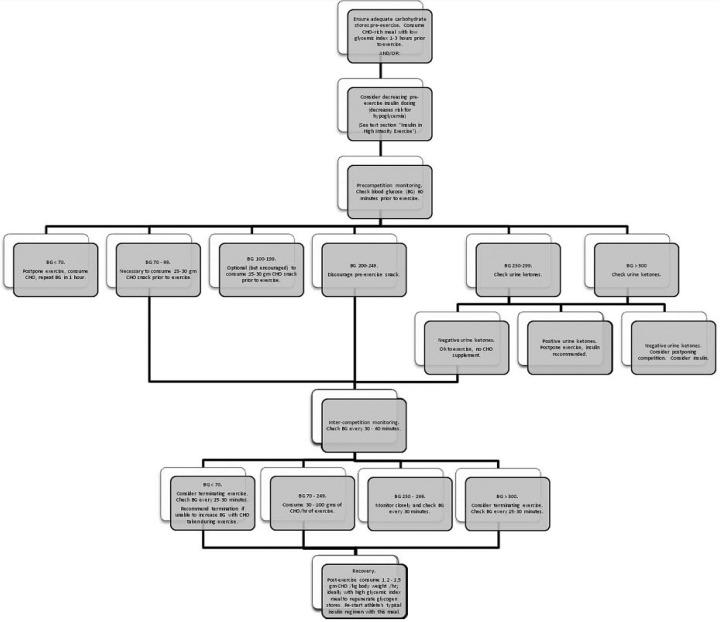
Results: Diabetics should be evaluated for complications of long-standing disease before beginning an exercise program, and exercise should be modified appropriately if complications are present. Athletes who use insulin or oral insulin secretogogues are at risk for exercise-induced immediate or delayed hypoglycemia. Diabetics are advised to engage in a combination of regular aerobic and resistance exercise. Insulin-dependent diabetics should supplement carbohydrate before and after exercise, as well as during exercise for events lasting longer than 1 hour. Adjustment of insulin dosing based on planned exercise intensity is another strategy to prevent hypoglycemia. Insulin-dependent athletes should monitor blood sugar closely before, during, and after exercise. Significant hyperglycemia before exercise should preclude exercise because the stress of exercise can paradoxically exacerbate hyperglycemia and lead to ketoacidosis. Athletes should be aware of hypoglycemia symptoms and have rapidly absorbable glucose available in case of hypoglycemia.
Conclusion: Exercise is an important component of diabetes treatment, and most people with diabetes can safely participate in sports at recreational and elite levels with attention to appropriate precautions.
Keywords: benefits and risks of sport; diabetic athlete; insulin pump; medication adjustment.
Conflict of interest statement
No potential conflict of interest declared.
Figures
References
-
- Admon G, Weinstein Y, Falk B, et al. Exercise with and without an insulin pump among children and adolescents with type 1 diabetes mellitus. Pediatrics. 2005;116:e348-e355 - PubMed
-
- Albert SG, Bernbaum M. Exercise for patients with diabetic retinopathy. Diabetes Care. 1995;18:130-132 - PubMed
-
- Albright A, Franz M, Hornsby G, et al. American College of Sports Medicine position stand: Exercise and type 2 diabetes. Med Sci Sports Exerc. 2000;32:1345-1360 - PubMed
-
- American Diabetes Association Consensus statement: Physical activity/exercise and type 2 diabetes. Diabetes Care. 2006;29:1433-1438 - PubMed
-
- American Diabetes Association Position statement: Physical activity/exercise and diabetes. Diabetes Care. 2004;27:S58-S62 - PubMed
LinkOut - more resources
Full Text Sources
