


Constant transmission properties of variant Creutzfeldt-Jakob disease in 5 countries
- PMID: 23017202
- PMCID: PMC3471642
- DOI: 10.3201/eid1810.120792
Constant transmission properties of variant Creutzfeldt-Jakob disease in 5 countries
Abstract
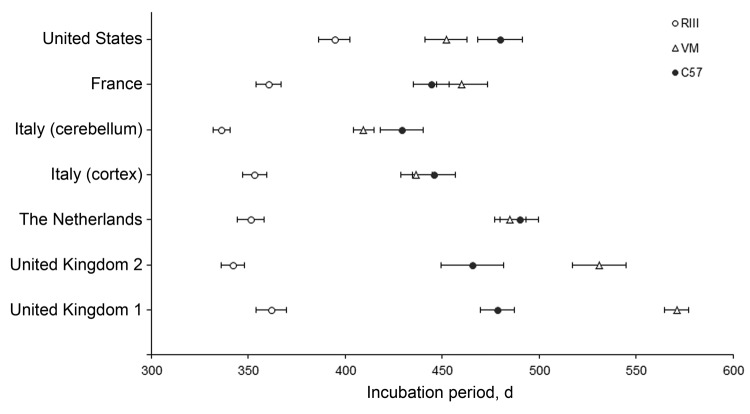
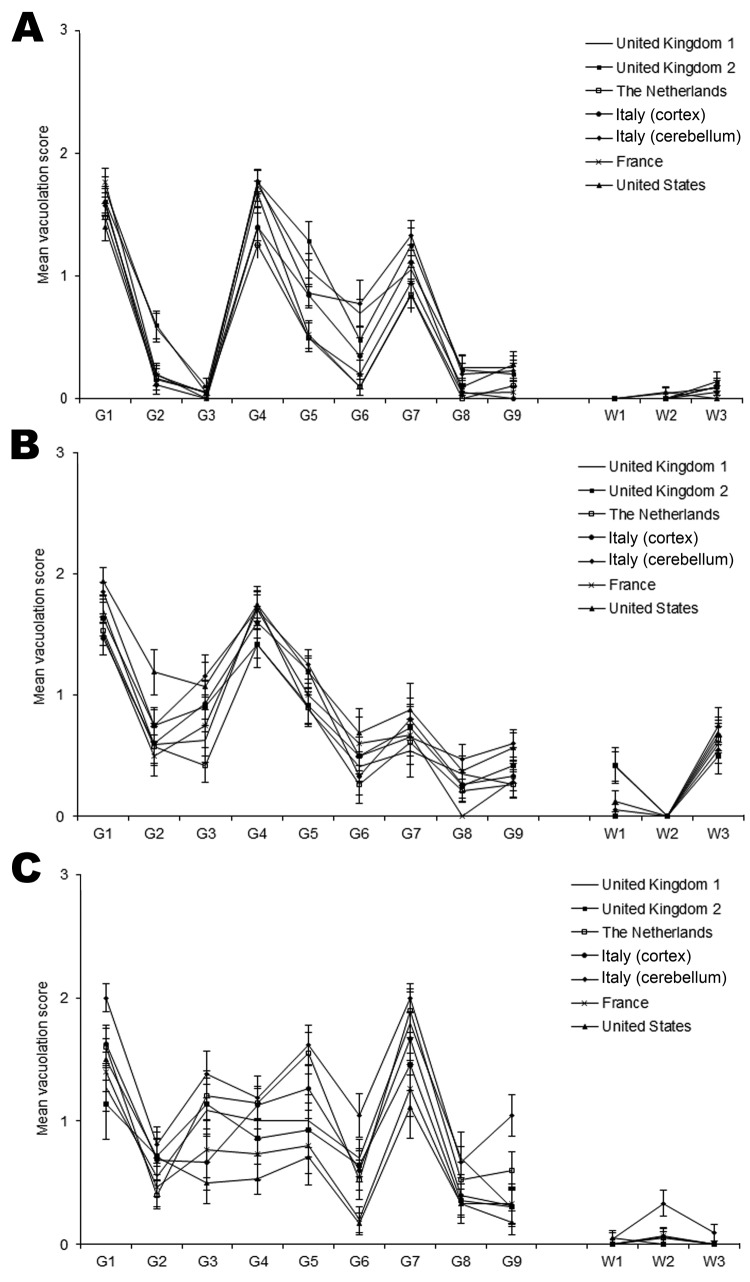
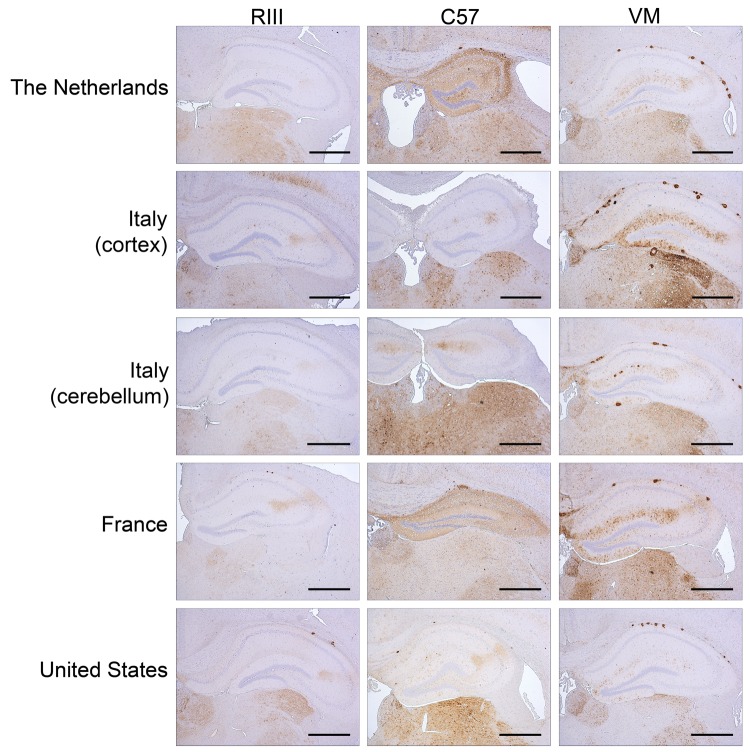
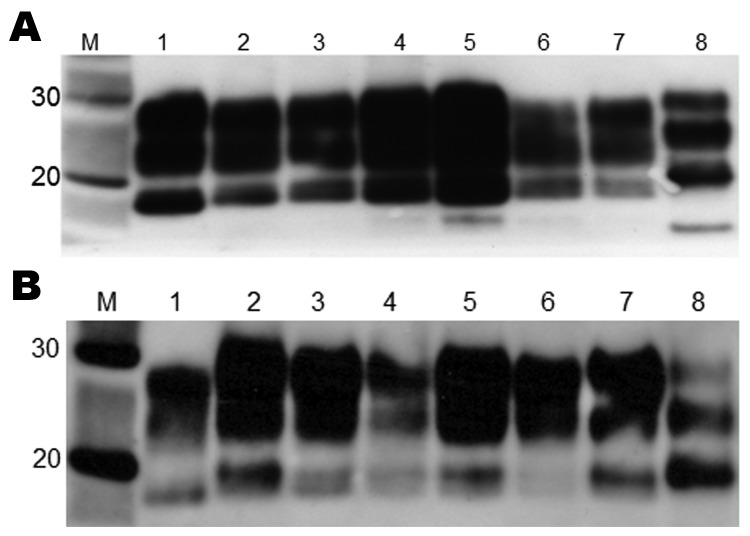
Variant Creutzfeldt-Jakob disease (vCJD) has been reported in 12 countries. We hypothesized that a common strain of agent is responsible for all vCJD cases, regardless of geographic origin. To test this hypothesis, we inoculated strain-typing panels of wild-type mice with brain material from human vCJD case-patients from France, the Netherlands, Italy, and the United States. Mice were assessed for clinical disease, neuropathologic changes, and glycoform profile; results were compared with those for 2 reference vCJD cases from the United Kingdom. Transmission to mice occurred from each sample tested, and data were similar between non-UK and UK cases, with the exception of the ranking of mean clinical incubation times of mouse lines. These findings support the hypothesis that a single strain of infectious agent is responsible for all vCJD infections. However, differences in incubation times require further subpassage in mice to establish any true differences in strain properties between cases.
Figures
References
-
- Bruce MB, Will RG, Fraser H. Comparison of the biological characteristics of BSE and CJD in mice. In: Iqbal K, Swaab DF, Winblad B, Wisniewski HM, editors. Alzheimer’s disease and related disorders. Chichester (UK): John Wiley; 1999. p. 553–60.
Publication types
MeSH terms
Substances
Grants and funding
LinkOut - more resources
Full Text Sources
Medical