Factors associated with poor glycemic control or wide glycemic variability among diabetes patients in Hawaii, 2006-2009
- PMID: 23017247
- PMCID: PMC3475506
- DOI: 10.5888/pcd9.120065
Factors associated with poor glycemic control or wide glycemic variability among diabetes patients in Hawaii, 2006-2009
Abstract
Introduction: Although glycemic control is known to reduce complications associated with diabetes, it is an elusive goal for many patients with diabetes. The objective of this study was to identify factors associated with sustained poor glycemic control, some glycemic variability, and wide glycemic variability among diabetes patients over 3 years.
Methods: This retrospective study was conducted among 2,970 diabetes patients with poor glycemic control (hemoglobin A1c [HbA1c] >9%) who were enrolled in a health plan in Hawaii in 2006. We conducted multivariable logistic regressions to examine factors related to sustained poor control, some glycemic variability, and wide glycemic variability during the next 3 years. Independent variables evaluated as possible predictors were age, sex, type of insurance coverage, morbidity, diabetes duration, history of cardiovascular disease, and number of medications.
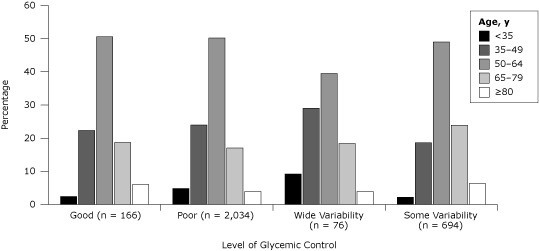
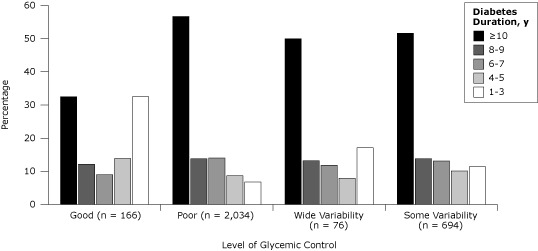
Results: Longer duration of diabetes, being under age 35, and taking 15 or more medications were significantly associated with sustained poor glycemic control. Preferred provider organization and Medicare (vs health maintenance organization) enrollees and patients with high morbidity were less likely to have sustained poor glycemic control. Wide glycemic variability was significantly related to being younger than age 50, longer duration of diabetes, having coronary artery disease, and taking 5 to 9 medications per year.
Conclusion: Results indicate that duration of diabetes, age, number of medications, morbidity, and type of insurance coverage are risk factors for sustained poor glycemic control. Patients with these characteristics may need additional therapies and targeted interventions to improve glycemic control. Patients younger than age 50 and those with a history of coronary heart disease should be warned of the health risks of wide glycemic variability.
Figures
References
-
- Nathan DM, Cleary PA, Backlund JY, Genuth SM, Lachin JM, Orchard TJ, et al. ; Diabetes Control and Complications Trial/Epidemiology of Diabetes Interventions and Complications (DCCT/EDIC) Study Research Group. Intensive diabetes treatment and cardiovascular disease in patients with type 1 diabetes. N Engl J Med 2005;353(25):2643–53. 10.1056/NEJMoa052187 - DOI - PMC - PubMed