


Serostatus disclosure to sexual partners among people living with HIV: examining the roles of partner characteristics and stigma
- PMID: 23020136
- PMCID: PMC3622199
- DOI: 10.1080/09540121.2012.722601
Serostatus disclosure to sexual partners among people living with HIV: examining the roles of partner characteristics and stigma
Abstract
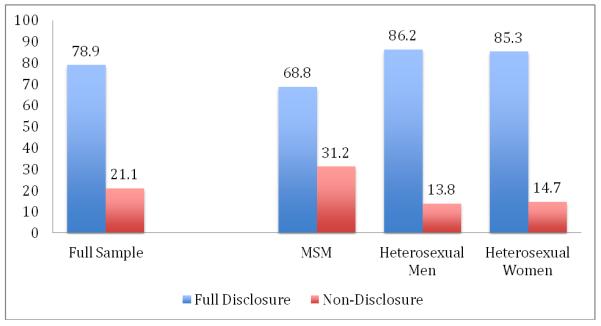
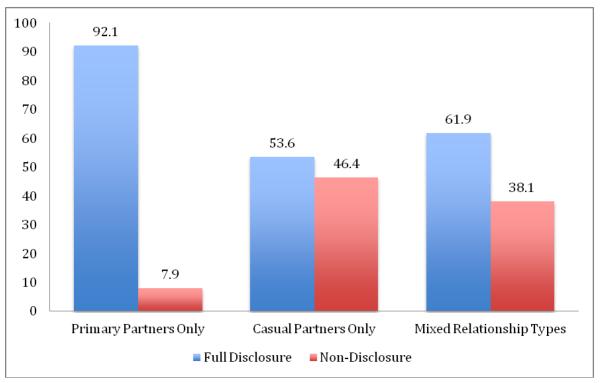
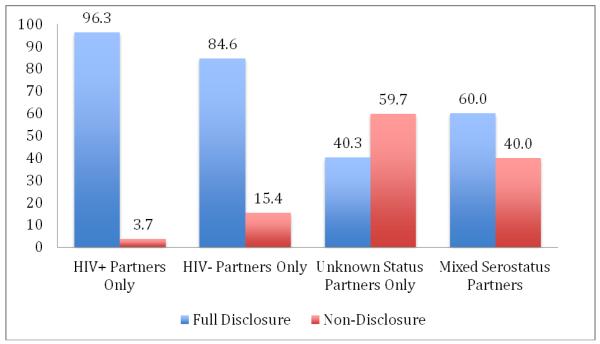
HIV serostatus disclosure among people living with HIV/AIDS (PLWHA) is an important component of preventing HIV transmission to sexual partners. Due to barriers like stigma, however, many PLWHA do not disclose their serostatus to all sexual partners. This study explored differences in HIV serostatus disclosure based on sexual behavior subgroup (men who have sex with men [MSM]; heterosexual men; and women), characteristics of the sexual relationship (relationship type and HIV serostatus of partner), and perceived stigma. We examined disclosure in a sample of 341 PLWHA: 138 MSM, 87 heterosexual men, and 116 heterosexual women who were enrolled in SafeTalk, a randomized, controlled trial of a safer sex intervention. We found that, overall, 79% of participants disclosed their HIV status to all sexual partners in the past 3 months. However, we found important differences in disclosure by subgroup and relationship characteristics. Heterosexual men and women were more likely to disclose their HIV status than MSM (86%, 85%, and 69%, respectively). Additionally, disclosure was more likely among participants with only primary partners than those with only casual or both casual and primary partners (92%, 54%, and 62%, respectively). Participants with only HIV-positive partners were also more likely to disclose than those with only HIV-negative partners, unknown serostatus partners, or partners of mixed serostatus (96%, 85%, 40%, and 60%, respectively). Finally, people who perceived more HIV-related stigma were less likely to disclose their HIV serostatus to partners, regardless of subgroup or relationship characteristics. These findings suggest that interventions to help PLWHA disclose, particularly to serodiscordant casual partners, are needed and will likely benefit from inclusion of stigma reduction components.
Figures
References
-
- Berger BE, Ferrans CE, Lashley FR. Measuring stigma in people with HIV: psychometric assessment of the HIV stigma scale. Research in Nursing and Health. 2001;24(6):518–529. - PubMed
Publication types
MeSH terms
Grants and funding
LinkOut - more resources
Full Text Sources
Miscellaneous
