


Upregulation of α-synuclein during localized radiation therapy signals the association of cancer-related fatigue with the activation of inflammatory and neuroprotective pathways
- PMID: 23022913
- PMCID: PMC3518581
- DOI: 10.1016/j.bbi.2012.09.009
Upregulation of α-synuclein during localized radiation therapy signals the association of cancer-related fatigue with the activation of inflammatory and neuroprotective pathways
Abstract
Purpose: Neuroinflammatory mechanisms are associated with fatigue in neurodegenerative conditions such as Parkinson's. The symptoms in Parkinson's including fatigue are thought to be related to α-synuclein overexpression. This study investigated genomic correlates of fatigue experienced by men with prostate cancer receiving external beam radiation therapy (EBRT).
Patients and methods: Sixteen men with non-metastatic prostate cancer who were scheduled to receive EBRT were enrolled. Fatigue scores and blood were obtained at baseline (prior to EBRT, D0); one hour following initiation of EBRT (D1), day 7 (D7), day 14 (D14), midpoint (days 19-21, D21), completion (days 38-42, D42), and four weeks post-EBRT (days 68-72, D72). Gene expression profiling using microarray analysis was performed from peripheral blood and confirmatory qPCR and protein (ELISA) analyses verified the microarray results. Correlations between fatigue and gene/protein expressions were determined using a mixed model approach.
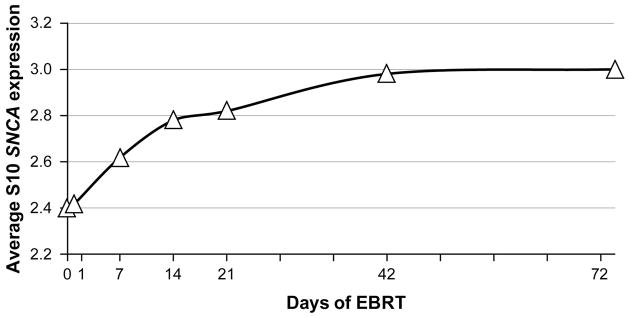
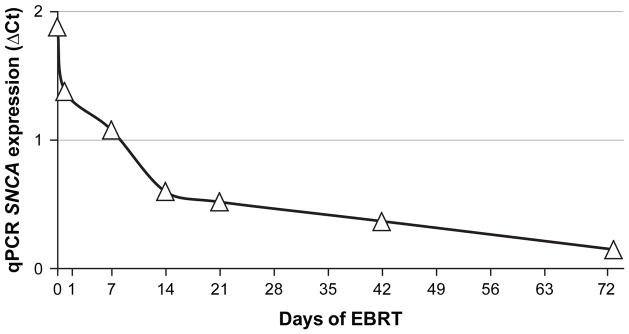
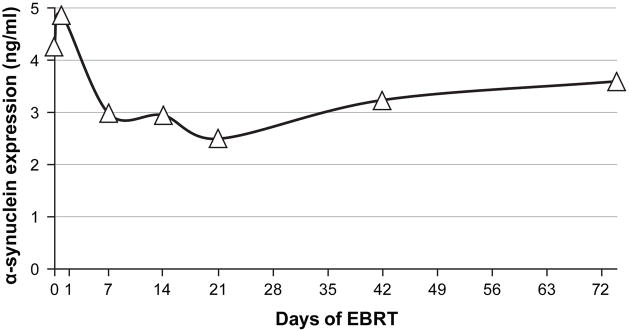
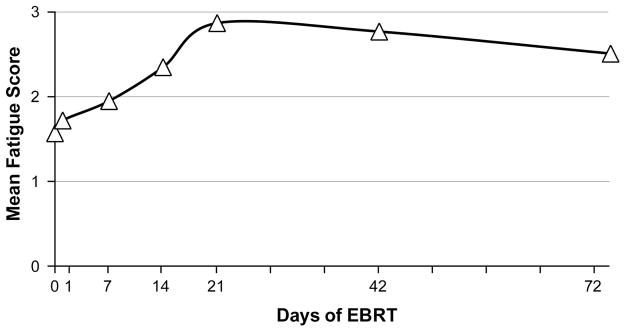
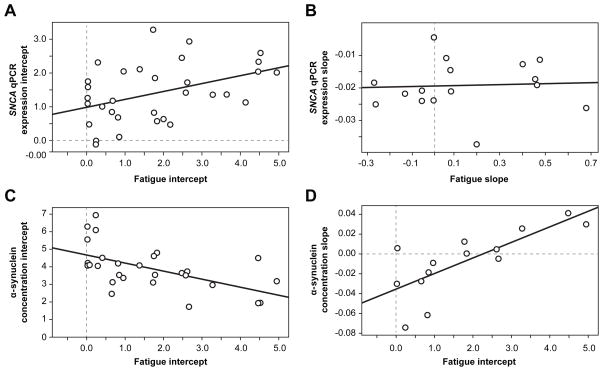
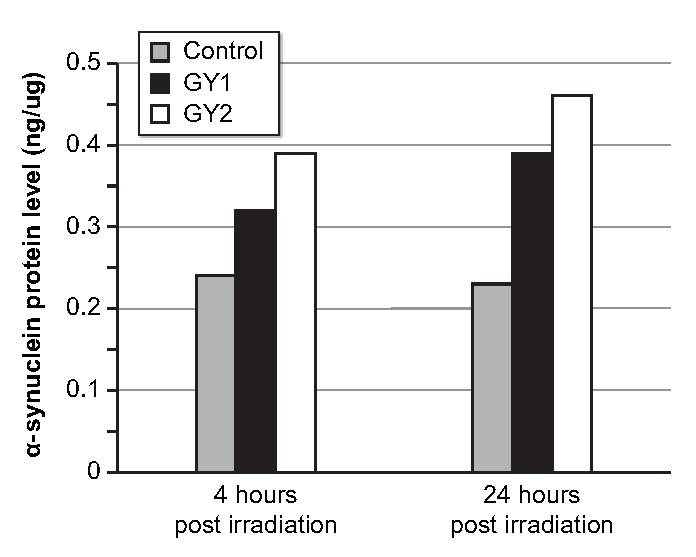
Results: Microarray data showed significant, differential expression of 463 probesets following EBRT. SNCA had a 2.95-fold change at D21 from baseline. SNCA expression was confirmed by qPCR (p<0.001) and ELISA (p<0.001) over time during EBRT. Fatigue scores were significantly correlated with SNCA gene expression on D14 (r=0.55, p<0.05) and plasma α-synuclein concentrations on D42 of EBRT (r=0.54, p=0.04).
Conclusion: Fatigue experienced during EBRT may be mediated by α-synuclein overexpression. Alpha-synuclein may serve as a useful biomarker to understand the mechanisms and pathways related to the development of fatigue in this population.
Published by Elsevier Inc.
Figures
References
-
- Bokemeyer M, Ding XQ, Goldbecker A, Raab P, Heeren M, Arvanitis D, et al. Evidence for neuroinflammation and neuroprotection in HCV infection-associated encephalopathy. Gut. 2011;60:370–377. - PubMed
-
- Bower J, Ganz P, Aziz N, Olmstead R, Irwin MR, Cole SW. Inflammatory responses to psychological stress in fatigued breast cancer survivors: relationship to glucocorticoids. Brain Behav Immun. 2007;21:251–258. - PubMed
-
- Bruera E, Driver L, Barnes EA, Willey J, Shen L, Palmer JL, et al. Patient-controlled methylphenidate for the management of fatigue in patients with advanced cancer: a preliminary report. J Clin Oncol. 2003;21:4439–4443. - PubMed
-
- Bruera E, Valero V, Driver L, Shen L, Willey J, Zhang T, et al. Patient-controlled methylphenidate for cancer fatigue: a double-blind, randomized, placebo-controlled trial. J Clin Oncol. 2006;24:2073–2078. - PubMed
MeSH terms
Substances
Grants and funding
LinkOut - more resources
Full Text Sources
Other Literature Sources
Medical
Molecular Biology Databases
Miscellaneous
